


Dizzy Every Time You Stand Up?
POTS, endometriosis, and a link the newest research has finally put numbers on.
Dr. Pankaj Singhal y Dra. Virginia McLean
Cirujanos ginecólogos y robóticos especializados en endometriosis · New York Gynecology Surgery & Endometriosis (NYGSE™) · www.nygse.com
© 2026 New York Gynecology Surgery & Endometriosis. Material patentado de NYGSE. Queda prohibida la reproducción o distribución sin autorización por escrito.

Many of our patients describe a second problem that has nothing to do with the pelvis, and they almost always apologize for bringing it up.
They stand up and the room goes grey at the edges. Their heart pounds after one flight of stairs. A hot shower leaves them sitting on the bathroom floor. They are tired in a way that sleep does not fix, and by mid-afternoon their thinking has gone soft. Most have been told it is anxiety, or dehydration, or that they need more sleep. A good number have simply stopped mentioning it.
There is often a name for what they are describing, and research published this year suggests it appears in women with endometriosis more often than chance would predict.
What Is POTS?
Postural orthostatic tachycardia syndrome, or POTS, is a disorder of the autonomic nervous system. That is the part of the body that adjusts heart rate and blood vessel tone without being asked. Standing up pulls roughly half a liter of blood downward into the legs and abdomen. Normally the blood vessels tighten to push it back up. In POTS that reflex underperforms, so the body compensates the only other way it can, by racing the heart.
None of this is guesswork. It gets measured. A review published in JAMA in August 2026 restates the criteria: a sustained heart rate increase of at least 30 beats per minute, or 40 in adolescents aged 12 to 19, within ten minutes of standing, with no drop in blood pressure, symptoms lasting at least three months, and other causes excluded.
It is also not rare. That review estimates POTS affects between 0.1 and 1 percent of the United States population. About nine in ten patients are female, and onset peaks between the ages of 13 and 29, the same window in which endometriosis usually declares itself. In one survey, roughly 70 percent of patients reported substantial functional impairment, with school or work participation lost.
La conexión entre el POTS y la endometriosis
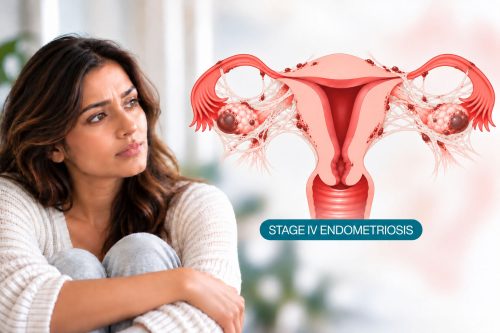
A study published in 2026 in the journal Autonomic Neuroscience reviewed the records of 1,322 women whose POTS had been confirmed on tilt-table testing at a specialist autonomic center. Of those, 229, or 17.3 percent, also carried a diagnosis of endometriosis.
For comparison, roughly 10 percent of women in the general population have endometriosis. Patients at the same clinic who tested negative on the tilt table had a rate of 10.2 percent. Both comparisons reached statistical significance. That second one matters, because it argues the finding is not simply a case of women who reach specialist clinics collecting more diagnoses.
The detail we find most useful is the order of events. Among the women who had both conditions, endometriosis was diagnosed first 68 percent of the time. Put plainly, the gynecologist is often the first physician in a position to notice the other half of the picture.
LEE ESTA PARTE CUIDADOSAMENTE
This is an association. It is not a cause. The study was retrospective and done at a single center, so it cannot show that either condition produces the other.
A separate 2025 survey of women diagnosed with POTS as teenagers found no excess of endometriosis at all, most likely because endometriosis is often still undiagnosed at 18. That is an explanation rather than a proof. Anyone who tells you the science here is settled has not read both papers.
Why Might POTS and Endometriosis Occur Together?
Nobody knows yet. Several explanations are being argued in the literature, and they do not rule each other out.
- Shared inflammatory biology. Mast cells, the immune cells that release histamine and other messengers, are active in endometriosis lesions and are also implicated in POTS and related conditions.
- Nerve involvement in the endometriosis pain itself. The autonomic nervous system and inflammation interact directly in endometriosis-associated pain, and reduced vagal tone has been documented in adenomyosis.
- Connective tissue. Joint hypermobility and inherited connective-tissue conditions are over-represented in both groups of patients.
- Years of untreated pain. Long-standing pelvic pain can turn up the volume on the whole nervous system, which amplifies symptoms everywhere, not only in the pelvis.
There is also an explanation that is not biological at all. Both conditions affect mostly women, both average years of delay before anyone names them, and both get attributed to anxiety first. A large review of qualitative research covering more than 11,000 patients with contested illnesses tied that kind of dismissal directly to longer diagnostic delays. That counts as a mechanism too, and it is the one we have the most control over.
What to Do If You Have Endometriosis and POTS Symptoms?
1. Get Your Iron Checked Properly
Heavy periods drain iron, and low iron on its own causes a racing heart, breathlessness and exhaustion. Ask for a ferritin level and not only a hemoglobin, because iron stores can be depleted while the blood count still looks normal. This is treatable, and it is one of the first things we check.
2. Track Your Symptoms Against Your Menstrual Cycle
In a survey of women with POTS, 72 percent said their symptoms worsened just before and during their period, and hormonal treatment to settle the cycle helped about half of those who tried it. If your worst days cluster predictably, say so, because it changes what we offer.
Not sure which symptoms may be related to endometriosis? Try our Verificador de síntomas de endometriosis to better understand your symptoms and what they may mean.
3. Ask About a Standing Test
It takes about ten minutes in the office: ten minutes lying down, then a series of heart rate and blood pressure readings while you stand. A positive result is not a diagnosis by itself, but it turns a vague complaint into numbers that a cardiologist will act on.
4. Tell Us Before Surgery
A day of surgery contains almost every POTS trigger at once: fasting, dehydration, heat, changes in position, opioids and nausea. None of that is a reason to avoid an operation. It is a reason to plan it, and we plan it differently when we know.
What We Are Not Saying
We are not saying that endometriosis causes POTS, or that POTS causes endometriosis. We are not saying that excision surgery treats POTS. There is no evidence for that, and we would rather tell you now than have you find it out after an operation. We are also not saying that every woman with endometriosis and fatigue has POTS. Fatigue has many causes, several of them easier to fix.
What we are saying is smaller and more useful than any of that. If standing up reliably makes you feel worse, that is a real, measurable, named thing, and it deserves ten minutes of our attention rather than a shrug.
Where to Start
Bring it up at your next visit, even if it feels off-topic. Tell us what happens when you stand, how it relates to your period, and whether it has ever made you faint. We will check your iron, run the standing test if it is warranted, and bring in our cardiology colleagues if the numbers call for it.
You have almost certainly waited long enough for someone to take the pelvic pain seriously. You should not have to wait again for this.
Sources: Chung TH, Raj SR. Postural orthostatic tachycardia syndrome (POTS): a review. JAMA. 2026. · Chin AY, et al. The endometriosis-POTS connection: a retrospective analysis. Autonomic Neuroscience. 2026. · Boris JR, et al. The long-term POTS outcomes survey, gynecologic findings. Obstetrics and Gynecology International. 2025. · Bontempo AC, et al. Psychological Bulletin. 2025.
This article is general education, not individual medical advice. POTS is diagnosed and managed together with cardiology and autonomic specialists. If you have fainted without warning, have chest pain with a racing heart, or have a family history of sudden cardiac death, seek medical care promptly rather than waiting for a routine visit.