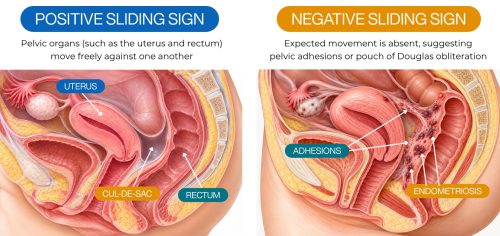


Endometriosis surgery varies widely from one surgeon to the next. These are the eight elements we believe every operation should include, and the evidence behind each one.
By Pankaj Singhal, MD, MS, MHCM, FACOG, and Virginia McLean, MD
New York Gynecology Surgery & Endometriosis, Babylon, NY
Dr. Singhal is double board certified in obstetrics and gynecology and in gynecologic oncology, with more than 18 years in practice and more than 12,000 surgeries.
Two women can both be told they “had endometriosis surgery” and have had very different operations. One may have had a short look inside with a few spots burned. The other may have had every area of disease mapped before surgery, removed completely, confirmed under a microscope, and followed by a plan to keep it from returning. The difference often shows up months later, in whether the pain comes back.
Endometriosis is a chronic inflammatory disease in which tissue similar to the lining of the uterus grows outside it, most often on the lining of the pelvis, the ovaries, the ligaments behind the uterus, the bowel and the bladder. It affects about one in ten women of reproductive age, and diagnosis is often delayed by seven to ten years. [1]
Many of the women we see have already waited a long time for answers, so we think it is fair for them to know what a thorough operation looks like.
1. A careful diagnosis before surgery
We start with a detailed history, an examination and imaging. Expert ultrasound and MRI are good at finding endometriosis cysts on the ovary and deeper disease, and they help us plan the operation and tell the patient what to expect. [2]
They are not good at finding the thin, superficial spots on the pelvic lining, so a normal scan does not rule endometriosis out. [3]
2. Excision rather than burning
Ablation burns or vaporizes the surface of a lesion. Excision cuts the whole lesion out, including the part beneath the surface. In randomized trials, excision was at least as effective as ablation and better for several kinds of pain, including period pain, pain with bowel movements and pain with sex. [4][5]
For endometriosis cysts on the ovary, the difference is larger: painful periods returned in about 49% of women after draining and burning the cyst, compared with 10% to 34% after removing it. [6]
3. A survey of the whole abdomen and pelvis
Endometriosis that is not looked for is left behind. We examine the pelvic lining, both ovaries and tubes, the ligaments behind the uterus, the bladder, the ureters, the bowel, the appendix and the diaphragm under the ribs, in the same order every time. In one large series, 4.7% of women with endometriosis had disease on the diaphragm, which is missed when only the pelvis is examined. [7]
4. Pathology on everything we remove
Every specimen goes to a pathologist. That confirms the diagnosis in writing, which matters for the patient’s future care and her peace of mind, and it allows the rare unexpected finding to be identified and treated correctly.
5. Protection of the ovaries
The ovary holds a woman’s lifetime supply of eggs. Removing an endometriosis cyst lowers levels of anti-Müllerian hormone (AMH), a blood marker of egg supply, so technique matters. [8]
We separate the cyst wall carefully from healthy tissue and limit the use of heat on the ovary.
6. One surgeon from the diaphragm to the pelvis
When endometriosis involves the bowel, bladder, ureters or diaphragm, many hospitals bring in a colorectal surgeon, a urologist and sometimes a general surgeon. Dr. Singhal is trained in gynecologic oncology and performs those parts of the operation himself. The patient has one surgeon responsible for the entire operation, and less time under anesthesia, which matters because the risk of complications rises with every additional half hour in the operating room. [9]
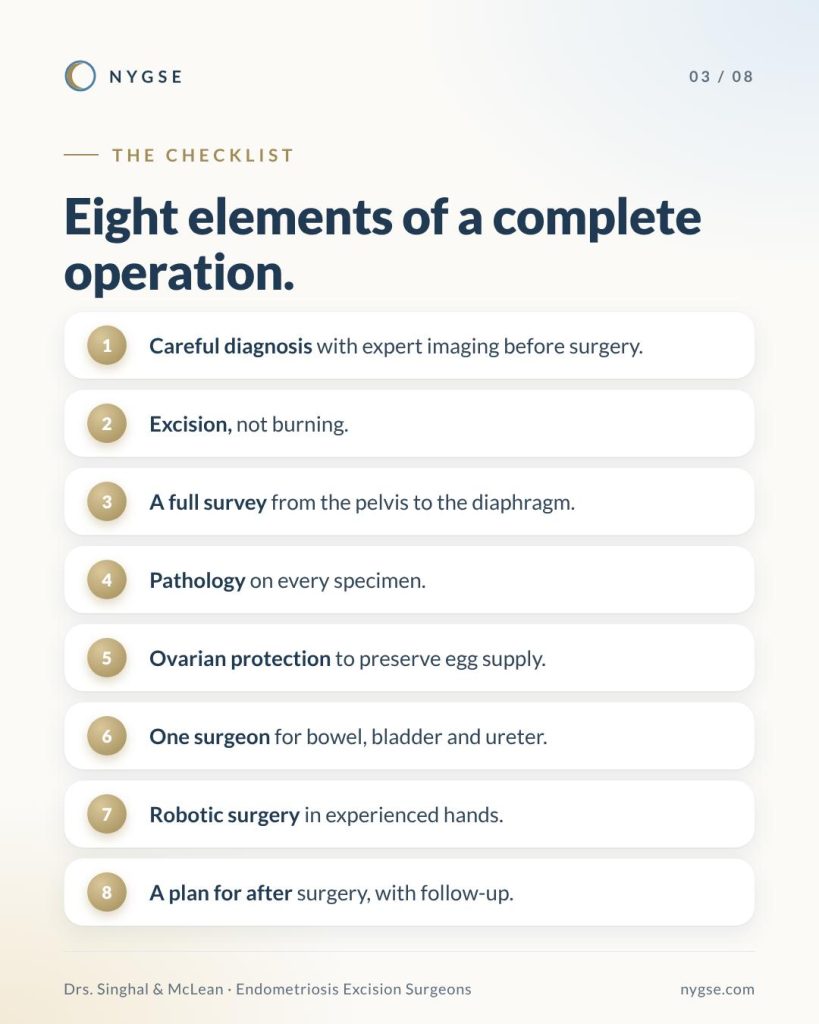
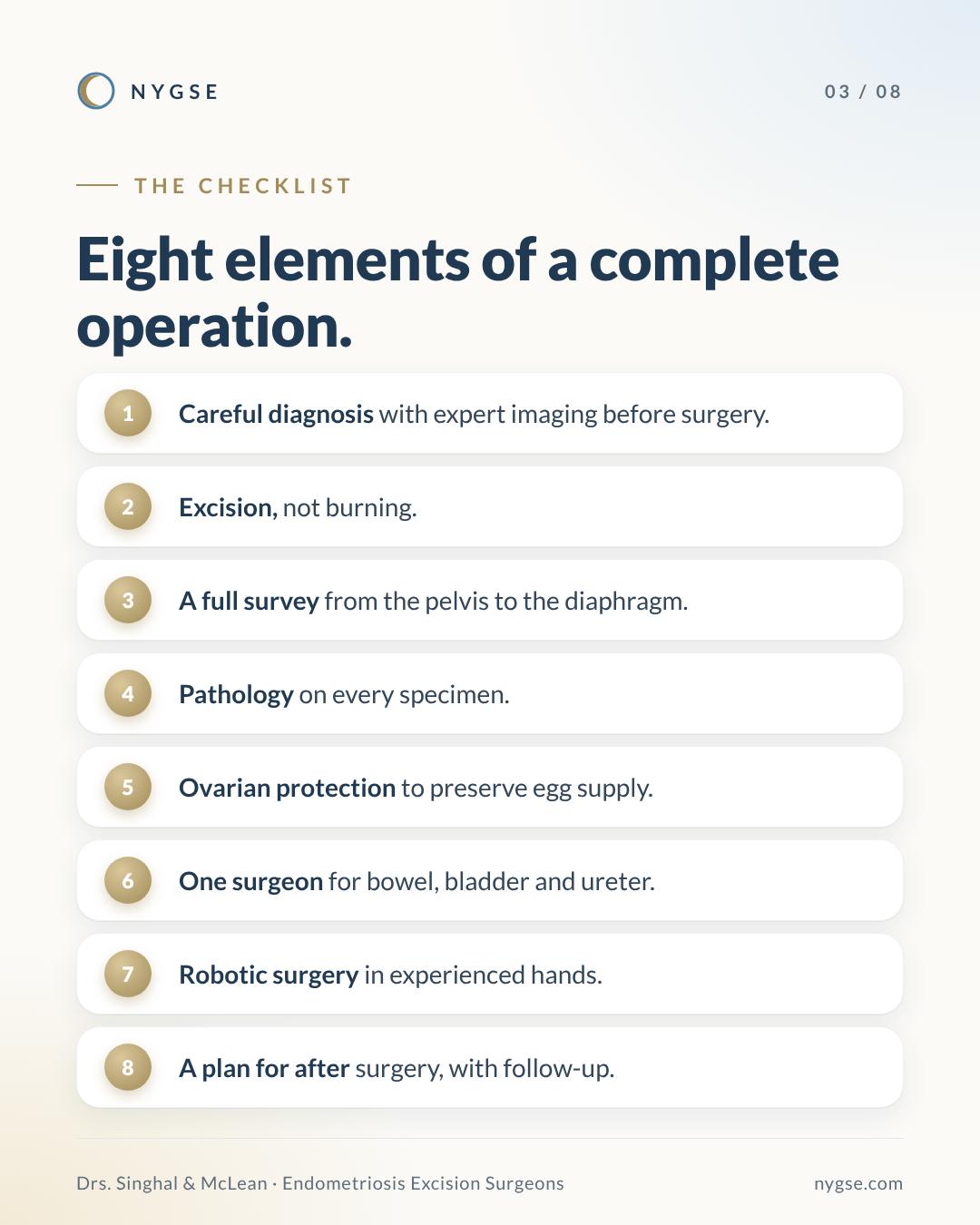
Figure 1. The eight elements of a complete endometriosis operation.
7. A minimally invasive approach in experienced hands
Nearly all of our operations are robotic, through small incisions. Experience matters with any technique: higher-volume surgeons have shorter operating times, less blood loss and fewer complications. [10][11]
8. A plan for after surgery
Endometriosis returns in about one in five women within two years of surgery and in 40% to 50% within five years across published studies. [12]
Hormonal suppression after surgery reduces that risk by more than half. [13]
We build each patient’s plan before she goes home and keep seeing her afterward. In an internal review of our own patients, which has not been published, our recurrence rate has been approximately 4%. [14]
Before you schedule surgery, ask
- Will you excise the disease or ablate it?
- Will every specimen go to pathology?
- Will you examine the diaphragm, appendix and bowel?
- Who will operate if the disease is on my bowel, bladder or ureter?
- What is the plan for after surgery, and who will follow me?
The takeaway
A complete operation is defined by what happens before, during and after it. If you are planning endometriosis surgery, you are entitled to ask your surgeon about each of these eight elements and to expect clear answers.
Key terms
| Term | Plain-language meaning |
|---|---|
| Excision | Cutting out a lesion completely, including tissue beneath the surface. |
| Ablation | Burning or vaporizing the surface of a lesion. |
| Endometrioma | An endometriosis cyst on the ovary. |
| AMH | Anti-Müllerian hormone, a blood test that reflects egg supply. |
About the authors. Pankaj Singhal, MD, MS, MHCM, FACOG, and Virginia McLean, MD, are endometriosis excision surgeons at New York Gynecology Surgery & Endometriosis in Babylon, NY. Dr. Singhal is double board certified in obstetrics and gynecology and in gynecologic oncology, has performed more than 12,000 surgeries, more than 6,000 of them robotic, and holds a national designation as a master robotic surgeon.
References
- Watrowski R, Kostov S, Tsoneva E, et al. Menstrual effluent in the pathogenesis and diagnosis of endometriosis: a systematic review. Diagnostics (Basel). 2026;16(5):677. doi:10.3390/diagnostics16050677
- Nisenblat V, Bossuyt PMM, Farquhar C, Johnson N, Hull ML. Imaging modalities for the non-invasive diagnosis of endometriosis. Cochrane Database Syst Rev. 2016;2:CD009591. doi:10.1002/14651858.CD009591.pub2
- Mondal R, Nandi M. Non-invasive diagnosis of endometriosis: from expert imaging to molecular and artificial intelligence-enabled pathways. Int J Gynaecol Obstet. 2026. doi:10.1002/ijgo.71401
- Healey M, Cheng C, Kaur H. To excise or ablate endometriosis? A prospective randomized double-blinded trial after 5-year follow-up. J Minim Invasive Gynecol. 2014;21(6):999-1004. doi:10.1016/j.jmig.2014.04.002
- Pundir J, Omanwa K, Kovoor E, et al. Laparoscopic excision versus ablation for endometriosis-associated pain: an updated systematic review and meta-analysis. J Minim Invasive Gynecol. 2017;24(5):747-756. doi:10.1016/j.jmig.2017.04.008
- Kalra R, McDonnell R, Stewart F, Hart RJ, Hickey M, Farquhar C. Excisional surgery versus ablative surgery for ovarian endometrioma. Cochrane Database Syst Rev. 2024;11:CD004992. doi:10.1002/14651858.CD004992.pub4
- Pagano F, Schwander A, Vaineau C, et al. True prevalence of diaphragmatic endometriosis and its association with severe endometriosis: a call for awareness and investigation. J Minim Invasive Gynecol. 2023;30(4):329-334. doi:10.1016/j.jmig.2023.01.006
- Raffi F, Metwally M, Amer S. The impact of excision of ovarian endometrioma on ovarian reserve: a systematic review and meta-analysis. J Clin Endocrinol Metab. 2012;97(9):3146-3154. doi:10.1210/jc.2012-1558
- Cheng H, Clymer JW, Po-Han Chen B, et al. Prolonged operative duration is associated with complications: a systematic review and meta-analysis. J Surg Res. 2018;229:134-144. doi:10.1016/j.jss.2018.03.022
- Vree FEM, Cohen SL, Chavan N, Einarsson JI. The impact of surgeon volume on perioperative outcomes in hysterectomy. JSLS. 2014;18(2):174-181. doi:10.4293/108680813X13753907291594
- Brunes M, Forsgren C, Warnqvist A, Ek M, Johannesson U. Assessment of surgeon and hospital volume for robot-assisted and laparoscopic benign hysterectomy in Sweden. Acta Obstet Gynecol Scand. 2021;100(9):1730-1739. doi:10.1111/aogs.14166
- Guo SW. Recurrence of endometriosis and its control. Hum Reprod Update. 2009;15(4):441-461. doi:10.1093/humupd/dmp007
- Zakhari A, Delpero E, McKeown S, Tomlinson G, Bougie O, Murji A. Endometriosis recurrence following post-operative hormonal suppression: a systematic review and meta-analysis. Hum Reprod Update. 2021;27(1):96-107. doi:10.1093/humupd/dmaa033
- New York Gynecology Surgery & Endometriosis. Internal practice analysis of endometriosis recurrence. Unpublished data.
Educational content only. It is not a substitute for individual medical advice. Please speak with your own physician about your symptoms and treatment.