Inner thigh pain during your period may feel like aching, burning, pulling, or pain extending toward the knee. There are many possible causes, and thigh pain during menstruation does not automatically mean you have endometriosis.
However, when inner thigh pain repeatedly appears or becomes worse around menstruation, particularly alongside pelvic pain or other endometriosis symptoms, the pattern may be worth discussing with a doctor.
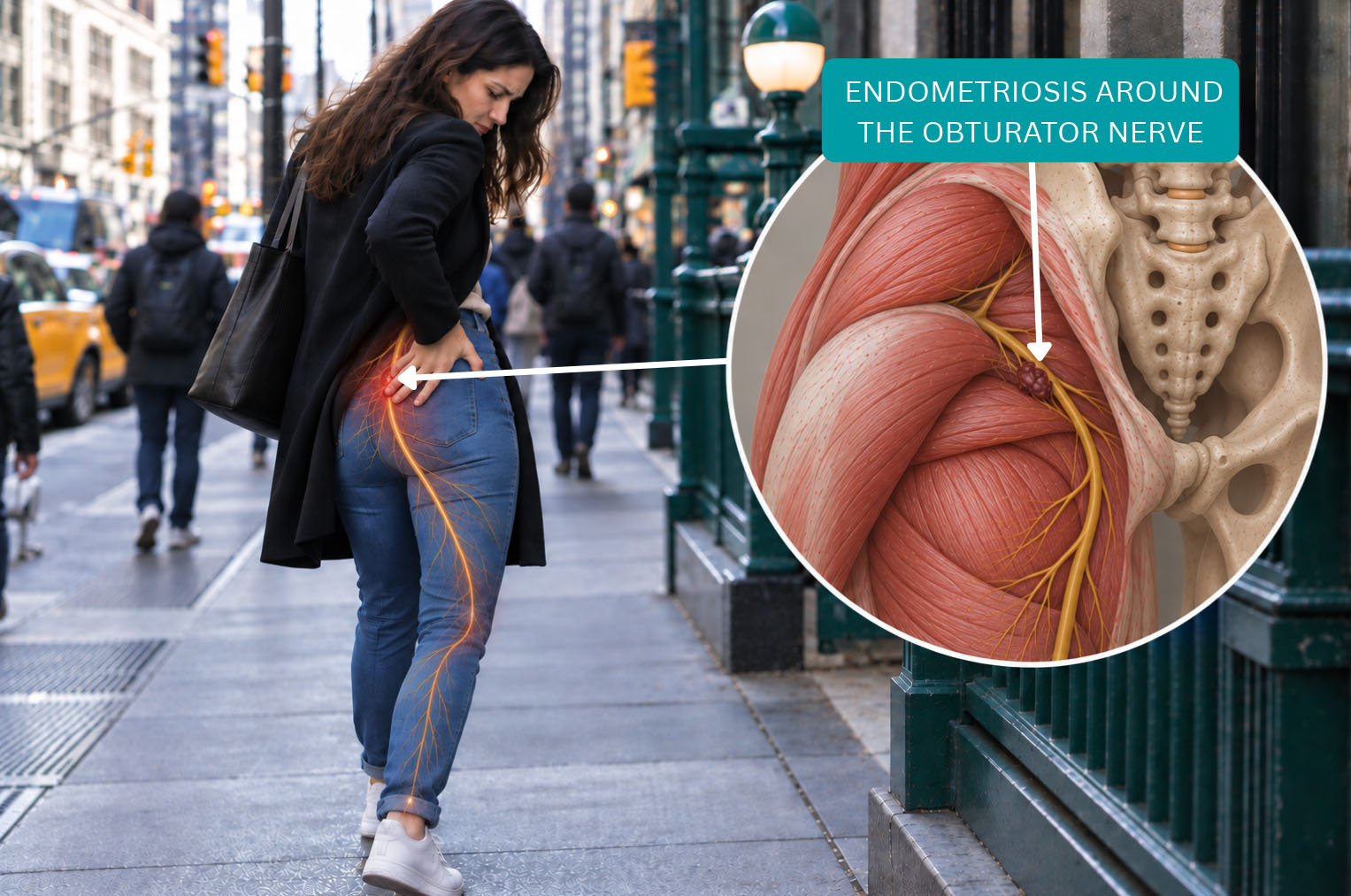
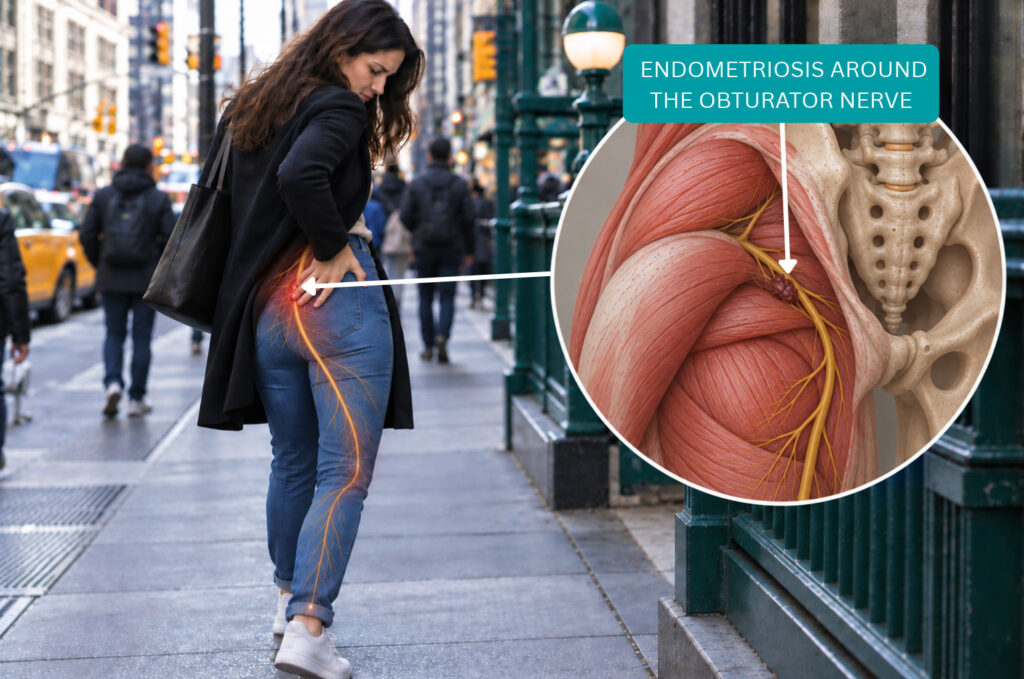
In rare cases, endometriosis can involve the obturator nerve, a pelvic nerve associated with sensation along the inner thigh and muscles that help bring the thigh inward. [1]
Endometriosis can rarely involve pelvic nerves and may cause cyclical pain that extends into the thigh.
Why Can Endometriosis Cause Inner Thigh Pain?
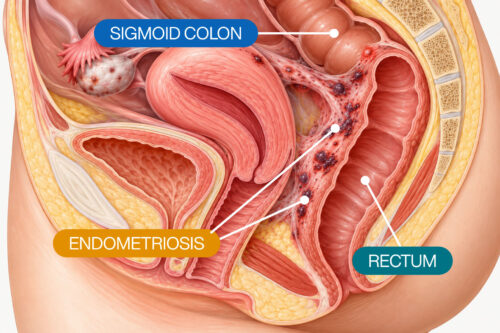
Endometriosis can cause pain beyond the pelvis through inflammation, fibrosis, adhesions, and irritation of nearby structures. Importantly, inner thigh pain does not necessarily mean endometriosis is growing on a nerve.
Rarely, however, deep endometriosis can involve or surround the obturator nerve. Because of where this nerve travels, symptoms may include: [2]
Pain along the inner thigh
Pain extending toward the knee
Tingling or altered sensation
Difficulty walking
Weakness when bringing the thighs together
A 2022 systematic review by Kale et al. (2022) identified only eight published cases of symptomatic obturator nerve endometriosis between 1990 and 2019. Inner thigh pain, difficulty walking, and weakness of thigh adduction were among the characteristic symptoms described. [2]
Inner Thigh Pain vs. Sciatic Pain
The location of pain can provide useful clues.
Obturator nerve symptoms tend to involve the groin and inner thigh, sometimes extending toward the knee. [1]
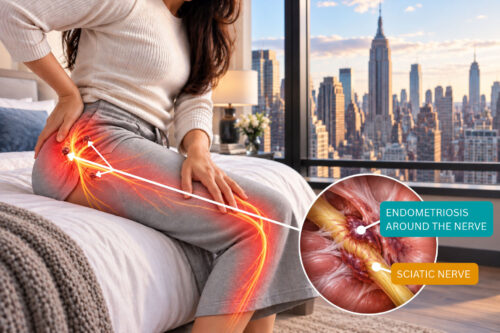
Sciatic-type pain more commonly begins around the buttock or lower back and travels down the back of the thigh and leg. [1]
Symptoms can overlap, however, and pain location alone cannot determine which nerve is involved.
The timing and distribution of symptoms are important. A doctor may ask whether the pain follows the menstrual cycle, where it travels, and whether you experience weakness, numbness, or difficulty walking.
When pelvic nerve involvement is suspected, MRI can help evaluate the obturator nerve and surrounding structures. Imaging may identify endometriotic or fibrotic tissue along the nerve and help determine whether nearby pelvic structures are involved. [1]
When Inner Thigh Pain May Point to Nerve Involvement
Consider discussing the symptom with a doctor when inner thigh pain repeatedly worsens during menstruation, extends toward the knee, occurs with significant pelvic pain, or is accompanied by tingling, numbness, difficulty walking, or muscle weakness.
New or worsening weakness should be medically evaluated because it can have many possible causes and should not automatically be attributed to endometriosis.
En New York Gynecology Surgery & Endometriosis (NYGSE), Dr. Pankaj Singhal and Dr. Elizabeth McLean evaluate cyclical symptoms in the context of each patient’s complete clinical picture. When inner thigh pain consistently follows the menstrual cycle, its timing and location may provide useful clues when determining whether endometriosis should be considered.
Bourg, J., Ruaux, E., Bolze, P. A., Gavrel, M., Charlot, M., Golfier, F., Thomassin-Naggara, I., & Rousset, P. (2025). Pelvic nerve endometriosis: MRI features and key findings for surgical decision. Insights into Imaging, 16, 131. https://doi.org/10.1186/s13244-025-02005-6
Kale, A., Aboalhasan, Y., Gündoğdu, E. C., Usta, T., & Oral, E. (2022). Obturator nerve endometriosis: A systematic review of the literature. Facts, Views & Vision in ObGyn, 14(3), 219–223. https://pubmed.ncbi.nlm.nih.gov/36206796/