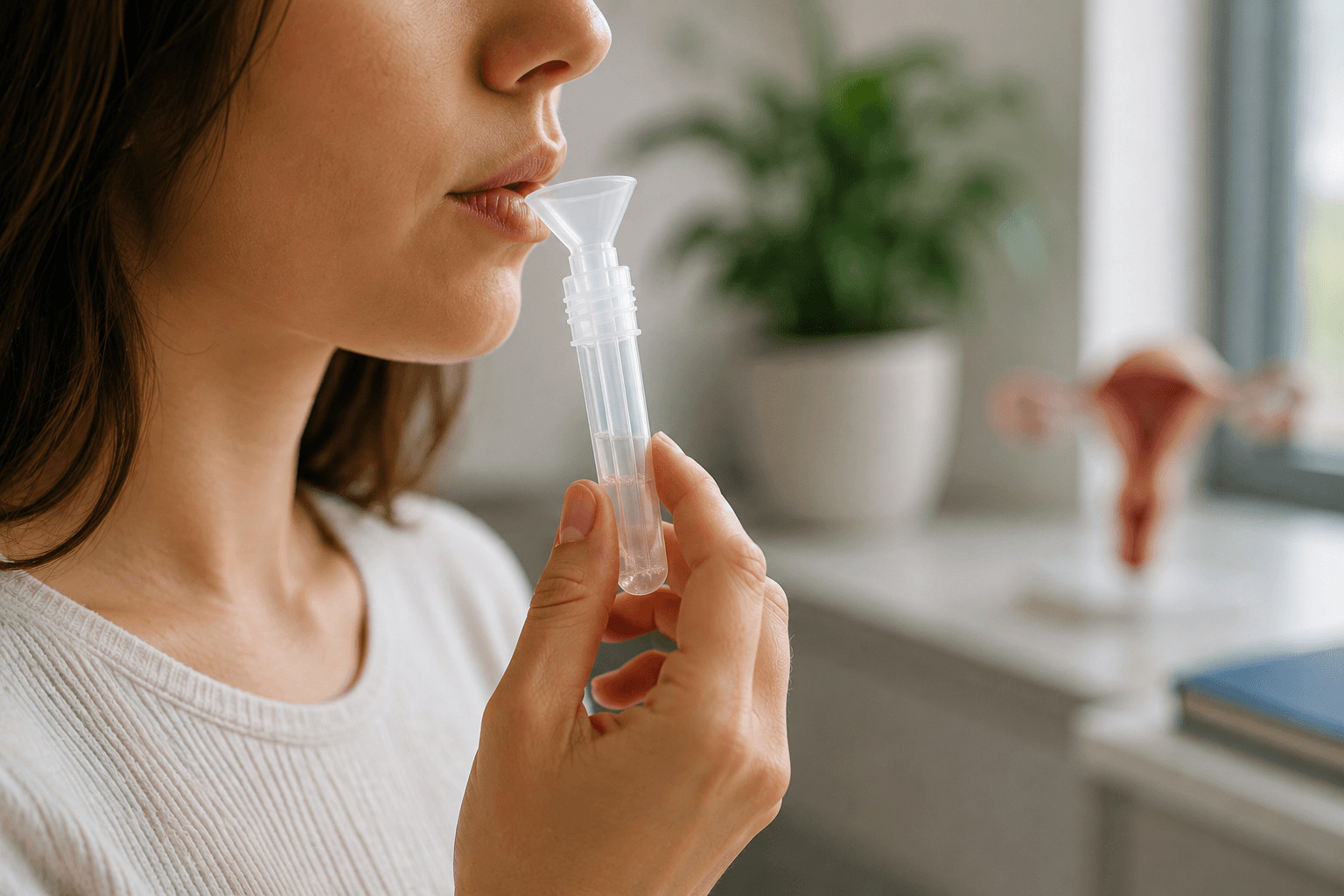
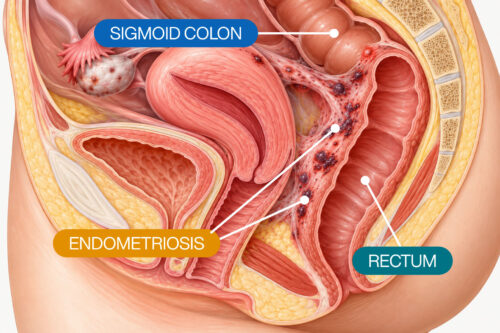
A saliva test for endometriosis has generated worldwide attention, offering hope for a faster and less invasive way to identify the disease. For millions of women living with pelvic pain, painful periods, or infertility, the possibility of diagnosing endometriosis with a simple saliva sample is understandably exciting.
But how accurate is this new test? Can it replace laparoscopic surgery as the gold standard for diagnosing endometriosis? And what does it mean for patients today?
Here is what the current evidence tells us.
Why Is a Saliva Test Needed?
One of the greatest challenges in endometriosis is not treatment. It is diagnosis.
Many women experience symptoms for years before receiving an accurate diagnosis. The average delay is estimated to be 7 to 10 years, during which patients may see multiple healthcare providers, undergo numerous tests, and continue living with chronic pain or infertility without clear answers. Researchers have spent years looking for a reliable, non-invasive way to shorten that journey.
The saliva test is one of the most promising developments to emerge from that effort.
What Is the Saliva Test for Endometriosis?
The test making headlines is Ziwig Endotest, a saliva-based test developed in France.
Unlike imaging studies or surgery, it does not detect endometriosis lesions directly. Instead, it analyzes tiny molecules called microRNAs found in saliva. Artificial intelligence then evaluates patterns within these molecular markers to estimate the likelihood that a person has endometriosis.
In other words, the test estimates probability. It does not provide a definitive diagnosis.
What Does the Research Show?
The early findings are encouraging, but they should be interpreted within the context of ongoing research. In the largest published validation study to date, involving 971 women with symptoms suggestive of endometriosis, researchers reported:
Sensitivity: 97.3%
Specificity: 94.1%
Overall accuracy: 96.6%
These findings suggest that the test may correctly identify many women with endometriosis while also correctly excluding many women who do not have the disease.
However, promising early data do not automatically change clinical practice.
Before any diagnostic test becomes part of routine medical care, its performance must be confirmed through independent studies conducted across different healthcare systems and diverse patient populations. Additional research is still needed before the saliva test can be considered a standard diagnostic tool.
Is the Test Available in the United States?
Not at this time.
The Ziwig Endotest is not FDA approved in the United States, which means it is not currently part of standard clinical care for diagnosing endometriosis in the U.S.
Patients may encounter articles or social media posts describing the test, but it is important to recognize that it remains investigational in the United States.
Can a Saliva Test Replace Laparoscopy for Diagnosing Endometriosis?
No.
This is the most important message patients should understand.
A saliva test may estimate the likelihood that endometriosis is present, but it cannot determine where the disease is located, how severe it is, or whether another condition is causing similar symptoms.
Currently, laparoscopic surgery remains the gold standard because it is the only procedure that can both confirm the diagnosis of endometriosis and treat visible disease during the same operation.
Where Could This Technology Make the Greatest Difference?
The greatest value of saliva testing may not be replacing surgery.
Instead, it could help identify patients who should be referred to an endometriosis specialist earlier in their diagnostic journey.
Earlier referral has the potential to reduce years of uncertainty, allowing patients to receive expert evaluation, counseling, and treatment planning sooner.
If future studies continue to validate the technology, saliva testing could become an important first step in identifying women who may benefit from specialized care.
The saliva test represents one of the most significant recent advances in endometriosis diagnostics. The early findings are encouraging, and we will continue to follow new research as it emerges. At the same time, it is important not to overstate what the technology can currently achieve.
Today, a comprehensive evaluation by an experienced endometriosis specialist remains the foundation of accurate diagnosis and individualized treatment planning.
Bendifallah, S., Dabi, Y., Suisse, S., et al. (2023). Validation of the salivary miRNA signature of endometriosis: Interim data.NEJM Evidence, 2(7).
Bendifallah, S., Roman, H., Suisse, S., et al. (2025). Validation of a saliva microRNA signature for endometriosis.NEJM Evidence, 4(11).
Chapron, C., Marcellin, L., Borghese, B., & Santulli, P. (2019). Rethinking mechanisms, diagnosis, and management of endometriosis. Nature Reviews Endocrinology, 15(11), 666-682.
Giudice, L. C. (2010). Clinical practice: Endometriosis. The New England Journal of Medicine, 362(25), 2389-2398.
Taylor, H. S., Kotlyar, A. M., & Flores, V. A. (2021). Endometriosis is a chronic systemic disease: Clinical challenges and novel innovations. The Lancet, 397(10276), 839-852.