

Endometriosis is often associated with painful periods, chronic pelvic pain, pain during sex, and difficulty becoming pregnant. But the condition does not always follow that familiar pattern.
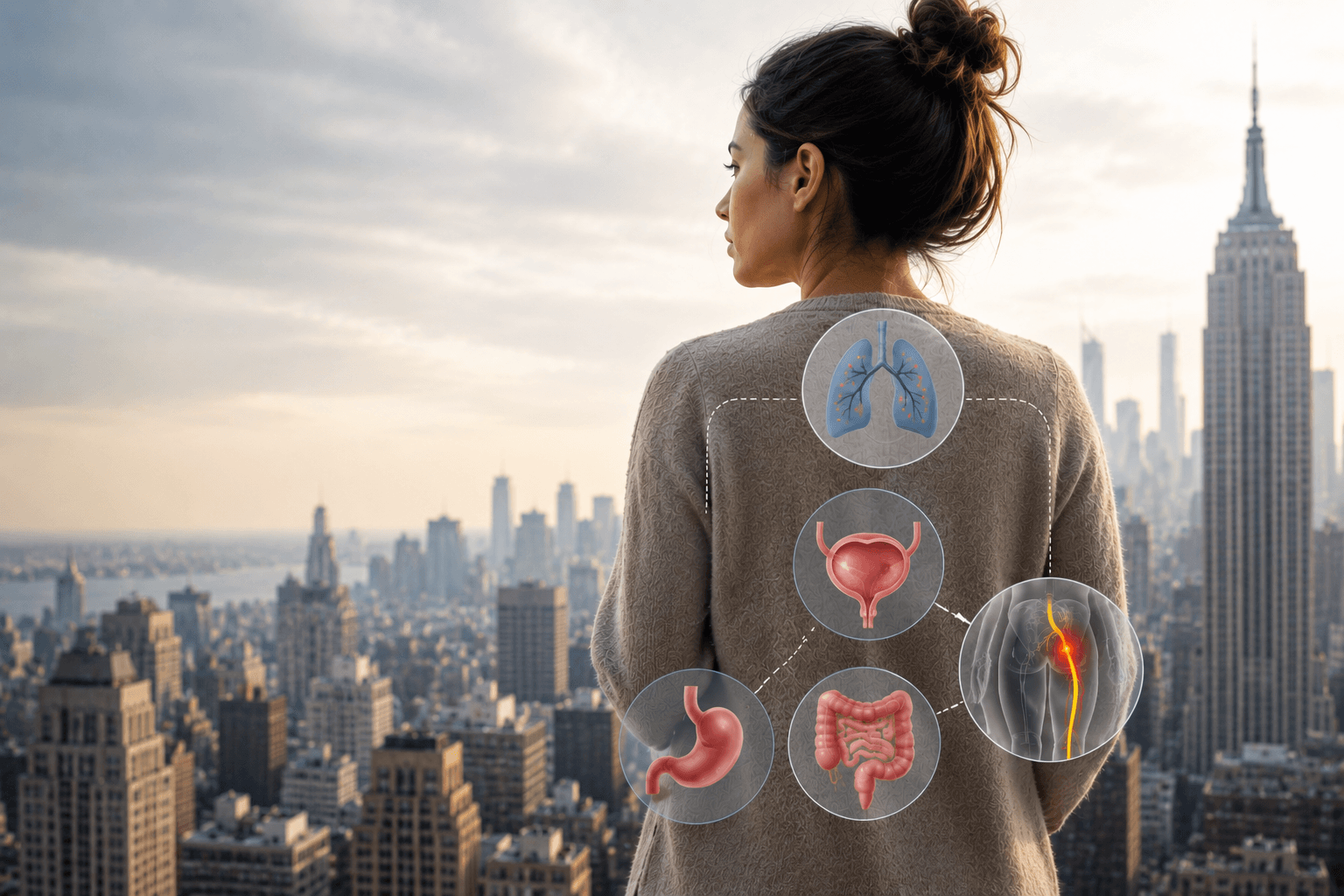
Some women experience symptoms involving the digestive tract, bladder, lower back, legs, or even the chest. Because these symptoms can resemble gastrointestinal, urinary, musculoskeletal, or respiratory problems, the connection to endometriosis may not be immediately obvious.
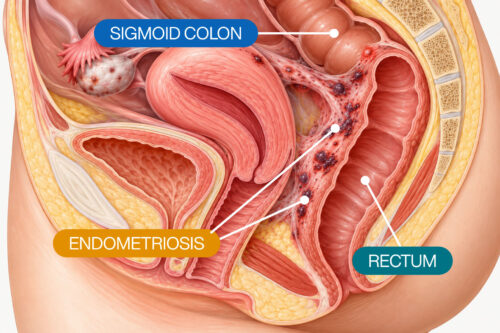
Endometriosis most commonly occurs in the pelvis, but it can occur elsewhere in the abdomen and, more rarely, the chest. Symptoms also vary considerably from one person to another.
Understanding these less familiar symptoms can help patients recognize when seemingly unrelated problems deserve a closer look.
Digestive Problems That Seem to Follow Your Cycle
Bloating, constipation, diarrhea, nausea, and painful bowel movements can occur with endometriosis.
The confusing part is that these symptoms can look very similar to common gastrointestinal conditions. Having bloating or constipation does not mean that you have endometriosis.
What may deserve additional attention is a pattern.
If digestive symptoms repeatedly become worse before or during your period, or occur alongside significant menstrual or pelvic pain, tell your gynecologist. The timing of symptoms can provide useful information during an endometriosis evaluation.
Painful Bowel Movements or Rectal Bleeding
Some patients experience significant pain with bowel movements, particularly around menstruation. Endometriosis can affect bowel function, and disease involving or near the bowel may produce gastrointestinal symptoms.
Rectal bleeding, however, should never simply be assumed to be endometriosis. Hemorrhoids, gastrointestinal disease, and other conditions can also cause bleeding and need to be considered.
If rectal bleeding occurs repeatedly around your menstrual cycle, make sure both the bleeding and its timing are discussed with your healthcare provider.
When Urinary Symptoms May Be More Than a UTI
Urinary urgency, frequent urination, or discomfort when urinating can easily be mistaken for a urinary tract infection or bladder condition.
Endometriosis can affect urination, particularly when disease involves structures around the bladder or urinary tract.
A useful clue, again, may be timing.
Urinary symptoms that consistently become worse around menstruation, especially when cultures repeatedly fail to identify an infection, may warrant a broader evaluation.
Blood in the urine should always be medically evaluated rather than attributed to endometriosis without investigation.
Lower Back Pain Is Not Always Just Back Pain
Lower back pain is extremely common and has many possible causes. For some women with endometriosis, however, pelvic pain can extend into the lower back.
This becomes more suggestive when the pain follows a recurring menstrual pattern or appears alongside other symptoms such as severe period pain, painful sex, bowel symptoms, or pelvic pain.
The menstrual pattern matters more than back pain by itself.
What About Pain That Travels Down the Leg?
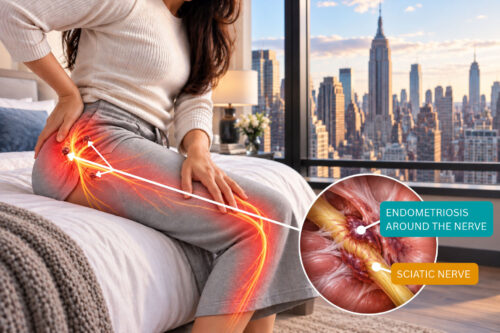
Leg pain, numbness, tingling, or pain resembling sciatica is much less commonly associated with endometriosis, but nerve involvement has been documented.
Rarely, endometriosis can involve the sciatic nerve or nerves of the pelvis. Historically, one of the characteristic clues described with sciatic endometriosis has been cyclical sciatica, with symptoms worsening in relation to menstruation. More recent evidence also documents sciatic nerve and sacral nerve root involvement in patients with endometriosis-related neuropathic pain.
That does not mean ordinary sciatica should be assumed to be endometriosis. Most back and leg pain has other causes.
But recurring leg or sciatic-type pain that predictably worsens around your period is worth mentioning during an endometriosis evaluation.
Chest Pain and Shortness of Breath Are Rare, but Important
Endometriosis involving the chest is uncommon, but it is a recognized form of the disease.
Thoracic endometriosis can cause chest pain, shortness of breath, cough, and, in some cases, pneumothorax (a collapsed lung). Symptoms frequently have a relationship to menstruation.
This is very different from ordinary pelvic endometriosis and requires specialist evaluation.
Chest pain or difficulty breathing should not be self-diagnosed as endometriosis. New, severe, or unexplained chest pain or shortness of breath can have serious causes and warrants prompt medical assessment.
The Menstrual Pattern Can Be an Important Clue
One of the most useful things you can do is pay attention to when symptoms occur.
Ask yourself:
- Does this happen every month?
- Does it become worse just before or during my period?
- Do several seemingly unrelated symptoms flare at approximately the same time?
- Has this pattern continued for several cycles?
A symptom diary can help. Record your menstrual cycle alongside bowel, bladder, pelvic, back, leg, and other symptoms.
This does not diagnose endometriosis, but it gives your physician a clearer picture than trying to remember several months of symptoms during an appointment. WHO notes that a careful menstrual history, including associated symptoms, can contribute to evaluating possible endometriosis.
Unusual Symptoms Do Not Automatically Mean Endometriosis
This distinction is important.
Digestive problems can come from gastrointestinal conditions. Urinary symptoms can result from infection or bladder disorders. Back and leg pain can have musculoskeletal or neurologic causes. Chest symptoms can have cardiac or pulmonary causes that require urgent attention.
Endometriosis should therefore be considered as one possible explanation, not assumed to be the explanation.
What raises suspicion is often the overall picture: symptoms that recur with the menstrual cycle, occur alongside more typical endometriosis symptoms, persist despite treatment for another suspected condition, or cannot otherwise be adequately explained.
When It May Be Time for an Endometriosis Evaluation
You do not need to have every classic symptom before discussing endometriosis with your physician.
Consider seeking an evaluation if persistent or recurring bowel, bladder, back, or other symptoms appear to follow your menstrual cycle, particularly if you also experience painful periods, chronic pelvic pain, painful intercourse, or fertility difficulties.
Endometriosis can present differently from one patient to another, which is one reason diagnosis can be delayed. WHO reports that diagnosis may take 7 to 10 years and notes that the broad variability of symptoms can make the disease difficult to recognize.
Sometimes the Pattern Tells Us More Than a Single Symptom
Endometriosis does not always announce itself with pelvic pain alone. For some patients, the first clues may come from the bowel, bladder, back, legs, or, rarely, the chest.
At New York Gynecology Surgery & Endometriosis (NYGSE), we look at symptoms in context rather than focusing on a single complaint. When symptoms repeatedly follow the menstrual cycle or occur alongside other signs of endometriosis, a comprehensive evaluation can help determine whether endometriosis may be contributing and what the appropriate next step should be.
References
World Health Organization. (2025, October 15). Endometriosis.
https://www.who.int/news-room/fact-sheets/detail/endometriosis
Torkelson, S. J., Lee, R. A., & Hildahl, D. B. (1988). Endometriosis of the sciatic nerve: A report of two cases and a review of the literature. Obstetrics & Gynecology, 71(3 Pt 2), 473-477.
https://pubmed.ncbi.nlm.nih.gov/3279360/
Racca, C., Franken, J., Cahen, M., Cicchelero, A., Mormont, M., & Cinotti, R. (2026). Efficacy and safety of laparoscopic nerve decompression for neuropathic sciatic pain due to endometriosis: A systematic review and meta-analysis. International Journal of Gynecology & Obstetrics. Advance online publication.
https://doi.org/10.1002/ijgo.71087
Nikolettos, K., Patsouras, A., Kotanidou, S., et al. (2024). Pulmonary endometriosis: A systematic review.
Journal of Personalized Medicine, 14(11), 1085. https://doi.org/10.3390/jpm14111085