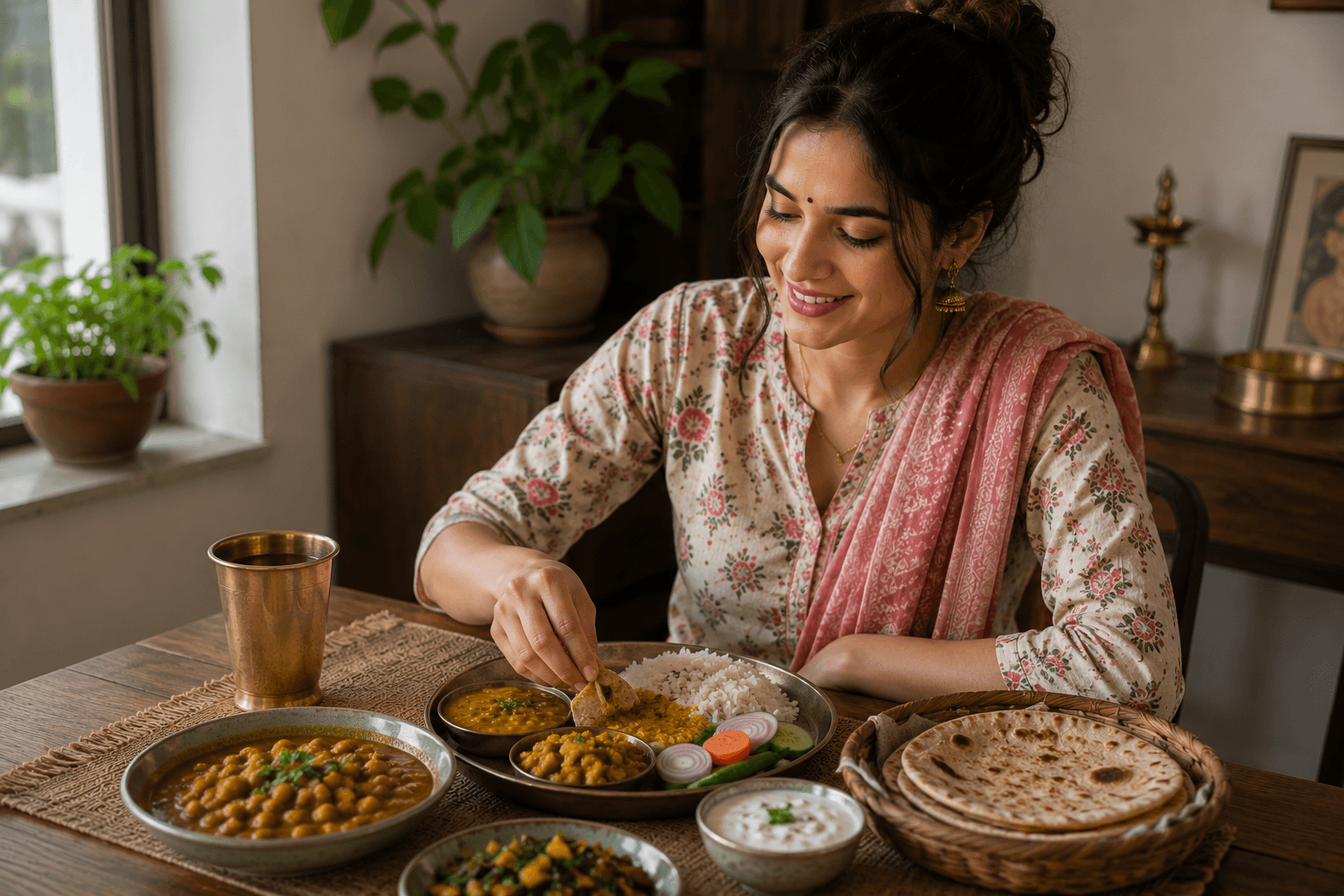
Indian cuisine is often misunderstood when it comes to healthy eating. Some people assume it’s too rich or too spicy to fit into an anti-inflammatory diet. In reality, traditional Indian home cooking already includes many of the foods recommended for people with endometriosis.
Lentils, beans, vegetables, yogurt, herbs, and spices have been part of Indian cooking for generations. In many cases, you don’t need to abandon the food you grew up with. A few thoughtful adjustments are often all that’s needed.
If you haven’t already, we recommend reading our guide, What to Eat with Endometriosis, which explains the overall nutrition principles behind these recommendations.
Why Indian Cuisine Is Already a Great Starting Point
Many traditional Indian meals naturally include foods that align with an anti-inflammatory eating pattern, including:
Lentils such as moong, masoor, toor, urad, and chana dal
Bean dishes like rajma, chole, and lobia
Vegetable-based sabzi and bhaji
Yogurt, dahi, and raita
Spices such as turmeric, ginger, garlic, cumin, coriander, fenugreek, and curry leaves
These foods provide fiber, plant-based protein, and a wide variety of nutrients that support overall health.
Small Changes Can Make a Big Difference
Rather than changing your cuisine, consider changing how some foods are prepared.
Choose Steamed or Grilled More Often
Deep-fried foods such as samosas, pakoras, vadas, puris, and bhaturas don’t need to disappear forever, but they are better reserved for celebrations or occasional meals.
For everyday cooking, try:
Idli
Dhokla
Steamed momos
Air-fried versions of favorite snacks
Build Your Plate Around Vegetables and Dal
One of the simplest changes is to rethink the proportions on your plate.
Instead of making white rice the main component, try:
Filling half your plate with vegetables
Including a generous serving of dal or beans
Enjoying a smaller portion of rice
If you enjoy rice every day, consider trying brown rice, hand-pounded rice, or traditional millets such as bajra, jowar, or ragi.
Choose Whole Grains More Often
Refined flour (maida) is commonly used in naan, kulcha, bakery biscuits, and rusks.
Whenever possible, choose:
Whole wheat phulka
Whole wheat roti
Millet rotis
Save naan for special occasions or restaurant meals rather than everyday eating.
Use Healthy Cooking Oils
One recommendation in our patient guide is particularly important: avoid hydrogenated fats such as vanaspati and dalda.
Instead, cook with oils such as:
Extra virgin olive oil
Mustard oil
Groundnut oil
Sesame oil
If you enjoy ghee, small amounts, such as one or two teaspoons, can still fit into an overall balanced eating pattern.
Rethink Rich Gravies and Red Meat
Creamy gravies don’t have to disappear, but they don’t have to be an everyday choice either.
Instead of relying on heavy cream or malai, try using:
Yogurt
Cashew paste
Tomato and onion-based gravies
If you eat mutton, lamb, or beef several times a week, consider reducing them to once or twice weekly and choosing fish, chicken, eggs, paneer, or legumes more often.
You Don't Have to Give Up Chai or Sweets
Healthy eating doesn’t mean giving up the foods you enjoy.
If you drink several cups of chai each day, try gradually reducing the amount of sugar over a few weeks. Most people find that their taste adjusts over time.
Similarly, traditional sweets such as gulab jamun, jalebi, barfi, and halwa can still have a place during festivals and family celebrations. For everyday desserts, consider fresh fruit, a few dates, or a small piece of dark chocolate.
A Sample Day
A balanced day of Indian meals might include:
Breakfast: Besan chilla with vegetables, or idli with sambar and coconut chutney.
Lunch: Moong dal, mixed vegetable sabzi, one or two whole wheat phulkas, curd, and a fresh salad.
Dinner: Fish curry with a small serving of brown rice and a vegetable side, or rajma with brown jeera rice.
Snacks: Roasted chana, makhana, almonds, walnuts, fresh fruit, or chaas.
If You Have Other Dietary Needs
Traditional Indian cuisine is highly adaptable.
If you’re vegetarian or vegan, it already provides many excellent plant-based protein sources. However, vitamin B12 deficiency is common, and iron and vitamin D may also need to be checked, especially if you experience heavy menstrual bleeding.
If you need to follow a gluten-free diet, traditional options such as jowar, bajra, ragi, rice flour, besan, idli, dosa, and besan chilla can all be good choices. Remember that some brands of hing (asafoetida) contain wheat flour, so look for certified gluten-free products.
If your healthcare team recommends a low FODMAP trial, small adjustments, such as using garlic-infused oil, the green parts of spring onions, and well-cooked moong dal, may help while allowing you to continue enjoying familiar flavors.
Looking Ahead
Healthy eating doesn’t require giving up your culture or your favorite family recipes.
Traditional Indian cooking already provides many of the building blocks of an anti-inflammatory eating pattern. By making a few practical changes, such as choosing whole grains more often, reducing deep-fried foods, cooking with healthier oils, and emphasizing vegetables and legumes, you can continue enjoying the flavors you love while supporting your overall health.
At NYGSE, we believe nutrition should fit into your everyday life. The best eating pattern is one that is balanced, enjoyable, and sustainable for years to come.
Chapron, C., Marcellin, L., Borghese, B., & Santulli, P. (2019). Rethinking mechanisms, diagnosis, and management of endometriosis. Nature Reviews Endocrinology, 15(11), 666–682. https://doi.org/10.1038/s41574-019-0245-z
Gonçalves, G. A., Barros, N. F., Bahamondes, L., & Brito, M. B. (2025). Diet and endometriosis: A systematic review. Nutrients, 17(3), 487. https://doi.org/10.3390/nu17030487
Horne, A. W., & Missmer, S. A. (2022). Pathophysiology, diagnosis, and management of endometriosis. BMJ, 379, e070750. https://doi.org/10.1136/bmj-2022-070750