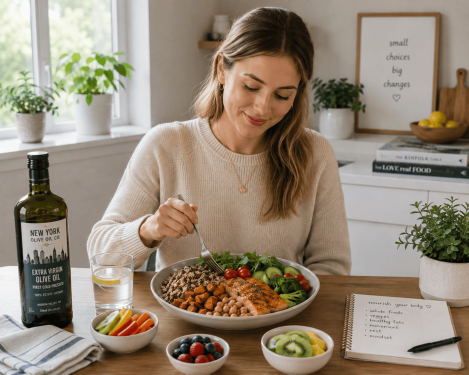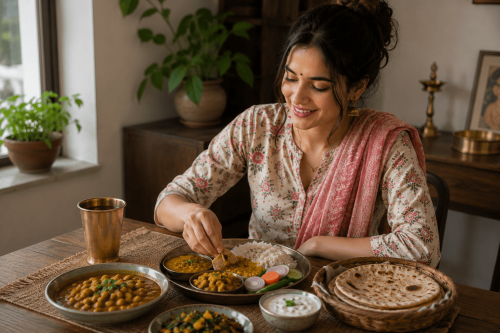


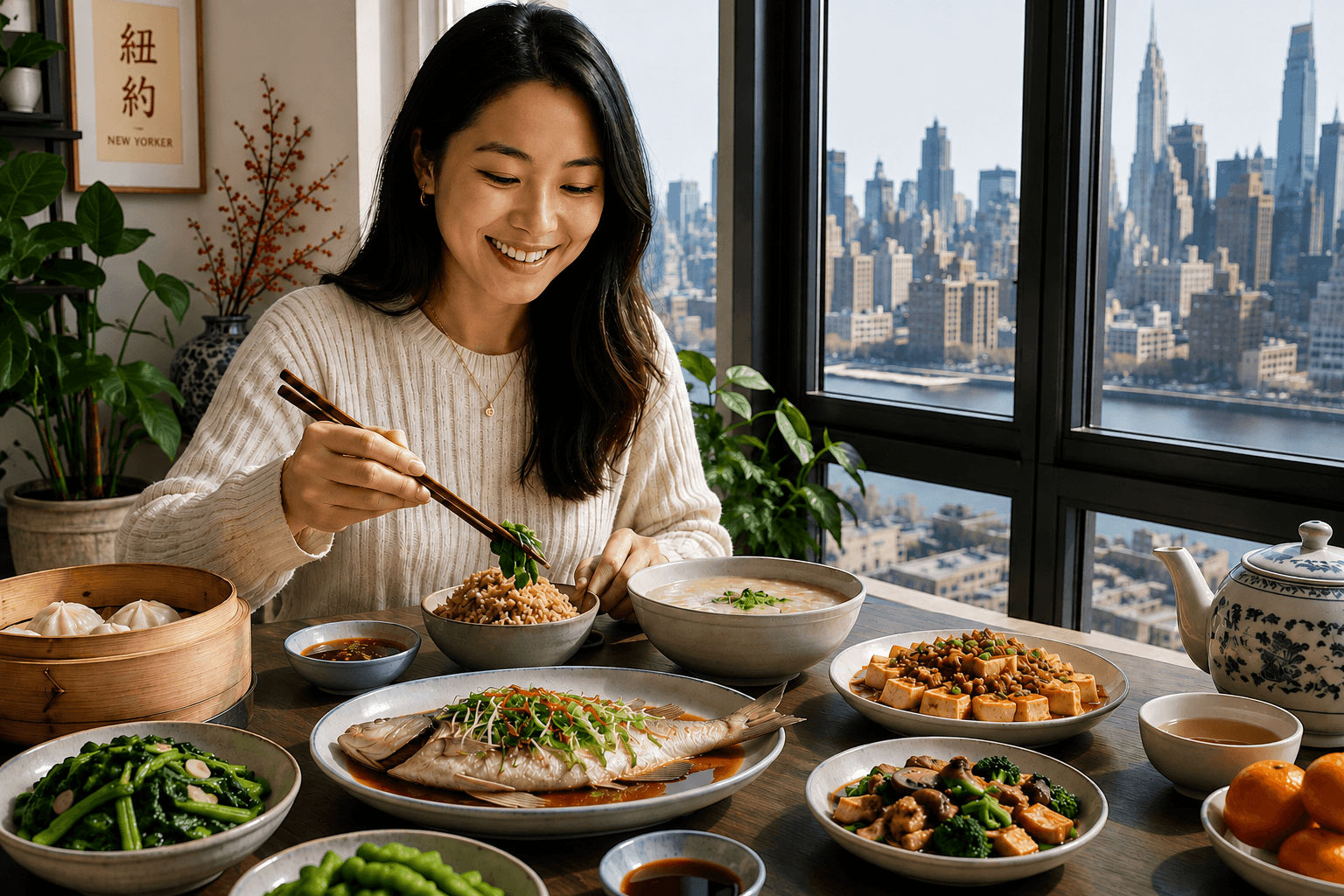
If Chinese or East Asian food is part of your everyday life, eating with endometriosis does not mean giving up the dishes you grew up with.
In fact, many traditional home-cooking techniques already fit well with the way we encourage patients to eat. Steaming, poaching, braising, and quick stir-frying require relatively little modification. A simple meal such as whole steamed fish with ginger and spring onion is already close to an ideal choice.
The bigger concerns tend to appear with certain restaurant-style foods: deep-fried dishes, sugar-heavy sauces, roasted and preserved meats, and very large portions of white rice.
If you are new to this topic, start with our broader guide, What to Eat with Endometriosis, which explains the nutrition principles behind these recommendations.
Chinese Home Cooking Already Gets a Lot Right
Look at a traditional home-cooked table and you may already see many of the foods we want patients to continue eating.
Steamed fish, bok choy, gai lan, choy sum, napa cabbage, water spinach, tofu, tempeh, edamame, mushrooms, soups, broths, and vegetable-based congee can all have a place. Ginger, garlic, spring onion, Sichuan pepper, star anise, and white pepper provide plenty of flavor without relying entirely on heavy sauces.
Seaweed and green tea can also remain part of your usual meals.
For many patients, then, the goal is not to replace Chinese or East Asian cooking. It is to be more thoughtful about how familiar foods are prepared and how often certain dishes appear on the table.
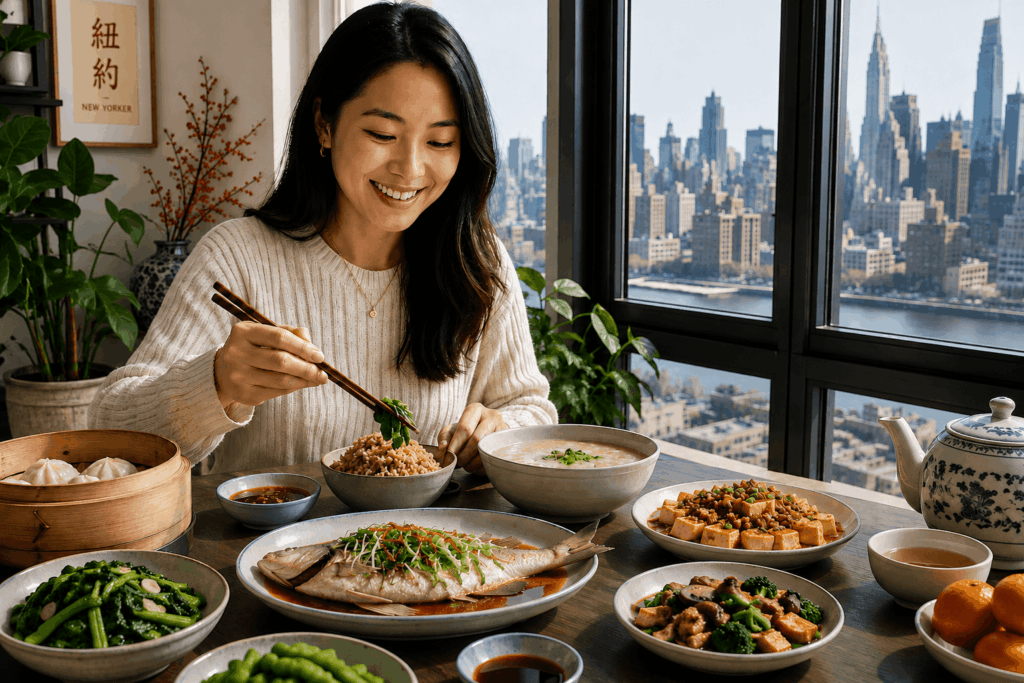
When Eating Out, Preparation Matters
Restaurant food can be quite different from everyday home cooking. The same ingredient can become a very different meal depending on whether it is steamed, braised, battered, fried, glazed, or heavily salted.
Choose Steamed and Braised Over Deep-Fried
Sweet and sour pork, spring rolls, fried wontons, and salt and pepper squid are better treated as occasional choices rather than everyday meals.
When ordering out, look for steamed, braised, poached, or clay-pot dishes instead. Often, these options are already available on the same menu.
You do not need to stop enjoying your favorite fried foods completely. The practical goal is simply to make them the exception rather than the default.
Keep Roast and Preserved Meats Occasional
Char siu, roast pork belly, lap cheong sausage, and other cured or preserved meats are another area where moderation matters.
Consider using these foods as an occasional dish or garnish rather than your main everyday protein. Poached or steamed chicken, steamed fish, braised tofu, tempeh, and other less processed choices can take their place more often. The NYGSE guide also recommends avoiding heavily blackened or charred edges on meats.
Tofu and Soy Do Not Need to Be Avoided
Soy can cause confusion for people with endometriosis, particularly because of information circulating online about soy and estrogen.
Our patient guidance does not recommend eliminating soy foods. Tofu, tempeh, edamame, and other soy foods can remain part of your diet.
They are also useful protein choices when you are trying to eat less processed or preserved meat, and they make Chinese and East Asian cooking particularly adaptable for vegetarian and vegan diets.
Build Flavor Without So Much Sugar or Salt
One of the pleasures of Chinese cooking is the ability to build layers of flavor from relatively simple ingredients. You do not need a large amount of sugar or salt to make food taste good.
Rethink Sweet Sauces
Sweet and sour, hoisin, char siu, and plum sauces can contribute considerable sweetness to a meal.
For everyday cooking, try building sauces around ginger, garlic, spring onion, Shaoxing wine, rice vinegar, and a small amount of tamari. If sweetness is needed, use it lightly.
This allows the aromatics and the ingredients themselves to become more prominent.
Use Soy Sauce and Stock Powders More Lightly
Soy sauce, oyster sauce, and stock powder can quickly increase the amount of sodium in a dish, particularly when several are used together.
Rather than eliminating them, use smaller quantities or dilute them with water. Ginger, garlic, spring onion, spices, and vinegar can provide additional flavor without relying on salt alone.
Rice Can Stay on the Table
White rice is a staple for many families, and there is no need to automatically remove it.
A more practical approach is to look at the proportion of rice to everything else on your plate.
Instead of a very large serving of white or fried rice, try a smaller bowl accompanied by more vegetables and protein. You can also rotate in brown rice, black rice, millet, or buckwheat noodles for variety.
The goal is balance, not making rice a forbidden food.
What About Noodles and Dumplings?
Noodles and dumplings are another example of foods that do not necessarily need to disappear.
If wheat noodles and dumpling wrappers are part of many of your meals, simply introduce more variety. Rice noodles, mung bean noodles, and buckwheat soba can provide alternatives.
For most people, there is little reason to turn this into a rigid rule. Think about rotating different foods rather than eliminating a familiar staple.
Choosing Cooking Oils for the Wok
High-heat wok cooking presents a slightly different challenge from making a salad or cooking over low heat.
For wok cooking, the NYGSE guide recommends a moderate amount of peanut or avocado oil. It also recommends using less oil overall rather than cooking with large quantities of refined soybean or corn oil.
Olive oil can be kept for cold dishes and lower-heat cooking.
Again, the emphasis is on moderation rather than finding one “perfect” cooking oil.
What Could a Day of Eating Look Like?
You do not need a complicated meal plan. Familiar foods can be combined into balanced meals throughout the day.
Breakfast – Try congee with egg, ginger, and greens. Another option is soy milk with a steamed bun and a side of vegetables.
Lunch – Steamed fish with bok choy and a small bowl of brown rice makes a simple meal. You could also have a clear noodle soup made with rice noodles, tofu, and plenty of vegetables.
Dinner – Try braised tofu with shiitake mushrooms, stir-fried gai lan with garlic, and a small portion of brown or black rice.
Snacks – Edamame, mandarin, Asian pear, walnuts, roasted chestnuts, or green tea are all simple options.
Adapting East Asian Foods to Other Dietary Needs
Some people with endometriosis are also managing other dietary needs. Chinese and East Asian cooking is flexible, but certain ingredients deserve particular attention.
Vegetarian or Vegan
This cuisine can be relatively easy to adapt because tofu, tempeh, mushrooms, seaweed, and greens already feature prominently in many dishes.
If you follow a vegan diet, vitamin B12 supplementation still needs attention. If you have heavy periods, talk with your healthcare team about checking your iron levels as well.
Gluten-Free or Celiac Disease
This requires more caution than simply avoiding noodles.
Ordinary soy sauce contains wheat, and wheat may also be present in hoisin sauce, oyster sauce, stock powders, dumpling wrappers, wonton skins, and many noodles.
Certified gluten-free tamari can replace regular soy sauce, while rice noodles and mung bean noodles are useful alternatives to wheat-based noodles.
When eating at a restaurant, always ask about preparation because cross-contamination from a shared wok can occur.
During a Low FODMAP Trial
Garlic and onion are foundational to many Chinese dishes, so a low FODMAP trial can initially feel restrictive.
Garlic-infused oil and the green tops of spring onions can provide much of the familiar flavor. Wheat noodles can be replaced with rice noodles, and portions of legumes can be kept modest.
A low FODMAP diet is not intended to be unnecessarily restrictive, so individual guidance can be helpful when making these adjustments.
Keep the Cooking Traditions, Adjust the Details
Chinese and East Asian cooking does not need to be reinvented to fit an anti-inflammatory eating pattern. In many cases, traditional home-cooking techniques are already working in your favor.
The biggest opportunities are often in the details: choose steamed or braised dishes more often than deep-fried ones, keep preserved meats occasional, use less sugar and sodium in sauces, and balance rice or noodles with plenty of vegetables and protein.
At NYGSE, we believe healthy eating should work with your culture, not against it. Familiar foods can remain part of the table, with practical adjustments that support your overall health without turning eating into a complicated set of rules.