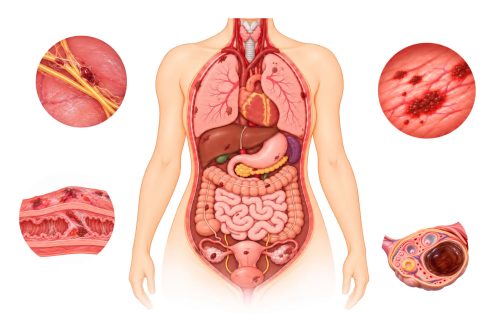


Endometriosis does not always produce one distinctive set of symptoms. Two people with the disease may have very different experiences, and many of the symptoms associated with endometriosis can also occur with other gynecologic, gastrointestinal, urinary, or musculoskeletal conditions.
For example, painful periods may also occur with adenomyosis or uterine fibroids. Bloating and changes in bowel habits may resemble irritable bowel syndrome (IBS). Bladder pain and urinary urgency may overlap with bladder pain syndrome, while pelvic floor disorders can contribute to pelvic pain and pain during sex.
This does not necessarily mean that one diagnosis excludes another. Endometriosis can occur alongside other conditions, which is why identifying the pattern, timing, severity, and progression of symptoms can be important during an evaluation.
| Endometriosis Symptom | How It May Present | Possible Overlapping Conditions |
|---|---|---|
| Painful periods (dysmenorrhea) | Severe cramping before or during menstruation; may interfere with normal activities | Adenomyosis, uterine fibroids, primary dysmenorrhea, pelvic inflammatory disease |
| Chronic pelvic pain | Pelvic or lower abdominal pain that may occur throughout the month | Adenomyosis, pelvic floor dysfunction, interstitial cystitis/bladder pain syndrome, IBS, pelvic inflammatory disease, ovarian cysts |
| Deep pain during or after sex | Pain felt deep in the pelvis rather than at the vaginal opening | Pelvic floor dysfunction, adenomyosis, pelvic inflammatory disease, ovarian cysts, vulvovaginal conditions |
| Painful bowel movements | Pain with defecation, often worse around menstruation | Irritable bowel syndrome, inflammatory bowel disease, constipation, hemorrhoids, anal fissures |
| Rectal bleeding around menstruation | Blood from the rectum occurring in a cyclical pattern | Hemorrhoids, anal fissures, inflammatory bowel disease, colorectal polyps, other gastrointestinal disorders |
| Bloating / “endo belly” | Abdominal swelling, pressure, or bloating that may worsen cyclically | IBS, constipation, food intolerance, SIBO, ovarian cysts |
| Nausea | Nausea associated with menstrual pain or pelvic symptoms | Gastrointestinal disorders, migraine, medication effects, pregnancy |
| Painful urination or urinary urgency | Burning, discomfort, urgency, or bladder pain, sometimes worse during menstruation | Urinary tract infection, interstitial cystitis/bladder pain syndrome, overactive bladder, kidney stones |
| Blood in urine around menstruation | Cyclical hematuria | Urinary tract infection, kidney stones, bladder disorders, kidney disorders |
| Low back, hip, or leg pain | Aching or radiating pain; occasionally follows the sciatic distribution | Sciatica, herniated disc, musculoskeletal disorders, pelvic floor dysfunction, hip disorders |
| Fatigue | Persistent or cyclical exhaustion beyond ordinary tiredness | Anemia, thyroid disorders, sleep disorders, chronic pain conditions, fibromyalgia |
| Heavy or prolonged periods | Heavy menstrual bleeding or periods lasting more than 7 days | Adenomyosis, uterine fibroids, bleeding disorders, hormonal abnormalities |
| Infertility | Difficulty conceiving despite regular unprotected intercourse | Ovulatory disorders, polycystic ovary syndrome, tubal disease, diminished ovarian reserve, male-factor infertility |
| Ovarian endometrioma | Ovarian cyst suggestive of endometriosis on ultrasound or MRI | Hemorrhagic cyst, dermoid cyst, other benign ovarian cysts, ovarian tumors |
| Shoulder or chest pain around menstruation | Cyclical chest, shoulder-tip, or upper abdominal pain | Musculoskeletal pain, gallbladder disease, pulmonary conditions, diaphragmatic disorders |
| Painful surgical scar or lump | Swelling, tenderness, or a mass in a C-section or other abdominal scar that worsens with periods | Incisional hernia, suture granuloma, neuroma, abscess, other scar-related conditions |
Look for Patterns Among Your Symptoms
The table above shows why a single symptom is rarely enough to distinguish endometriosis from another condition. What can be more informative is the pattern among several symptoms.
Consider whether your symptoms become worse before or during your period. Do painful periods occur together with pelvic pain, bowel or bladder symptoms, pain during sex, or significant bloating? Does the pain interfere with work, school, exercise, sleep, or other everyday activities?
Symptoms that repeatedly follow the menstrual cycle can provide particularly useful information. Cyclical gastrointestinal symptoms, such as painful bowel movements, and cyclical urinary symptoms are among the symptoms that may raise suspicion for endometriosis.
However, a cyclical pattern does not confirm the disease. It is one part of the overall clinical picture.
Can Endometriosis and Other Conditions Occur Together?
Yes. The conditions listed in the table should not always be viewed as alternatives to endometriosis.
A person with endometriosis may also have adenomyosis, uterine fibroids, irritable bowel syndrome (IBS), pelvic floor dysfunction, or another condition contributing to their symptoms. In these cases, identifying one condition may not fully explain the pain or other symptoms a patient continues to experience.
This is why an evaluation may consider the complete history rather than focusing on one symptom or one previous diagnosis.
Can You Have Endometriosis With a Normal Ultrasound or MRI?
Yes. Normal imaging does not necessarily rule out endometriosis.
Ultrasound and MRI can identify certain manifestations of the disease, including ovarian endometriomas and some forms of deep endometriosis. Other forms of endometriosis, particularly superficial disease, may be more difficult to identify with imaging.
Imaging findings are therefore considered alongside symptoms, medical history, physical examination, previous treatments, and other clinical information.
When Should You Consider an Endometriosis Evaluation?
Consider discussing your symptoms with a healthcare professional if they are persistent, worsening, interfering with everyday life, or have not improved despite treatment.
It may be particularly useful to seek an evaluation when several symptoms occur together or consistently become worse around your period.
Keeping a record of when symptoms occur, how severe they become, and how they relate to your menstrual cycle can also help you communicate the pattern during an appointment.
If you are unsure whether your symptoms could be associated with endometriosis, you can also use our Endometriosis Symptom Checker to organize your symptoms and identify patterns that may be worth discussing with a healthcare professional.
The Importance of a Complete Evaluation
Determining the cause of pelvic pain or other symptoms is not always a matter of choosing between endometriosis and one other condition. Several conditions can produce similar symptoms, and more than one condition may be present at the same time.
A comprehensive evaluation can help determine whether endometriosis, another condition, or a combination of conditions may be contributing to your symptoms and help guide the next steps in care.
At New York Gynecology Surgery & Endometriosis (NYGSE), patients with suspected endometriosis can be evaluated based on their symptoms, medical history, previous imaging and treatments, and other relevant clinical findings.
References
American College of Obstetricians and Gynecologists. (2026). Diagnosis of endometriosis: ACOG Clinical Practice Guideline No. 11. https://www.acog.org/clinical/clinical-guidance/clinical-practice-guideline/articles/2026/03/diagnosis-of-endometriosis
Becker, C. M., Bokor, A., Heikinheimo, O., Horne, A., Jansen, F., Kiesel, L., King, K., Kvaskoff, M., Nap, A., Petersen, K., Saridogan, E., Tomassetti, C., van Hanegem, N., Vulliemoz, N., Vermeulen, N., & ESHRE Endometriosis Guideline Group. (2022). ESHRE guideline: Endometriosis. Human Reproduction Open, 2022(2), hoac009.
https://doi.org/10.1093/hropen/hoac009
National Institute for Health and Care Excellence. (2024). Endometriosis: Diagnosis and management (NICE Guideline NG73). https://www.nice.org.uk/guidance/ng73
World Health Organization. (2025, October 15). Endometriosis. https://www.who.int/news-room/fact-sheets/detail/endometriosis