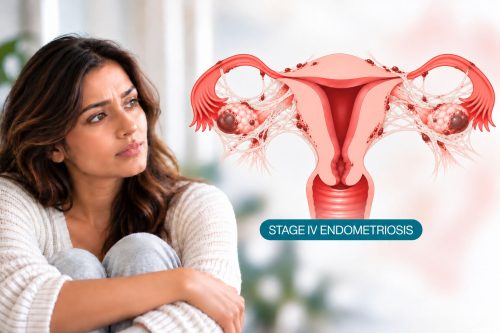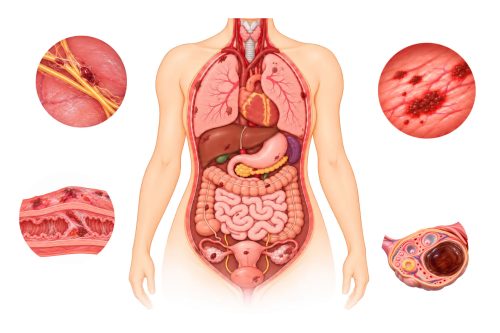



Endometriosis can affect fertility in several ways, including inflammation, scar tissue, and changes in the normal relationship between reproductive organs.
According to a review by Bulletti et al. (2010), approximately 30–50% of women with endometriosis experience infertility. However, many patients with the condition can conceive naturally. [2]
For patients experiencing fertility difficulties, surgery may help address certain problems associated with the disease.
By removing endometriosis lesions and releasing adhesions, surgery may improve pelvic anatomy and create more favorable conditions for conception. The potential benefits vary from patient to patient.
Pregnancy outcomes depend on several factors, including age, ovarian reserve, fallopian tube function, and other reproductive conditions.

Can Endometriosis Surgery Improve Your Chances of Pregnancy?
Yes. Surgery may improve the chances of natural pregnancy for some patients, particularly when endometriosis interferes with reproductive function.
During natural conception, an ovary releases an egg that must be captured by a fallopian tube. Fertilization usually occurs within the tube before the developing embryo travels toward the uterus.
Endometriosis may interfere with these processes through inflammation or adhesions affecting reproductive organs.
Surgery may address some of these problems, but improved pelvic anatomy does not always translate into pregnancy. [1][3]
How Endometriosis Surgery May Improve Fertility
Surgery aims to remove identified endometriosis while preserving healthy reproductive structures. Its fertility benefits depend partly on the location and extent of disease.
Removing Endometriosis Lesions
Endometriosis involves tissue resembling the uterine lining growing outside the uterus.
These lesions can contribute to chronic inflammation and changes in the pelvic environment. Inflammatory substances may interfere with reproductive processes, including ovarian function and fertilization.
Surgical excision removes identified lesions and may reduce sources of disease-related inflammation. However, removing visible endometriosis does not necessarily reverse every factor contributing to infertility. [1][4]
Restoring Pelvic Anatomy
Endometriosis can cause pelvic adhesions, which are bands of scar tissue that may attach the ovaries or fallopian tubes to surrounding structures.
These adhesions can restrict normal organ movement. For example, an ovary may become attached to the pelvic wall, or adhesions may interfere with fallopian tube mobility.
During surgery, adhesions may be carefully released to improve organ mobility and restore anatomical relationships.
This is important because a fallopian tube may remain open but still have difficulty capturing an egg if surrounding adhesions interfere with its normal movement. [3][4]
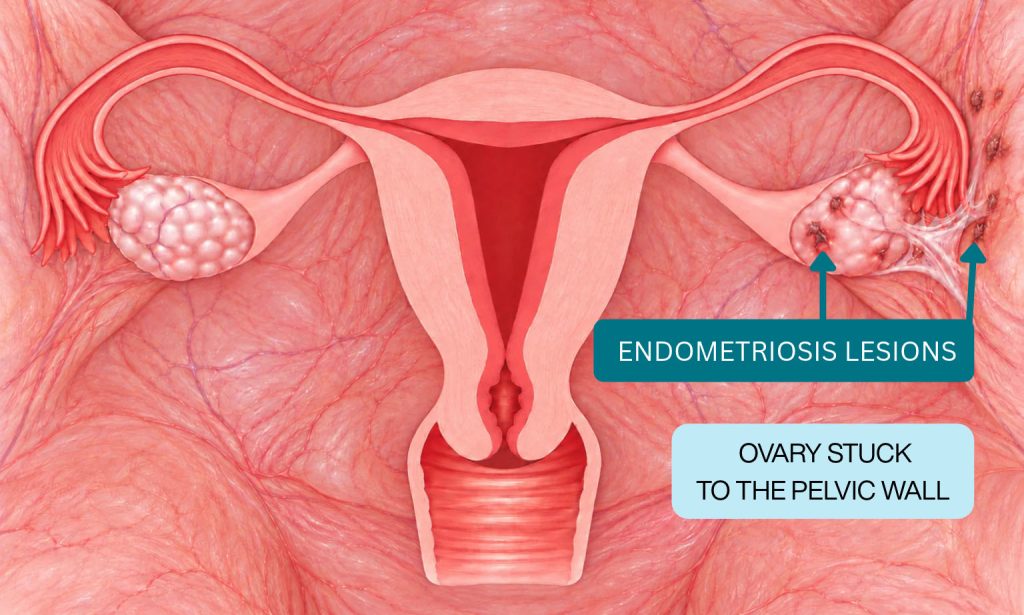
Medical illustration showing an ovary stuck to the pelvic wall by adhesions.
Fertility After Surgery Depends on More Than Removing Endometriosis
Pregnancy outcomes depend on several factors, including age, ovarian reserve, fallopian tube function, sperm quality, and previous reproductive conditions.
The extent of endometriosis does not always predict fertility. Some patients with limited disease experience infertility, while others with extensive disease conceive naturally. [1][4]
Clinicians may use the Endometriosis Fertility Index (EFI) to estimate the likelihood of pregnancy without assisted reproductive technology after surgery. It considers age, infertility history, and surgical findings. [1]
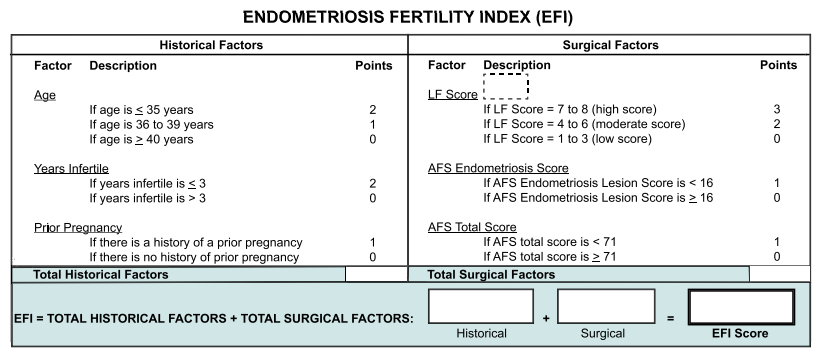
Endometriosis Fertility Index (EFI). The EFI combines historical factors and surgical findings to calculate a score from 0 to 10. Source: Adamson and Pasta (2010).
How Soon Can You Try to Get Pregnant After Endometriosis Surgery?
The appropriate timing depends on surgical recovery and individual fertility circumstances.
Some patients may begin trying once their surgeon confirms adequate healing, while others may need additional recovery following extensive procedures.
There is no universal waiting period. Patients should discuss their reproductive timeline with their surgeon, particularly when age or diminished ovarian reserve is a concern.
Endometriosis Surgery Can Also Affect Ovarian Reserve
Although surgery may improve fertility in selected patients, certain procedures can also affect ovarian function.
This is particularly important when treating ovarian endometriomas, which are endometriosis-associated cysts that develop within the ovaries.
Removing an endometrioma may unintentionally remove or damage healthy ovarian tissue. Surgical techniques used to control bleeding may also affect the remaining ovarian tissue, potentially reducing ovarian reserve. [1][3]
The risk is particularly relevant for patients with bilateral endometriomas, previous ovarian surgery, or already diminished ovarian reserve.
Surgical planning should balance the benefits of removing disease with the preservation of healthy ovarian tissue.
Natural Pregnancy or IVF After Endometriosis Surgery?
Not every patient requires in vitro fertilization (IVF) after endometriosis surgery.
Natural conception may be reasonable when ovarian function is adequate, the fallopian tubes are functional, and no other significant fertility factors are identified.
However, IVF may be considered when the fallopian tubes are significantly damaged, ovarian reserve is reduced, sperm-related infertility is present, or pregnancy has not occurred despite appropriate attempts. [1][4]
IVF can bypass certain problems involving the fallopian tubes, but pregnancy outcomes remain influenced by age, egg quality, and other reproductive factors.
Importantly, removing ovarian endometriomas before IVF does not routinely improve live birth rates and may reduce ovarian reserve.
Surgery before IVF should therefore be individualized rather than performed automatically to improve fertility outcomes. [1]
Can Endometriosis Return After Surgery and Affect Fertility?
Endometriosis can recur after surgery, but persistent infertility does not necessarily indicate recurrent disease. Other reproductive factors may also contribute.
Postoperative hormonal treatment may help reduce symptom recurrence in patients not immediately planning pregnancy. [1][3]
However, hormonal suppression does not improve spontaneous pregnancy rates and should not be prescribed solely to enhance fertility. [1][3]
When Should You See a Fertility Specialist After Surgery?
Fertility evaluation may be appropriate before or soon after surgery, particularly for patients with diminished ovarian reserve, fallopian tube damage, or age-related fertility concerns.
Patients do not necessarily need to wait a full year before seeking advice. A specialist may recommend ovarian reserve testing, fallopian tube evaluation, semen analysis, or assisted reproductive treatment.
Understanding Your Fertility Options After Endometriosis Surgery
Endometriosis surgery may improve fertility for some patients, but treatment decisions should consider the disease, reproductive anatomy, and individual fertility goals.
At New York Gynecology Surgery & Endometriosis, our specialists provide individualized evaluation and surgical treatment for patients with suspected or confirmed endometriosis.
Consider scheduling a consultation to discuss how endometriosis may affect your reproductive health and whether surgical treatment or coordination with a fertility specialist may be appropriate.
References
- Becker, C. M., Bokor, A., Heikinheimo, O., Horne, A., Jansen, F., Kiesel, L., King, K., Kvaskoff, M., Nap, A., Petersen, K., Saridogan, E., Tomassetti, C., van Hanegem, N., Vulliemoz, N., & Vermeulen, N. (2022). ESHRE guideline: Endometriosis. Human Reproduction Open, 2022(2), hoac009. https://doi.org/10.1093/hropen/hoac009
- Bulletti, C., Coccia, M. E., Battistoni, S., & Borini, A. (2010). Endometriosis and infertility. Journal of Assisted Reproduction and Genetics, 27(8), 441–447. https://doi.org/10.1007/s10815-010-9436-1
- National Institute for Health and Care Excellence. (2024). Endometriosis: Diagnosis and management (NICE Guideline NG73). https://www.nice.org.uk/guidance/ng73
- Practice Committee of the American Society for Reproductive Medicine. (2012). Endometriosis and infertility: A committee opinion. Fertility and Sterility, 98(3), 591–598. https://doi.org/10.1016/j.fertnstert.2012.05.031