

¿Qué es una pelvis congelada en la endometriosis?
A frozen pelvis describes an advanced, severe form of endometriosis in which pelvic organs become so densely bound together by adhesions that their normal movement is almost completely lost. Although not an official medical diagnosis, the term is widely used to describe the extreme immobility, distortion, and anatomical fixation caused by deeply infiltrating endometriosis. In this state, organs such as the uterus, ovaries, bowel, bladder, ureters, and pelvic ligaments become fused together by thick fibrotic tissue, often resulting in severe pain, impaired function, and complex surgical challenges.
of normal pelvic separation. Esta imagen laparoscópica muestra una pelvis congelada causada por una endometriosis infiltrante profunda extensa. Varios órganos pélvicos, incluidos los ovarios y el recto, así como el tejido peritoneal circundante, están firmemente unidos por adherencias fibróticas densas, lo que provoca una inmovilidad grave y una anatomía distorsionada. Esta presentación es característica de la endometriosis avanzada, en la que la inflamación crónica provoca cicatrización, fijación de los órganos y pérdida de la separación normal entre las estructuras pélvicas.
COMMON QUESTIONS ABOUT Frozen Pelvis in Endometriosis PREGUNTAS FRECUENTES SOBRE LA PELVIS CONGELADA EN LA ENDOMETRIOSIS
¿Qué tan común es la pelvis congelada en la endometriosis?
La prevalencia exacta de la pelvis congelada en la endometriosis es difícil de determinar debido a las variaciones en los criterios diagnósticos, las poblaciones estudiadas y las metodologías utilizadas. Sin embargo, la pelvis congelada se considera una complicación relativamente poco frecuente pero grave de la endometriosis. Se produce cuando los órganos pélvicos quedan densamente adheridos entre sí debido a una afectación extensa por endometriosis y a la formación de tejido cicatricial (adherencias).
La pelvis congelada se observa con mayor frecuencia en estadios avanzados de endometriosis, especialmente cuando la endometriosis infiltrante profunda (DIE) afecta órganos pélvicos como el recto, la vejiga, el útero y el intestino. También puede afectar las trompas de Falopio, los ovarios y los ligamentos pélvicos.
Aunque no existen cifras específicas de prevalencia, se estima que la pelvis congelada se presenta en una minoría de las personas con endometriosis, aproximadamente entre el 5 % y el 15 % de los casos. Es importante señalar que estas cifras pueden variar según la población estudiada y los criterios diagnósticos utilizados.
La detección temprana y el manejo adecuado de la endometriosis son fundamentales para reducir el riesgo de desarrollar una pelvis congelada. El seguimiento médico regular, el manejo eficaz del dolor y la intervención oportuna pueden ayudar a prevenir la progresión de la endometriosis hacia adherencias graves y una pelvis congelada.
¿Cuáles son los síntomas de la pelvis congelada?
Los síntomas de la pelvis congelada pueden variar según la causa subyacente y los órganos específicos afectados. Sin embargo, los síntomas comunes asociados con la pelvis congelada incluyen:
- Dolor pélvico crónico: El dolor persistente e intenso en la región pélvica es un síntoma característico de la pelvis congelada. El dolor puede ser sordo, continuo o agudo, y puede presentarse de forma constante o intermitente.
- Movilidad limitada: La pelvis congelada puede provocar una restricción del movimiento y una menor flexibilidad en la región pélvica. Esto puede causar dificultad para inclinarse, girar el cuerpo o realizar actividades cotidianas normales.
- Pain during sexual intercourse: Adhesions and organ fixation in the pelvis can cause pain and discomfort during sexual intercourse, known as dyspareunia.
- Bowel and bladder dysfunction: Adhesions involving the bowel and bladder can lead to symptoms such as constipation, diarrhea, bloating, urinary urgency, or difficulty emptying the bladder.
- Infertility or reproductive issues: In some cases, frozen pelvis can impact fertility by obstructing or distorting the fallopian tubes, affecting egg release, or impairing implantation.
- Gastrointestinal symptoms: Depending on the extent and location of adhesions, symptoms like abdominal pain, bloating, nausea, and changes in bowel habits may be present.
It’s important to note that these symptoms are not exclusive to frozen pelvis and can be associated with other pelvic conditions as well. If you are experiencing any of these symptoms, it is advisable to request an appointment with New York Gynecology Endometriosis (NYGE) for a comprehensive evaluation and appropriate diagnosis.
How is Frozen Pelvis Classified?
This classification provides additional information about the location and distribution of adhesions within the pelvis. The most commonly used classification based on patterns is the American Society for Reproductive Medicine (ASRM) classification. The ASRM classification system divides frozen pelvis into four patterns:
- Pattern I (Uterosacral ligament involvement): This pattern involves adhesions primarily affecting the uterosacral ligaments, which are fibrous bands that attach the uterus to the sacrum (the triangular bone at the base of the spine). Adhesions in this pattern can cause fixation of the uterus and limited mobility of the pelvic structures.
- Pattern II (Posterior cul-de-sac involvement): In this pattern, adhesions primarily involve the posterior cul-de-sac, also known as the Pouch of Douglas. The cul-de-sac is the space between the uterus and rectum. Adhesions in this pattern can lead to the uterus and other pelvic structures being fixed in a posterior position.
- Pattern III (Anterior cul-de-sac involvement): This pattern involves adhesions primarily affecting the anterior cul-de-sac, which is the space between the uterus and bladder. Adhesions in this pattern can cause fixation of the uterus and other pelvic structures in an anterior position.
- Pattern IV (Diffuse involvement): In this pattern, adhesions are widespread and involve multiple areas of the pelvis, including the uterosacral ligaments, posterior cul-de-sac, and anterior cul-de-sac. The adhesions in this pattern are often dense and can cause significant distortion and fixation of pelvic structures.
The pattern classification provides information about the specific areas affected by adhesions and can help guide surgical planning and treatment approaches. It assists in determining the complexity of the frozen pelvis and the potential challenges that may be encountered during surgical intervention. However, it’s important to note that the patterns may overlap or coexist in some cases, and individual variations can exist within each pattern.
Which healthcare professionals are qualified to perform surgery for a frozen pelvis?
Surgery for a frozen pelvis should ideally be performed by a skilled and experienced surgical team that includes healthcare professionals with expertise in the management of endometriosis and complex pelvic conditions. The specific specialists involved may vary depending on the extent and nature of the frozen pelvis, as well as the individual patient’s needs. Here are some healthcare professionals who may be involved in the surgical management of a frozen pelvis:
- Gynecologist: Gynecologists with advanced training and experience in the surgical treatment of endometriosis are often the primary surgeons involved in addressing a frozen pelvis. They specialize in the diagnosis and management of conditions affecting the female reproductive system, including endometriosis.
- Colorectal surgeon: If the frozen pelvis involves significant bowel involvement or adhesions, a colorectal surgeon may be consulted or directly involved in the surgical procedure. They specialize in the diagnosis and treatment of conditions affecting the colon, rectum, and anus.
- Urologist: In cases where the frozen pelvis affects the bladder, ureters, or other urinary structures, a urologist may be involved in the surgical management. Urologists specialize in the diagnosis and treatment of urinary system disorders.
- Multidisciplinary team: Depending on the complexity of the frozen pelvis and associated conditions, a multidisciplinary team may be formed, involving gynecologists, colorectal surgeons, urologists, and other specialists. This collaborative approach ensures comprehensive evaluation, surgical planning, and coordinated care.
It is crucial to seek treatment from healthcare professionals or medical centers like New York Gynecology Endometriosis (NYGE) with experience in managing frozen pelvis and the associated conditions. They can provide an accurate diagnosis, evaluate the extent of the condition, and recommend appropriate surgical interventions based on individual circumstances.
Surgical Treatment of Frozen Pelvis Causes by Endometriosis
The surgical treatment of frozen pelvis caused by endometriosis typically involves a comprehensive approach aimed at relieving adhesions, restoring normal pelvic anatomy and function, and alleviating associated symptoms. The specific surgical procedures performed may vary depending on the extent and severity of the adhesions and the individual patient’s circumstances.
Here are some common surgical treatment options:
Laparoscopic surgery
Laparoscopy is a minimally invasive surgical technique commonly used for the treatment of endometriosis-related frozen pelvis. It involves making small incisions in the abdomen through which a thin, flexible camera (laparoscope) and surgical instruments are inserted. The surgeon can visualize the pelvic organs and carefully dissect and remove the adhesions.
According to the Healthcare Bluebook, the cost of laparoscopic excision surgery ranges from $6,440 to $20,380, with an average cost of $13,790 in the United States. However, it’s important to note that the actual cost may vary depending on several factors such as the location of the facility, the experience of the surgeon, and the complexity of the procedure. It’s also worth checking with your insurance provider to see what portion of the cost will be covered.
To obtain an accurate cost estimate, it is advisable to make an appointment with Cirugía Ginecológica y Endometriosis de Nueva York (NYGSE).
Adhesiolysis
Adhesiolysis refers to the surgical removal or separation of adhesions. During this procedure, the surgeon carefully separates the adhered organs, restoring their mobility and function. Various techniques, such as sharp dissection, electrocautery, or laser therapy, may be utilized to release the adhesions.
Excision of Endometriosis Lesions
If endometriosis lesions are present within the adhesions, the surgeon may perform excision or removal of these abnormal growths. Excision aims to completely remove the endometriotic tissue while preserving the healthy surrounding tissue.
Organ-specific Procedures
In cases where specific pelvic organs, such as the bowel, bladder, ureters, or uterus, are significantly involved in the frozen pelvis, additional procedures may be required. These may include bowel resection or re-anastomosis, bladder repair, ureteral re-implantation, or even hysterectomy (removal of the uterus) if necessary.
Multidisciplinary Approach
Depending on the complexity of the frozen pelvis and associated symptoms, a multidisciplinary approach involving gynecologists, colorectal surgeons, urologists, or other specialists may be required to optimize surgical outcomes.
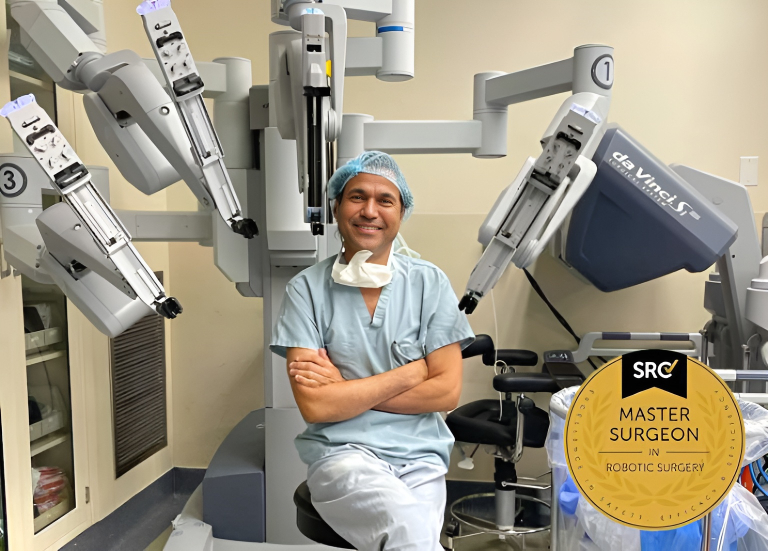
Pankaj Singhal, MD, MS, MHCM
Con más de 12 años de experiencia en la atención médica tanto académica como privada, Dr. Singhal ha capacitado a más de 45 cirujanos ginecólogos y fellows en procedimientos mínimamente invasivos y oncológicos. Ha sido pionero en nuevas técnicas quirúrgicas para la endometriosis y la cirugía laparoscópica, completando más de 5,700 casos asistidos por robot en todo el país. Reconocido por asumir los casos más complejos que otros centros rechazan, Dr. Singhal continúa avanzando el estándar de la atención quirúrgica de las mujeres.