


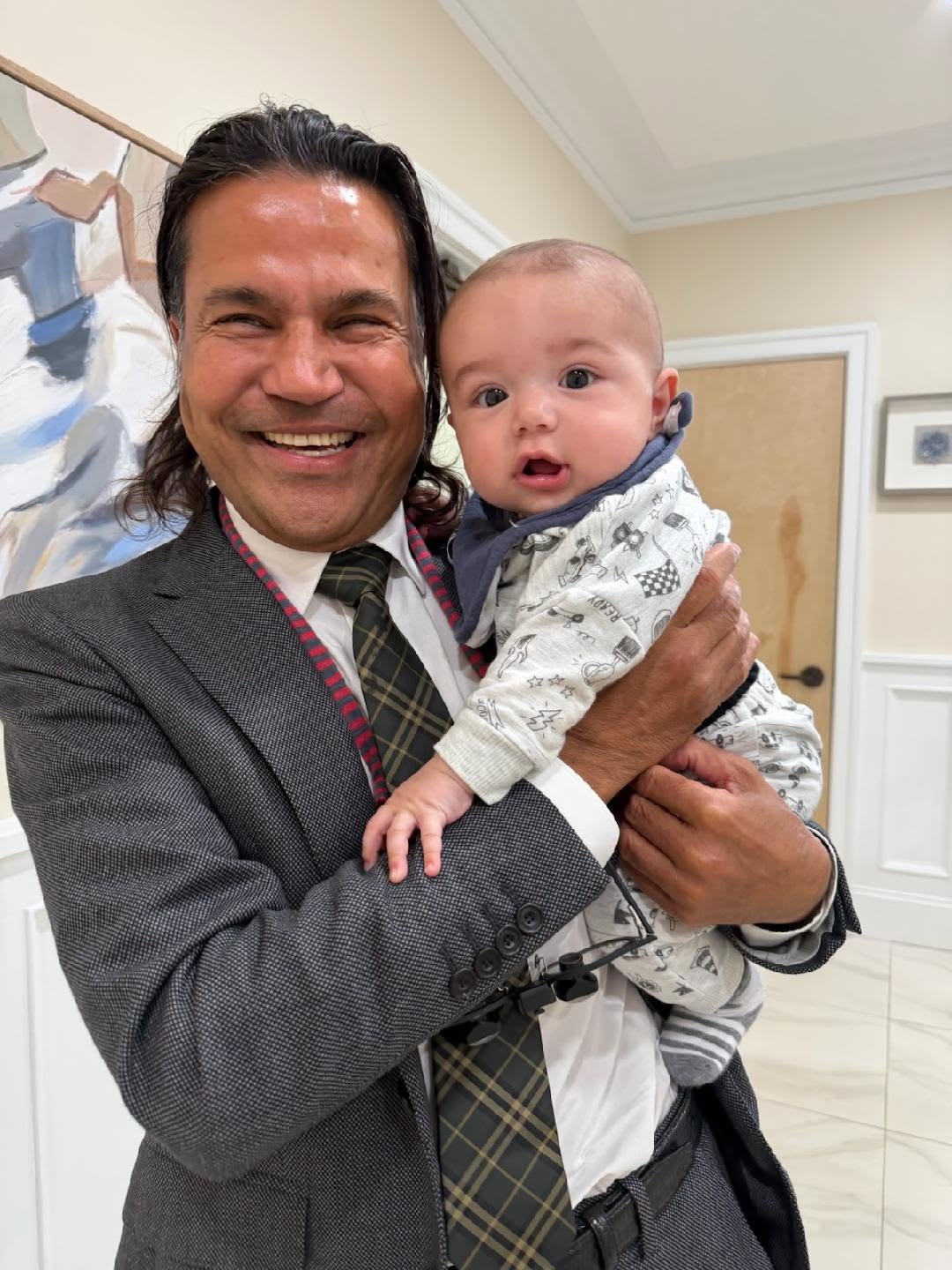
For more than a decade, Jessica struggled with a serious medical condition while her father watched helplessly. Then she met Dr. Pankaj Singhal, a surgeon who was willing to explore what might still be possible. Years later, a photograph captured what his care had come to mean to her family.
The Years a Father Could Do Nothing
There were nights when Leonard Saburro cried.
His youngest daughter, Jessica, was suffering from a serious medical condition, and he could do nothing to make it stop.
Leonard had watched her search for answers for more than ten years. She visited physicians, explained her symptoms, and continued living with the condition that was causing her so much distress. Years passed without the answers she needed.
As her father, Leonard wanted to protect her. He wanted to find some way to make things better, but he could not take away her pain.
Then came another devastating possibility.
Jessica was told she needed a hysterectomy.
The recommended operation would permanently eliminate her ability to carry a pregnancy, closing off a possibility that could never be restored.
For Leonard, the recommendation added another painful uncertainty to the years he had spent watching his daughter suffer.
But Jessica’s medical journey did not end there.
She later met a surgeon who questioned whether hysterectomy was her only medically appropriate option. That consultation marked a turning point in her family’s long search for answers.
A Daughter Who Refused to Give Up
In his Facebook post, Leonard chose not to disclose Jessica’s specific medical condition. He believes that part of her story belongs to her, if she ever chooses to share it.
But he spoke openly about what he witnessed.
According to his account, Jessica’s symptoms were sometimes dismissed or inadequately investigated. Leonard wondered whether her youth had contributed to the difficulty she experienced in finding answers.
He did not know why the answers were so difficult to find. What he knew was that Jessica kept going.
She got up each morning, even when she was struggling. She continued living her life, smiled when she could, and refused to let her condition define her.
Leonard was especially proud of the way she treated others.
Jessica did not allow her suffering to become an excuse for treating people poorly. Even during difficult periods, her father saw her maintaining her dignity and compassion.
Leonard has three children, and he has always made a point of telling them how proud he is. Watching Jessica endure years of illness gave him a particular appreciation for her character. He admired not only her determination to keep searching for answers but also the way she conducted herself while doing so.
Still, perseverance could only take her so far.
The Surgeon Who Asked What Else Was Possible
After more than a decade of searching for answers, Jessica met Dr. Pankaj Singhal, a gynecologic surgeon at New York Gynecology Surgery & Endometriosis (NYGSE).
By that point, Jessica had been advised to undergo a hysterectomy, a procedure that would permanently eliminate her ability to carry a pregnancy.
Leonard recalled a physician who listened to his daughter’s concerns, took her suffering seriously, and was willing to investigate whether another treatment approach might be appropriate.
When Dr. Singhal evaluated Jessica’s circumstances, Leonard recalled the surgeon responding:
“Oh, no, no, no. We’re going to tackle this.”
For years, Jessica had searched for someone who could help her understand and address her condition. Her father believed that Dr. Singhal was willing to investigate what other treatment options might be appropriate.
That did not necessarily mean the earlier recommendation was incorrect. Different physicians may reach different conclusions based on the information available, their expertise, and a patient’s individual circumstances.
A hysterectomy removes the uterus and permanently eliminates the ability to carry a pregnancy. For some patients, it is necessary or the most appropriate treatment. For others, depending on the underlying condition, different approaches may be considered.
Before an irreversible operation, when circumstances permit, patients deserve to understand the medical evidence, available alternatives, and consequences of each choice.
For Jessica, Dr. Singhal’s evaluation opened the possibility of a different course.
According to Leonard, Dr. Singhal committed to doing everything within his professional ability to help her.
Jessica eventually underwent surgery under Dr. Singhal’s care.
The Operation That Changed Her Family's Story
Jessica underwent a major surgical procedure performed by Dr. Singhal.
Leonard described the operation as extraordinarily serious. He believed it may have saved her life.
The precise diagnosis, surgical findings, and procedure have not been publicly disclosed in his account. Those details remain Jessica’s private medical history.
But Leonard shared what happened afterward.
Something that brought tears to his eyes as he recalled it.
Jessica became a mother.
The daughter Leonard had watched suffer for more than ten years now had a child of her own. The young woman who had been told she needed a hysterectomy had gone on to carry a pregnancy.
Leonard became a grandfather.
For years, he had worried about his daughter’s health and the future that might await her. He could now watch his daughter raise her son.
The child brought a kind of happiness that Leonard struggled to put into words.
The significance of Dr. Singhal’s approach extended beyond the operation itself. Rather than proceeding with the hysterectomy Jessica had previously been advised to undergo, Dr. Singhal pursued another surgical approach. Jessica subsequently became a mother, something that would not have been possible through pregnancy had her uterus been removed.
For her family, the importance of that decision was unmistakable. The alternative approach preserved the possibility of carrying a pregnancy, a possibility they had once feared was lost.
Leonard remembered the years Jessica had spent suffering and what his family had feared.
And now he had a grandson.
The Photograph He Wanted the World to See
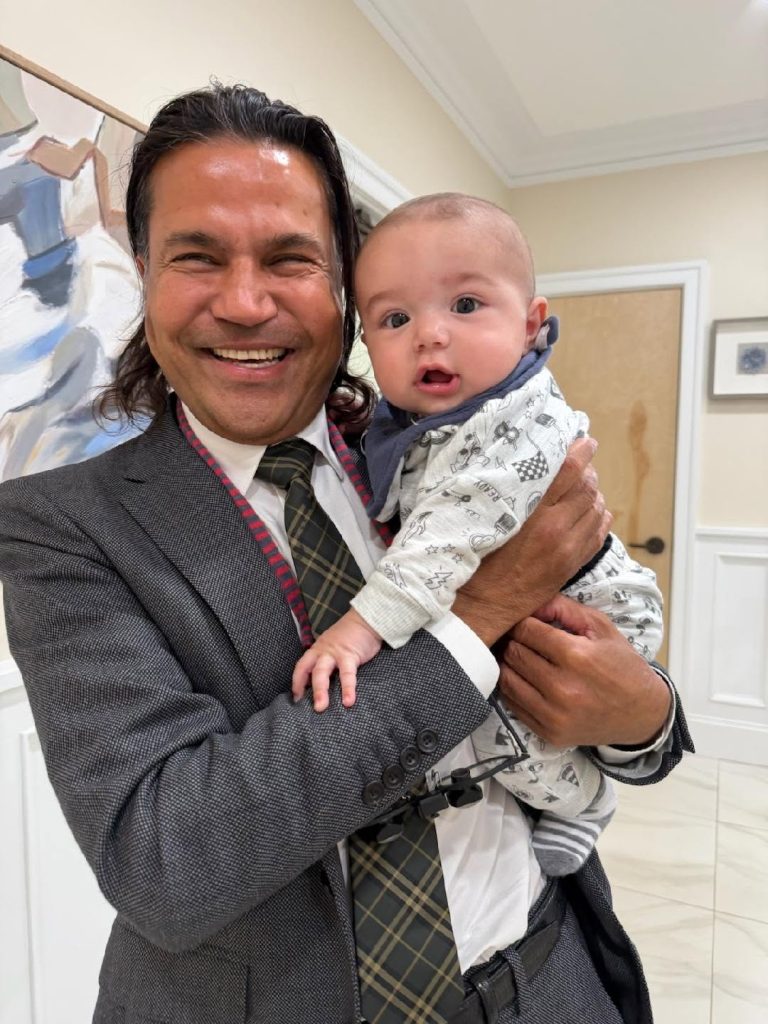
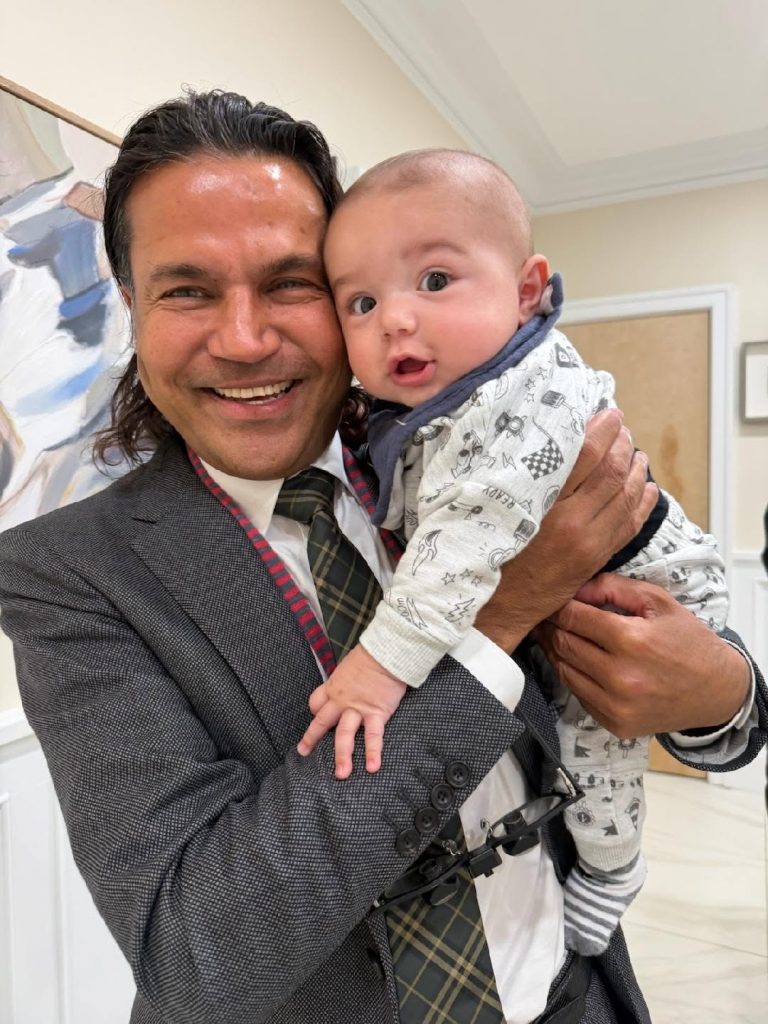
Dr. Pankaj Singhal holding Jessica’s son during a follow-up visit at NYGSE.
Photo shared by Jessica’s father, Leonard Saburro, via Facebook.
During a recent appointment, Jessica returned to see Dr. Singhal.
This time, she brought her son.
During the visit, Dr. Singhal held the little boy, and a photograph was taken.
Leonard later shared the image on Facebook.
The physician holding his grandson was the same surgeon who had cared for Jessica after years of suffering and uncertainty.
Leonard remembered the nights when he cried because he could not help his daughter. He remembered the recommendation for a hysterectomy and the fear that she might never have children.
Now he was looking at a photograph of her surgeon holding her son.
Leonard generally keeps his family’s private matters private. But he wanted others to know what Dr. Singhal’s care had meant to Jessica and their family.
He thanked the physician for listening to his daughter, investigating her condition, and taking her concerns seriously. In his account, Leonard emphasized that Dr. Singhal treated Jessica as a person whose suffering deserved careful attention.
His gratitude extended beyond the operation. The photograph reminded him of the years Jessica had spent searching for answers and the life she was now living as a mother.
What Jessica's Story Means for Other Patients
Jessica’s story raises an important question for patients facing complex gynecologic conditions.
When a major, irreversible operation is recommended, have all medically appropriate treatment options been considered?
Hysterectomy may be necessary or the most appropriate treatment for some patients. For others, alternatives that preserve the uterus may be available, depending on the diagnosis and clinical findings.
A second opinion does not automatically mean the first physician was wrong. It allows another qualified surgeon to assess the available information and explain potential treatment options.
At NYGSE, individualized surgical evaluation considers a patient’s symptoms, medical findings, previous treatments, and personal goals.
The objective is to determine which treatment is medically appropriate for the individual patient, including whether fertility-preserving options are available.
Not every condition can be treated while preserving the uterus, and surgery cannot guarantee future fertility. Patients nevertheless deserve careful evaluation, clear information, and an opportunity to participate meaningfully in decisions about their care.
For Leonard, the importance of that approach was something he had witnessed through his daughter’s experience.
A Father's Gratitude
Near the end of his Facebook post, Leonard returned to the subject that mattered most to him: his children.
He has three, and he has spent their lives making sure each knows how proud he is. Being their father, he wrote, is one of the greatest honors of his life.
Leonard was proud of Jessica not simply because she had survived years of hardship, but because of the way she had lived through them. He admired her dignity, her compassion, and her determination to keep searching for answers.
He was also profoundly grateful to Dr. Singhal.
But perhaps the most moving part of his message had little to do with medicine.
Leonard wrote about his grandson.
A little boy with two bright eyes and an entire lifetime ahead of him.
A child who had brought happiness into a family that remembered the years when Jessica was struggling.
There are things a medical photograph cannot show.
It cannot show the years a daughter spent searching for answers.
It cannot show a father crying because he could not relieve her suffering.
It cannot show every difficult conversation, every unanswered question, or every moment when the future seemed uncertain.
But sometimes, a photograph can remind a family of all those things.
And sometimes, it can show what came afterward.
A surgeon holding a little boy.
A daughter who became a mother.
And a father who finally had something extraordinary to celebrate.
This article is based on a public account shared by Jessica’s father, Leonard Saburro, and reflects his personal recollections. Jessica’s specific medical diagnosis and surgical details were not disclosed in that account as of November 20, 2026. Individual surgical and reproductive outcomes vary. Her story highlights the importance of exploring medically appropriate treatment options, particularly when preserving the possibility of future pregnancy is a priority.
Referencias
- Saburro, L. (n.d.). Failure is not an option [Facebook post]. Facebook. https://web.facebook.com/share/p/19vG3WozL9/