


How likely am I to have endometriosis if I experience painful periods, chronic pelvic pain, or other unexplained symptoms?
Endometriosis affects an estimated 10% of reproductive-age women worldwide, according to the World Health Organization [4]. However, your individual likelihood depends on your symptoms, medical history, family history, and clinical findings.
Some patients experience severe menstrual pain, while others have mild symptoms or no noticeable pain. Endometriosis can also affect the bowel, bladder, ovaries, and surrounding pelvic structures.
Understanding which symptoms raise suspicion of endometriosis can help you determine when medical evaluation may be appropriate.
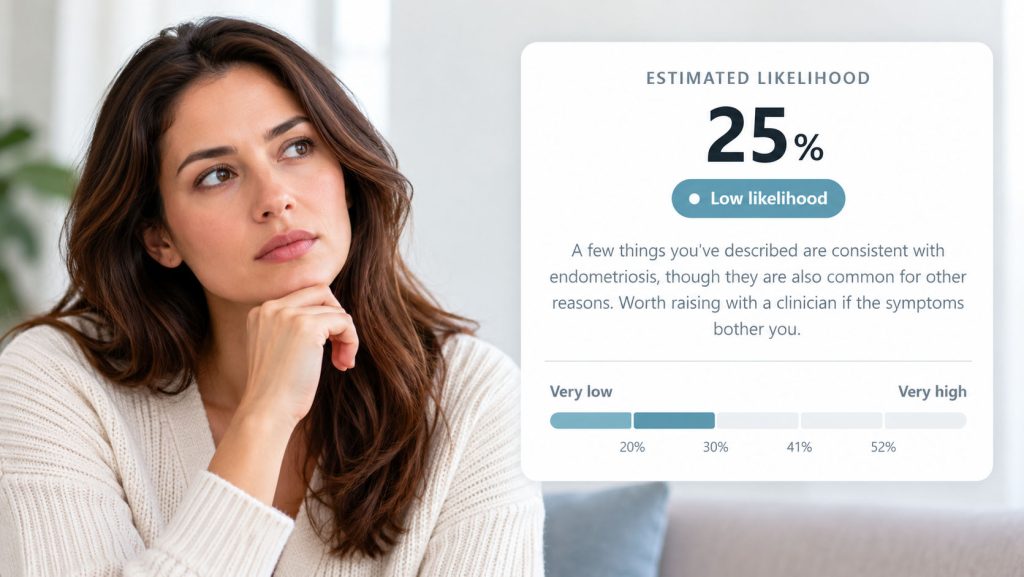
NYGSE Endometriosis Symptom Checker provides an educational estimate based on reported symptoms.
How Likely Am I to Have Endometriosis?
The endometrium is the tissue lining the inside of the uterus. During menstruation, this lining sheds and leaves the body through the cervix and vagina.
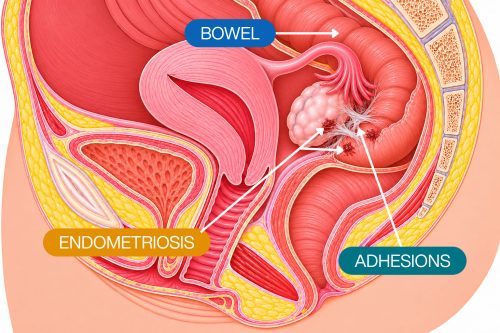
Endometriosis occurs when tissue resembling the endometrium develops outside the uterus, commonly on the ovaries, pelvic lining, and surrounding structures.
Endometriosis lesions can cause local inflammation and contribute to fibrosis, adhesions, and irritation of surrounding tissues. These changes may produce pelvic pain, although the severity of pain does not always correspond to the extent of disease. [2]
The worldwide prevalence estimate of 10% does not mean that every individual has a 10% chance of having endometriosis.
Your personal likelihood depends on several clinical factors, particularly the pattern and persistence of your symptoms.
Certain Symptoms Increase Suspicion of Endometriosis
Endometriosis can cause different symptoms depending on the location of lesions and the body’s response to inflammation.
Common symptoms include:
- Severe menstrual pain: Cramps that interfere with work, school, sleep, or daily activities.
- Chronic pelvic pain: Pain that continues outside menstruation or occurs throughout the menstrual cycle.
- Pain during intercourse: Particularly deep pelvic pain during or after sexual activity.
- Bowel symptoms: Painful bowel movements, constipation, or diarrhea, especially around menstruation.
- Urinary symptoms: Bladder discomfort or painful urination that becomes worse during periods.
- Difficulty becoming pregnant: Endometriosis may affect fertility even when pain is minimal. [2][3]
These symptoms are not exclusive to endometriosis. Adenomyosis, fibroids, gastrointestinal conditions, and other pelvic disorders may produce similar complaints.
The combination, timing, and persistence of symptoms are often more informative than any single symptom.
Family History May Increase Your Chances of Endometriosis
Endometriosis has a recognized genetic and familial component.
Having a first-degree relative, such as a mother or sister, with endometriosis increases the likelihood of having the condition. [3]
However, many patients have no known family history. Some relatives may also have undiagnosed endometriosis.
Family history is therefore one factor in clinical assessment, not a requirement for diagnosis.
You Can Have Endometriosis With Only Mild Symptoms
The severity of pain does not always correspond to the extent of endometriosis.
Some patients with limited endometriosis experience severe pain, while others with more extensive disease report relatively mild symptoms.
Some patients primarily experience infertility rather than pelvic pain.
This explains why having few symptoms does not rule out endometriosis, and experiencing severe pain does not necessarily mean the disease is advanced. [2]
Can an Endometriosis Symptom Checker Estimate Your Risk?
A symptom checker can help identify patterns associated with endometriosis, but it cannot independently establish a diagnosis.
For example, severe menstrual pain and painful bowel movements may raise clinical suspicion, particularly when symptoms worsen around menstruation. However, these symptoms can also occur in people without endometriosis.
The NYGSE Endometriosis Symptom Checker allows patients to review their symptoms, menstrual patterns, and relevant medical history.
The tool provides a symptom-based estimate intended for educational purposes. It cannot confirm or exclude endometriosis, and its numerical result should not replace evaluation by a healthcare professional.
A low score does not exclude endometriosis, and a high score does not prove that the disease is present.

A woman using the NYGSE Endometriosis Symptom Checker to review her symptoms and receive an educational likelihood estimate.
A Normal Ultrasound Does Not Rule Out Endometriosis
Ultrasound can identify ovarian endometriomas and certain forms of deep endometriosis.
However, superficial lesions may be too small or difficult to visualize with conventional imaging. Consequently, patients may have endometriosis despite normal ultrasound findings. [2][3]
MRI may provide additional information in selected cases, particularly when deep endometriosis is suspected. Imaging findings should always be interpreted alongside symptoms and medical history. [3]
How Doctors Evaluate the Likelihood of Endometriosis
Doctors evaluate suspected endometriosis through a combination of medical history, symptoms, physical examination, and imaging when appropriate.
A presumptive diagnosis of endometriosis can be made using symptoms, medical history, physical examination, and imaging when appropriate.
Under ACOG’s 2026 guidance, medical treatment may begin without requiring surgical confirmation in suitable patients. [1]
Laparoscopy may still be considered when symptoms persist despite treatment, imaging suggests complex disease, or surgical management is appropriate. [2][3]
The goal is to determine whether endometriosis is a likely explanation for the patient’s symptoms while considering other possible conditions.
When Should You See an Endometriosis Specialist?
Consider specialist evaluation if menstrual pain repeatedly disrupts daily activities, pelvic pain persists, bowel or bladder symptoms worsen around menstruation, or pregnancy has been difficult to achieve.
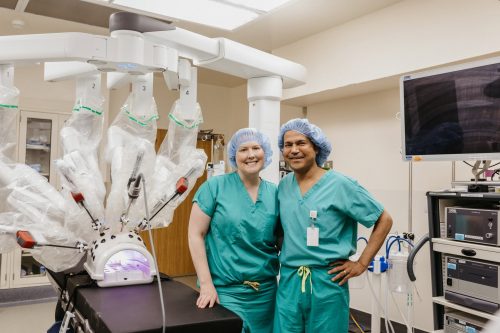
At New York Gynecology Surgery & Endometriosis (NYGSE), Dr. Pankaj Singhal and Dr. Elizabeth McLean evaluate suspected endometriosis based on symptoms, imaging findings, pelvic anatomy, and individual treatment goals.
If you are uncertain whether your symptoms may be related to endometriosis, the NYGSE Endometriosis Symptom Checker can help you organize your symptoms before discussing them with a specialist.
Endometriosis cannot be confirmed by symptoms alone, but recognizing persistent patterns is an important first step toward an accurate diagnosis.
References
- American College of Obstetricians and Gynecologists. (2026). Diagnosis of endometriosis: ACOG Clinical Practice Guideline No. 11. Obstetrics & Gynecology, 147(3), 432–448. https://doi.org/10.1097/AOG.0000000000006181
- Becker, C. M., Bokor, A., Heikinheimo, O., Horne, A., Jansen, F., Kiesel, L., King, K., Kvaskoff, M., Nap, A., Petersen, K., Saridogan, E., Tomassetti, C., van Hanegem, N., Vulliemoz, N., & Vermeulen, N. (2022). ESHRE guideline: Endometriosis. Human Reproduction Open, 2022(2), hoac009. https://doi.org/10.1093/hropen/hoac009
- National Institute for Health and Care Excellence. (2024). Endometriosis: Diagnosis and management (NICE Guideline NG73). https://www.nice.org.uk/guidance/ng73
- World Health Organization. (2025, October 15). Endometriosis. https://www.who.int/news-room/fact-sheets/detail/endometriosis