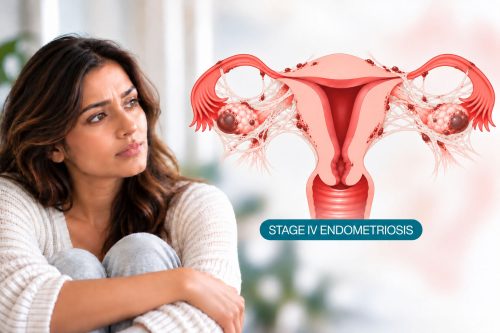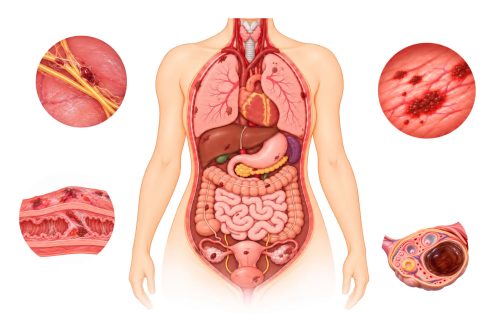


Endometriosis can look very different from one patient to another. In some people, the disease remains relatively limited. In others, inflammation, fibrosis, and adhesions can significantly change the normal anatomy of the pelvis.
One of the most advanced presentations is sometimes called a frozen pelvis.
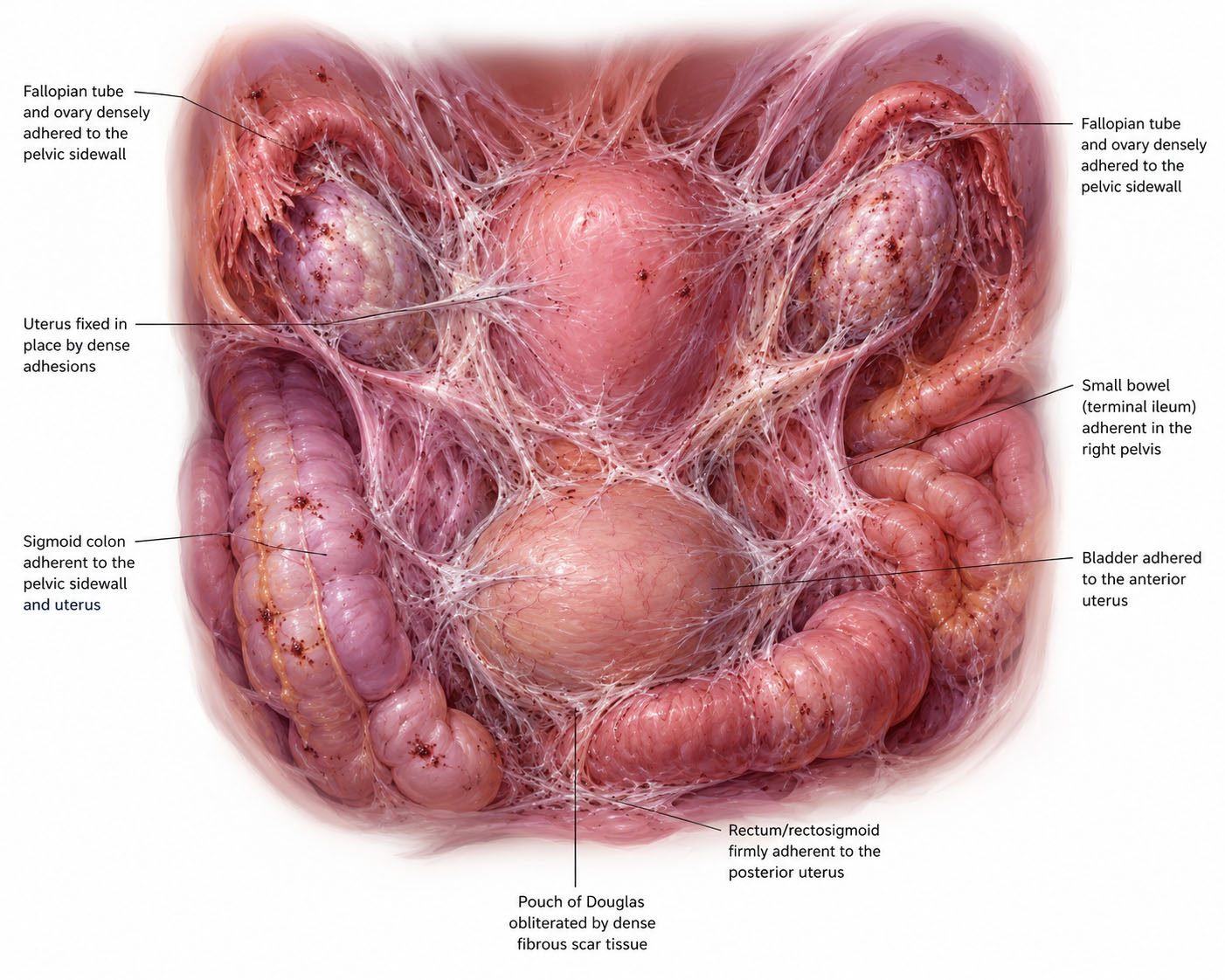
The name can sound alarming, but it describes what has happened anatomically. Pelvic organs that normally move independently may become densely attached to one another. The ovaries, fallopian tubes, uterus, bowel, bladder, ureters, and surrounding tissues can become fixed or pulled out of their normal positions.
For someone living with endometriosis, this may help explain why symptoms are not always limited to menstrual pain. Bowel symptoms, urinary problems, pain during sex, and fertility difficulties can sometimes be part of a much more complex pelvic picture.
Understanding Frozen Pelvis
A frozen pelvis is not a separate disease. It is a term used to describe severe distortion of the pelvic anatomy caused by extensive adhesions, fibrosis, and disease.
In simpler terms, structures that should normally be separate and mobile have become densely attached.
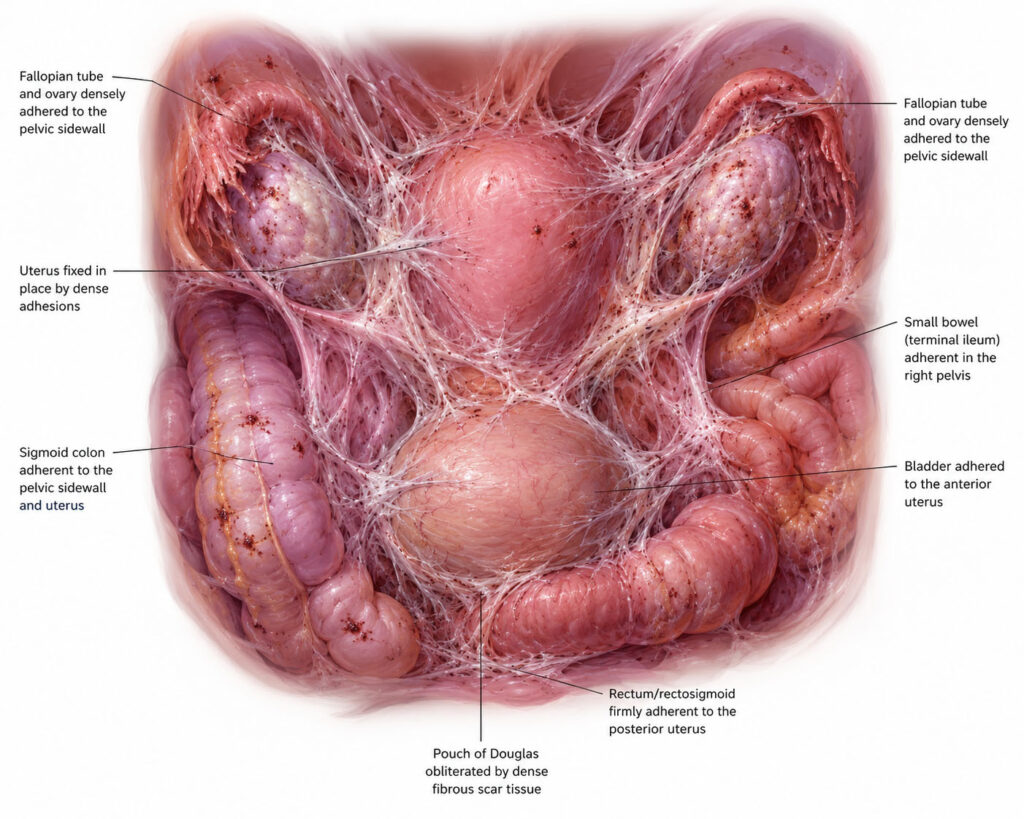
What Happens to the Pelvic Organs?
Endometriosis is associated with inflammation in the tissues where it develops. Over time, inflammation and healing can contribute to fibrosis and the formation of adhesions.
An adhesion is a band of scar-like tissue that connects surfaces that would normally remain separate.
With extensive disease, an ovary may become attached to the uterus or pelvic sidewall. The rectum may become densely adherent to the back of the uterus. The normal space behind the uterus may disappear. In some cases, fibrosis or endometriosis may also involve areas close to the bladder or ureters, the tubes that carry urine from the kidneys to the bladder.
As the anatomy becomes increasingly distorted, the normal boundaries between structures can become difficult to distinguish.
This loss of normal mobility is what gives the condition its name, frozen pelvis.
Endometriosis and the Development of Frozen Pelvis
Frozen pelvis is associated with severe forms of endometriosis, particularly when extensive adhesions and deep disease are present.
Endometriosis profunda can affect structures beyond the surface of the reproductive organs. Depending on its location, disease may involve areas around the uterosacral ligaments, vagina, rectum, bowel, bladder, and ureters.
Over time, endometriosis, inflammation, and scar tissue can cause pelvic organs to stick together or move out of their normal positions.
However, most people with endometriosis will not develop a frozen pelvis. It occurs in more advanced cases where extensive adhesions have significantly changed the normal pelvic anatomy.
Is Frozen Pelvis the Same as Stage 4 Endometriosis?
Frozen pelvis and stage IV endometriosis are closely related, but they are not the same. In the American Society for Reproductive Medicine (ASRM) classification system, stage IV describes advanced endometriosis that may include extensive adhesions and ovarian endometriomas, while frozen pelvis specifically describes pelvic organs that have become densely fixed together by adhesions and fibrosis.
Importantly, the extent of endometriosis does not always match the severity of symptoms. Some patients with advanced disease may have less pain than expected.
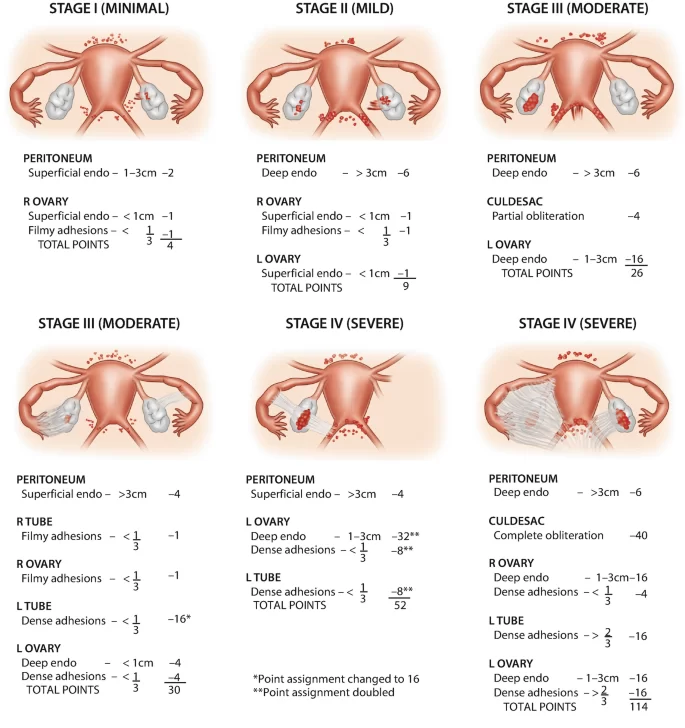
Fuente: American Society for Reproductive Medicine (1997).
Signs and Symptoms of Frozen Pelvis
There is no single symptom that confirms a frozen pelvis.
What a patient experiences depends partly on where the endometriosis and adhesions are located and which organs are involved.
Los posibles síntomas incluyen:
- Dolor menstrual intenso
- Dolor pélvico crónico
- Dolor durante o después de las relaciones sexuales
- Pain with bowel movements
- Constipation or other bowel symptoms
- Urinary symptoms
- Dificultad para quedar embarazada
- Pelvic pressure or discomfort
Some patients experience symptoms involving several organ systems at the same time.
This is one reason a detailed history matters. Menstrual pain combined with painful bowel movements, urinary symptoms, pain during sex, or infertility may suggest that we need to consider more than an isolated area of endometriosis.
If you are experiencing several symptoms and are unsure whether they may be related, our Endometriosis Symptom Checker can help you identify patterns to discuss with your doctor.
Bowel and Bladder Symptoms
A frozen pelvis can affect structures beyond the reproductive organs. The bowel, bladder, or ureters may become involved or attached to surrounding tissues.
Patients may experience painful bowel movements, constipation, bloating, or urinary symptoms, particularly around menstruation. However, these symptoms do not always mean that endometriosis has directly affected these organs, so proper evaluation is important.
Frozen Pelvis and Fertility
Extensive adhesions can interfere with normal reproductive anatomy.
The ovaries and fallopian tubes normally need to maintain appropriate position and mobility for natural conception. Dense adhesions may change those relationships, while endometriosis itself can affect fertility through additional mechanisms.
This makes fertility goals an important part of treatment planning.
A patient who hopes to become pregnant now or in the future may have different priorities from someone who has completed childbearing. Those goals should be discussed before deciding how advanced endometriosis will be treated.
Diagnosing a Frozen Pelvis
Diagnosing complex endometriosis begins with more than an imaging test.
A detailed history can provide important clues. The pattern of pain, bowel and urinary symptoms, infertility, previous endometriosis diagnoses, and findings from earlier surgeries or imaging can all contribute to the overall picture.
A pelvic examination may sometimes suggest reduced mobility of pelvic structures or a uterus that appears fixed.
Imaging can then help evaluate the anatomy and look for signs of advanced disease.
What Ultrasound and MRI Can Show
A normal standard ultrasound does not necessarily exclude endometriosis.
Specialized transvaginal ultrasound performed with attention to deep endometriosis can provide information beyond simply identifying ovarian cysts.
One useful assessment involves organ mobility.
During ultrasound, the examiner may evaluate whether pelvic structures move normally against one another. Restricted movement can suggest adhesions or deep disease. Ultrasound may also identify ovarian endometriomas and abnormalities involving the posterior pelvis or other structures.
MRI can provide additional information in selected patients and may be useful for mapping suspected deep endometriosis, particularly when several pelvic compartments may be involved.
Imaging is therefore not only about asking, “Is endometriosis present?”
For complex disease, another important question is:
“Where is the disease, which structures may be involved, and what information do we need before treatment?”
Treatment for Frozen Pelvis
Treatment for frozen pelvis depends on the extent of the disease, the organs involved, symptoms, previous treatments, and fertility goals. Hormonal therapies may help manage endometriosis-related symptoms, but they cannot separate organs that have already become densely attached by established adhesions.
When surgery is appropriate, frozen pelvis can require careful surgical planning because normal anatomy may be significantly distorted and structures such as the bowel, bladder, ureters, and ovaries may be involved.
As Dr. Pankaj Singhal emphasizes, complex endometriosis requires “a systematic, comprehensive approach.”
If you have been diagnosed with a frozen pelvis, severe endometriosis, or extensive pelvic adhesions, talk with an endometriosis specialist about your symptoms and treatment options. Understanding the extent of the disease is an important first step toward developing a treatment plan that is appropriate for you.
Referencias
American Society for Reproductive Medicine. (1997). Revised American Society for Reproductive Medicine classification of endometriosis: 1996. Fertility and Sterility, 67(5), 817–821. https://doi.org/10.1016/S0015-0282(97)81391-X
Guerriero, S., Condous, G., Van den Bosch, T., et al. (2016). Systematic approach to sonographic evaluation of the pelvis in women with suspected endometriosis, including terms, definitions and measurements: A consensus opinion from the International Deep Endometriosis Analysis (IDEA) group. Ultrasound in Obstetrics & Gynecology, 48(3), 318–332. https://doi.org/10.1002/uog.15955
Keckstein, J., Becker, C. M., Canis, M., et al. (2020). Recommendations for the surgical treatment of endometriosis. Part 2: Deep endometriosis. Human Reproduction Open, 2020(1), hoaa002. https://doi.org/10.1093/hropen/hoaa002
Neblett, M. F., II, Youssef, Y., & Khan, Z. (2023). A step-by-step approach to a frozen pelvis.
Fertility and Sterility, 119(1), 153–154. https://doi.org/10.1016/j.fertnstert.2022.10.007
Pellerin, M., Faller, E., Calabre, C., Boisramé, T., Lecointre, L., & Akladios, C. (2020). Frozen pelvis surgical strategy in 10 steps. Journal of Minimally Invasive Gynecology, 27(7), 1473. https://doi.org/10.1016/j.jmig.2020.02.003