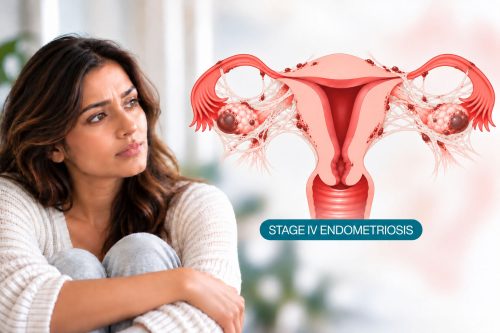
For many women with endometriosis, getting a diagnosis is not a single appointment. It can be a journey that lasts years.
Symptoms may begin with painful periods in adolescence, then gradually include pelvic pain, digestive problems, painful sex, urinary symptoms, fatigue, or difficulty becoming pregnant. Along the way, patients may see several healthcare providers before endometriosis is considered.
For years, research has commonly cited a diagnostic delay of 7 to 10 years. More recent estimates show that the experience varies considerably: the World Health Organization reports an average of 4 to 12 years, while in 2026, the American College of Obstetricians and Gynecologists (ACOG) highlighted an average delay of 4 to 11 years from the onset of symptoms.
Why can a condition affecting so many women remain undiagnosed for so long?
Endometriosis Does Not Look the Same in Every Patient
Endometriosis can cause a wide range of symptoms. Beyond painful periods and pelvic pain, some patients experience bowel or urinary symptoms, pain during sex, fatigue, or infertility. Others may have few noticeable symptoms.
Because some symptoms resemble gastrointestinal, bladder, or other conditions, endometriosis may not be considered right away. The challenge is recognizing when seemingly separate symptoms may be part of a larger pattern.
Endometriosis Does Not Look the Same in Every Patient
Endometriosis symptoms vary widely. Some patients have painful periods and pelvic pain, while others experience bowel or urinary symptoms, painful sex, fatigue, or infertility.
Because these symptoms can overlap with other conditions, endometriosis may not be considered right away.
Severe Period Pain Can Be Normalized for Years
Another problem begins much earlier.
Many girls grow up hearing that periods are supposed to hurt. As a result, significant menstrual pain may be tolerated for years before anyone considers whether something else could be happening.
Some menstrual discomfort is common. But pain that repeatedly interferes with school, work, sleep, exercise, or everyday activities deserves attention.
ACOG specifically notes that normalization, dismissal, and misattribution of endometriosis symptoms can contribute to delays in diagnosis and care.
The question should therefore not simply be, “Are your periods painful?”
It should also be, “What does that pain prevent you from doing?”
That difference can reveal much more about the severity of a patient’s symptoms.
A Normal Ultrasound Does Not Necessarily Rule It Out
Imaging has an important role in evaluating suspected endometriosis, but patients should understand its limitations.
Ultrasound and MRI can help identify certain forms of disease, particularly ovarian endometriomas and some types of deep endometriosis. However, imaging does not identify every endometriosis lesion.
A normal scan therefore needs to be interpreted alongside the patient’s symptoms, history, examination, and overall clinical picture.
This is particularly important because diagnostic thinking has changed.
Diagnosis Is Changing
Endometriosis no longer always requires surgery before a diagnosis can be considered. Current ACOG guidance supports using a patient’s history, symptoms, physical examination, and appropriate imaging to make a clinical or presumptive diagnosis in many patients.
As Bliss Kaneshiro, MD, MPH, FACOG, an author of the ACOG guidance, explains:
“A presumptive diagnosis of endometriosis based on patient history, symptoms, and physical examination findings, what we call a clinical diagnosis, allows us to offer patients empiric medical treatment while we continue the evaluation process with imaging studies, enabling patients to feel better faster and connect them with resources and support sooner. Data support this approach.”
Laparoscopy still has an important role, particularly when surgery is indicated or the diagnosis remains uncertain. But patients should not necessarily have to wait for surgery before their symptoms are recognized and treatment is considered.
When Should You Consider an Endometriosis Evaluation?
Consider discussing endometriosis with your doctor if menstrual or pelvic symptoms repeatedly interfere with daily life, persist despite treatment, or occur alongside symptoms such as painful sex, bowel or urinary problems, chronic pelvic pain, or difficulty becoming pregnant.
The years-long delay historically associated with endometriosis diagnosis should not be considered inevitable. Earlier recognition of symptoms and appropriate evaluation can help shorten the path to diagnosis.
At New York Gynecology Surgery & Endometriosis (NYGSE), we look at the complete pattern of a patient’s symptoms rather than relying on a single symptom or test. A focused evaluation can help determine whether endometriosis may be contributing and what the appropriate next step should be.
De Corte, P., Klinghardt, M., von Stockum, S., & Heinemann, K. (2025). Time to diagnose endometriosis: Current status, challenges and regional characteristics: A systematic literature review. BJOG: An International Journal of Obstetrics & Gynaecology, 132(2), 118-130. https://doi.org/10.1111/1471-0528.17973
Becker, C. M., Bokor, A., Heikinheimo, O., Horne, A., Jansen, F., Kiesel, L., King, K., Kvaskoff, M., Nap, A., Petersen, K., Saridogan, E., Tomassetti, C., van Hanegem, N., Vulliemoz, N., & Vermeulen, N. (2022). ESHRE guideline: Endometriosis. Human Reproduction Open, 2022(2), hoac009. https://doi.org/10.1093/hropen/hoac009