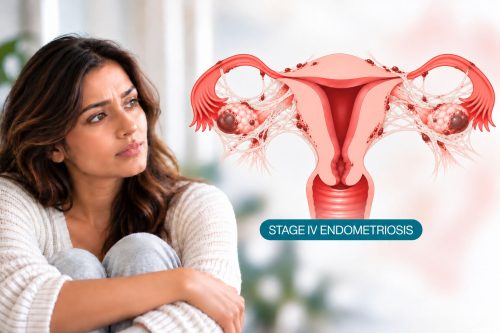


Most people associate endometriosis with painful periods, pelvic pain, or difficulty becoming pregnant. The kidneys rarely enter the conversation.
But can endometriosis affect your kidneys?
Yes. Although uncommon, endometriosis can interfere with the urinary system and sometimes threaten kidney function. What makes this complication concerning is that damage may develop without obvious symptoms. [1][3]
To understand why, it helps to know how the kidneys normally work and what happens when urine cannot drain properly.
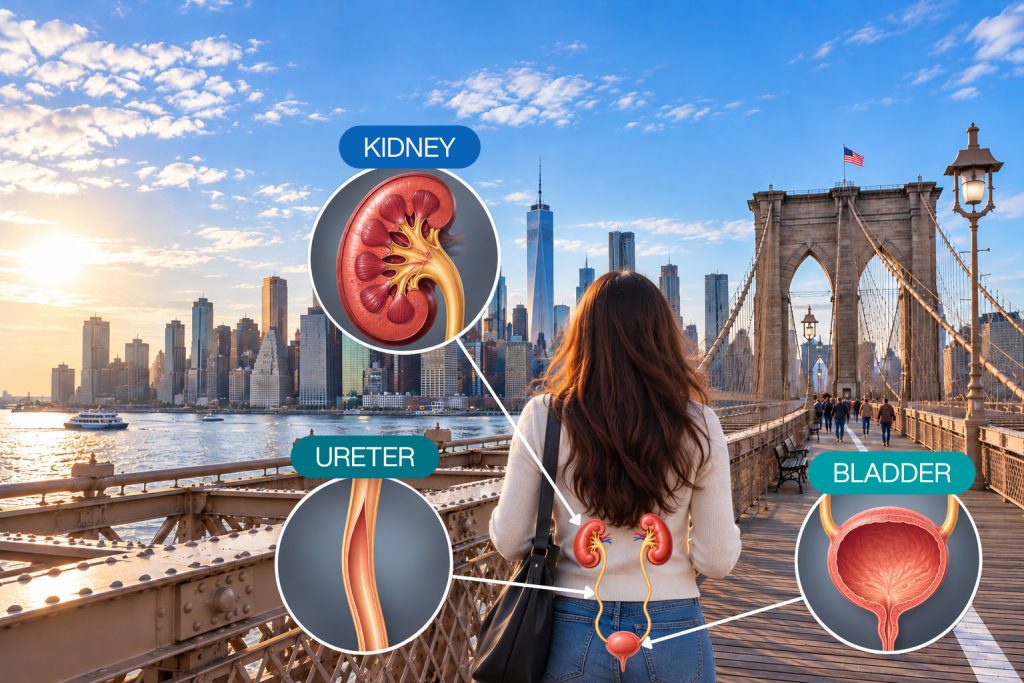
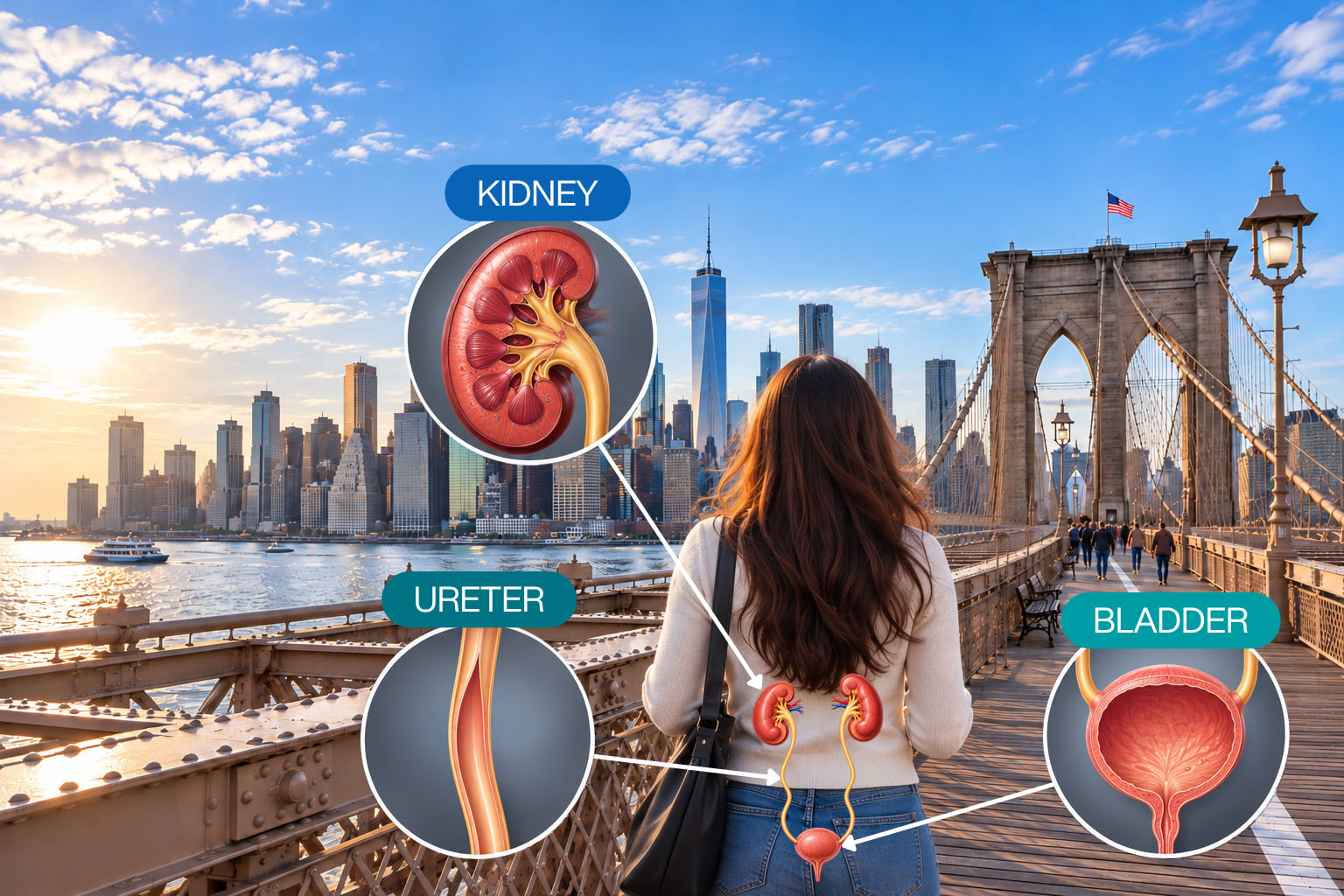
The kidneys produce urine, which travels through the ureters to the bladder for storage before urination.
How Your Kidneys and Ureters Work Together
Your kidneys filter blood, remove waste products, and produce urine. Each kidney connects to the bladder through a narrow, muscular tube called a ureter.
Think of the ureters as drainage pipes. As long as urine flows freely, the kidneys can continue doing their work.
But what happens when one of those pipes becomes narrowed?
Urine may accumulate above the obstruction, increasing pressure inside the kidney. If that pressure persists, it can gradually interfere with normal kidney function. [1][4]
The problem may begin in the pelvis, even though the consequences develop in the kidney.
Can Endometriosis Cause Kidney Damage?
Yes, although this is an uncommon complication.
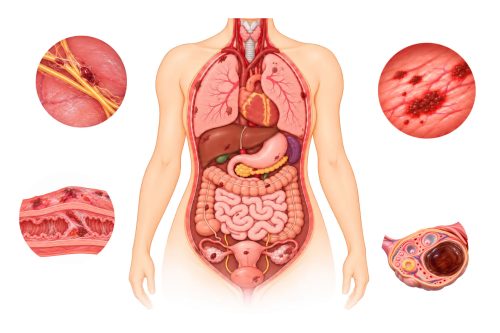
Endometriosis occurs when tissue similar to the lining of the uterus grows outside the uterus. These lesions can cause inflammation and contribute to scar tissue formation.
When endometriosis develops near a ureter, the surrounding scar tissue may narrow or compress it. This can make it difficult for urine to pass from the kidney into the bladder.
The kidney’s urine-collecting system may then become enlarged, a condition called hydronephrosis. If the obstruction continues, the resulting pressure can damage kidney tissue and eventually reduce its function. [1][4]
Importantly, endometriosis does not need to grow directly on the kidney to cause this problem. A small area of disease affecting the ureter may have consequences farther upstream.
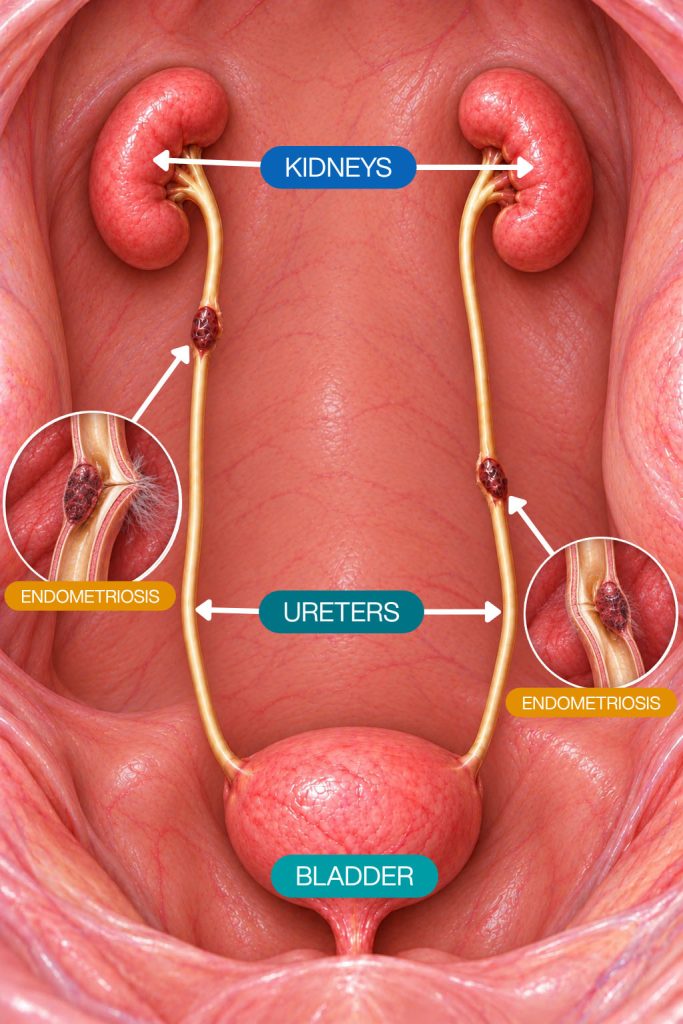
Medical illustration of ureteral endometriosis, showing how endometriosis lesion can obstruct the ureter and cause hydronephrosis.
Endometriosis and Kidney Pain
Kidney-related pain is often felt in the flank, the area between the lower ribs and the hip on either side of the back. Sometimes, discomfort extends toward the abdomen or groin.
However, pain in this region is not specific to endometriosis. Kidney stones, urinary infections, and musculoskeletal problems can produce similar symptoms.
Does Kidney Pain Get Worse During Your Period?
Sometimes, symptoms associated with urinary tract endometriosis may become more noticeable around menstruation.
However, pain that follows your menstrual cycle does not necessarily mean the ureter is affected. Likewise, pain occurring throughout the month does not rule out endometriosis. [4]
Persistent or unexplained flank pain deserves medical evaluation, particularly in patients with known deep endometriosis.
The Hidden Risk of Kidney Damage Without Pain
Here is something that may seem surprising: a ureter can become significantly obstructed without causing severe pain. [1][3]
Why?
If one kidney is affected, the other may continue filtering blood and producing urine. You may still urinate normally even when drainage from one kidney is impaired.
Routine blood tests may also remain within the normal range because they reflect the combined function of both kidneys.
This ability to compensate is helpful, but it can also make a problem harder to recognize.
Can One Kidney Lose Function Without Symptoms?
Yes. In some cases, kidney function declines without noticeable urinary symptoms.
A normal creatinine result does not necessarily prove that both kidneys are functioning equally well. One kidney may be compensating for reduced function in the other. [3][4]
This is why suspected ureteral involvement may require imaging or specialized testing, even when symptoms are mild or absent.
The goal is not to assume that every patient with endometriosis has kidney disease. It is to recognize when the location of endometriosis or other findings makes further evaluation appropriate.
Does Endometriosis Grow Directly on the Kidneys?
Direct endometriosis involving kidney tissue is exceptionally rare.
Urinary tract endometriosis more commonly affects the bladder or ureters. When lesions or surrounding fibrosis narrow a ureter, urine drainage may become impaired. [1][3]
In other words, the disease may be located in the pelvis while the kidney experiences the consequences.
This distinction matters because a patient may have no lesions on the kidney itself but still develop kidney-related complications.
How Doctors Evaluate Kidney Function
When urinary tract involvement is suspected, doctors may recommend a renal ultrasound to look for changes in the kidney’s urine-collecting system.
Blood tests, including creatinine, help assess overall kidney function. Pelvic ultrasound or MRI may also identify deep endometriosis near the ureters. [2][3]
In selected cases, a nuclear medicine renal scan can measure how much each kidney contributes to overall function. [3]
No single test provides every answer. The appropriate evaluation depends on symptoms, medical history, examination findings, and previous imaging.
Protecting Your Kidneys When You Have Endometriosis
Not everyone with endometriosis needs routine kidney imaging. Urinary tract complications are uncommon, and testing should be guided by individual risk and clinical findings.
However, unexplained flank pain, known deep endometriosis near the ureters, or abnormal urinary tract imaging may warrant further assessment. [1][3]
Severe flank pain accompanied by fever or chills requires urgent medical attention, particularly if urinary obstruction is suspected. A substantial reduction in urine output also needs prompt evaluation.
At New York Gynecology Surgery & Endometriosis, evaluating complex endometriosis means looking beyond pelvic pain and considering how the disease may affect surrounding organs.
The absence of pain does not always mean the absence of disease. Recognizing possible urinary tract involvement early can help protect kidney function and prevent avoidable complications.
References
- Barra, F., Scala, C., Biscaldi, E., Vellone, V. G., Ceccaroni, M., Terrone, C., & Ferrero, S. (2018). Ureteral endometriosis: A systematic review of epidemiology, pathogenesis, diagnosis, treatment, risk of malignant transformation and fertility. Human Reproduction Update, 24(6), 710–730. https://doi.org/10.1093/humupd/dmy027
- Becker, C. M., Bokor, A., Heikinheimo, O., Horne, A., Jansen, F., Kiesel, L., King, K., Kvaskoff, M., Nap, A., Petersen, K., Saridogan, E., Tomassetti, C., van Hanegem, N., Vulliemoz, N., & Vermeulen, N. (2022). ESHRE guideline: Endometriosis. Human Reproduction Open, 2022(2), hoac009. https://doi.org/10.1093/hropen/hoac009
- Leonardi, M., Espada, M., Kho, R. M., Magrina, J. F., Millischer, A.-E., Savelli, L., & Condous, G. (2020). Endometriosis and the urinary tract: From diagnosis to surgical treatment. Diagnostics, 10(10), 771. https://doi.org/10.3390/diagnostics10100771
- Palla, V.-V., Karaolanis, G., Katafigiotis, I., & Anastasiou, I. (2017). Ureteral endometriosis: A systematic literature review. Indian Journal of Urology, 33(4), 276–282. https://doi.org/10.4103/iju.IJU_84_17