

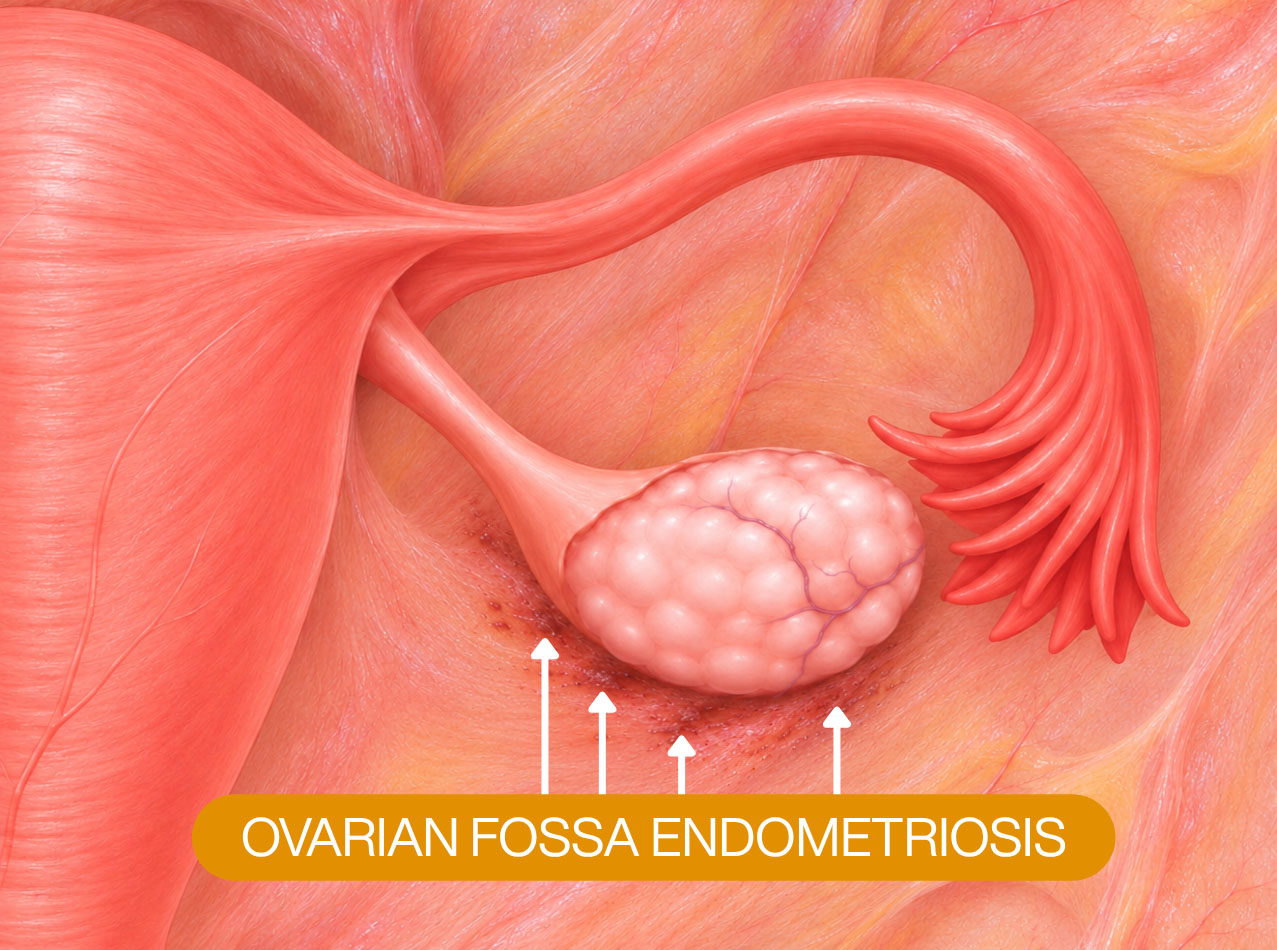
Endometriosis can develop in several areas of the pelvis, including an area along the pelvic sidewall known as the ovarian fossa, where the ovary normally rests. This location is particularly important because of its proximity to the ovaries, ureters, blood vessels, and other pelvic structures.
Ovarian fossa endometriosis occurs when tissue resembling the lining of the uterus develops on or beneath the peritoneum covering the ovarian fossa. These lesions may contribute to inflammation, pelvic pain, and adhesions that restrict the normal movement of the ovary.
Understanding the anatomy of this region is important when evaluating persistent pelvic pain or planning endometriosis surgery.
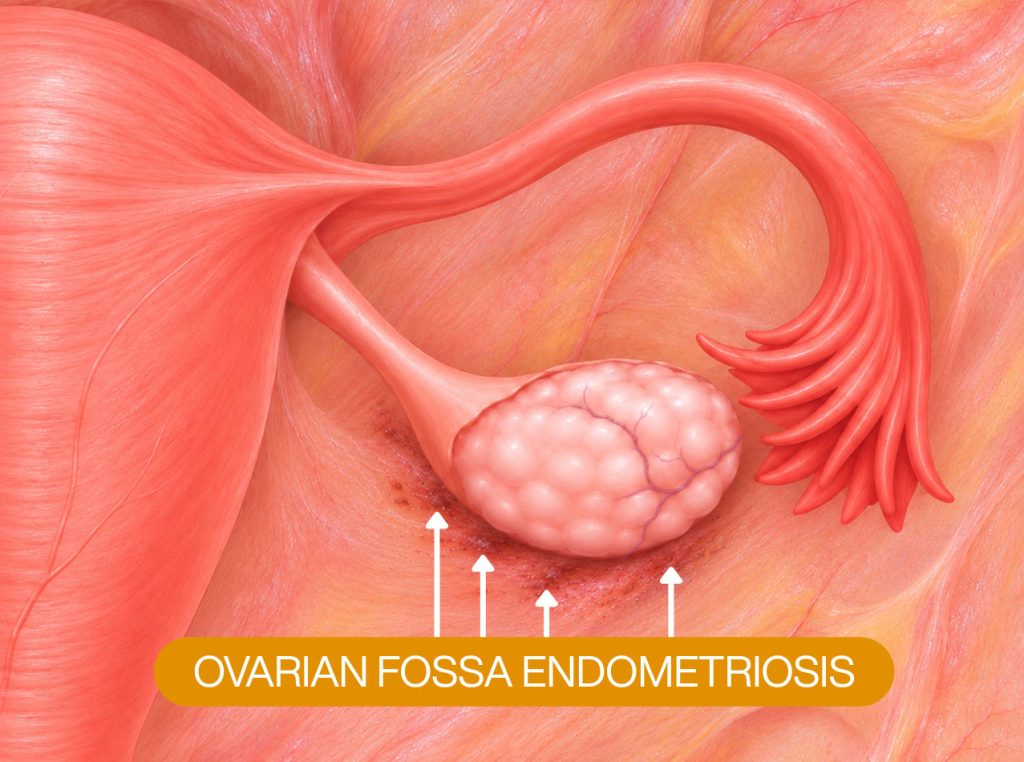
Medical illustration showing endometriosis lesions on the pelvic sidewall beneath the ovary, near the ovarian fossa, with the fallopian tube and fimbriae.
What Is Ovarian Fossa Endometriosis?
The ovarian fossa is an area along the pelvic sidewall where the ovary normally rests. There is one ovarian fossa on each side of the pelvis, although the exact position of the ovaries may vary.
Endometriosis in this region may involve superficial lesions on the peritoneum or extend into deeper tissues. [1]
The disease can occur independently of ovarian endometriomas, which are endometriosis-associated cysts that develop within the ovary.
Ovarian fossa endometriosis does not necessarily mean that the ovary itself is affected.
The Ovarian Fossa Lies Close to the Ureter
The ovarian fossa is bordered anteriorly by the external iliac vessels and posteriorly by the ureter and internal iliac vessels. The obturator nerve and vessels lie deeper along the pelvic sidewall.
The ureter carries urine from the kidney to the bladder and travels beneath the peritoneum near the ovarian fossa.
These anatomical relationships are important during surgery because endometriosis and adhesions may distort the normal position of surrounding structures.
In more extensive cases, endometriosis or associated fibrosis may involve or compress the ureter, potentially obstructing urinary drainage. [3]
However, ovarian fossa endometriosis does not automatically involve the ureter. Its relationship to surrounding structures must be assessed individually.
Ovarian Fossa Endometriosis Can Cause Pelvic Pain
Symptoms of ovarian fossa endometriosis can resemble those of endometriosis elsewhere in the pelvis.
Patients may experience:
- Painful menstrual periods
- Dolor pélvico crónico
- Pain during or after sexual intercourse
- Pain that is more noticeable on one side of the pelvis
- Pelvic discomfort during movement, although this symptom is nonspecific
- Difficulty becoming pregnant, particularly when endometriosis is associated with adhesions, tubal dysfunction, or other factors affecting fertility
Some patients have extensive disease with relatively mild symptoms, while others experience significant pain despite having limited visible lesions. [1]
The severity of pain does not consistently correspond to the number, size, or apparent extent of endometriosis lesions.
Can Ovarian Fossa Endometriosis Cause Leg Pain?
Pain involving the pelvis, hip, buttock, or leg can have several possible causes.
Endometriosis involving pelvic nerves or surrounding tissues may contribute to radiating pain in some patients. However, ovarian fossa endometriosis alone does not establish that a nerve is affected.
Persistent leg pain, particularly when accompanied by weakness, numbness, or other neurological symptoms, requires evaluation for additional causes.
Endometriosis Can Cause the Ovary to Adhere to the Pelvic Sidewall
Inflammation associated with endometriosis can contribute to adherencias, which are bands of fibrous scar tissue connecting structures that would normally move independently.
When adhesions develop around the ovarian fossa, the ovary may become attached to the pelvic sidewall. This condition is sometimes described as a fixed ovary.
What Happens When the Ovary Becomes Fixed?
A normally mobile ovary can move within the limits of its supporting ligaments and surrounding structures.
Adhesions may restrict this movement and alter the relationship between the ovary, fallopian tube, and pelvic sidewall. [3]
During surgery, a fixed ovary may need to be carefully separated from surrounding tissues to expose underlying endometriosis.
Not every fixed ovary is caused by endometriosis. Previous surgery, infection, and other inflammatory conditions can also produce pelvic adhesions.
Ovarian Fossa Adhesions Are Associated With Endometriosis
A 2015 study by De Cicco Nardone and colleagues examined 68 patients undergoing surgery for ovarian endometriomas. Researchers found endometriosis in ovarian fossa tissue in 87% of patients whose endometriomas were attached to the ovarian fossa, compared with 15% of those without these adhesions. [4]
Patients with adhesions also reported pain more frequently. During the 12-month follow-up, four patients experienced endometrioma recurrence, all of whom had ovarian fossa adhesions at their initial surgery. [4]
These findings suggest that adhesions involving an endometrioma and the ovarian fossa may indicate underlying endometriosis in the surrounding tissue. However, the study does not establish that removing ovarian fossa tissue prevents recurrence.
Can Ultrasound or MRI Detect Ovarian Fossa Endometriosis?
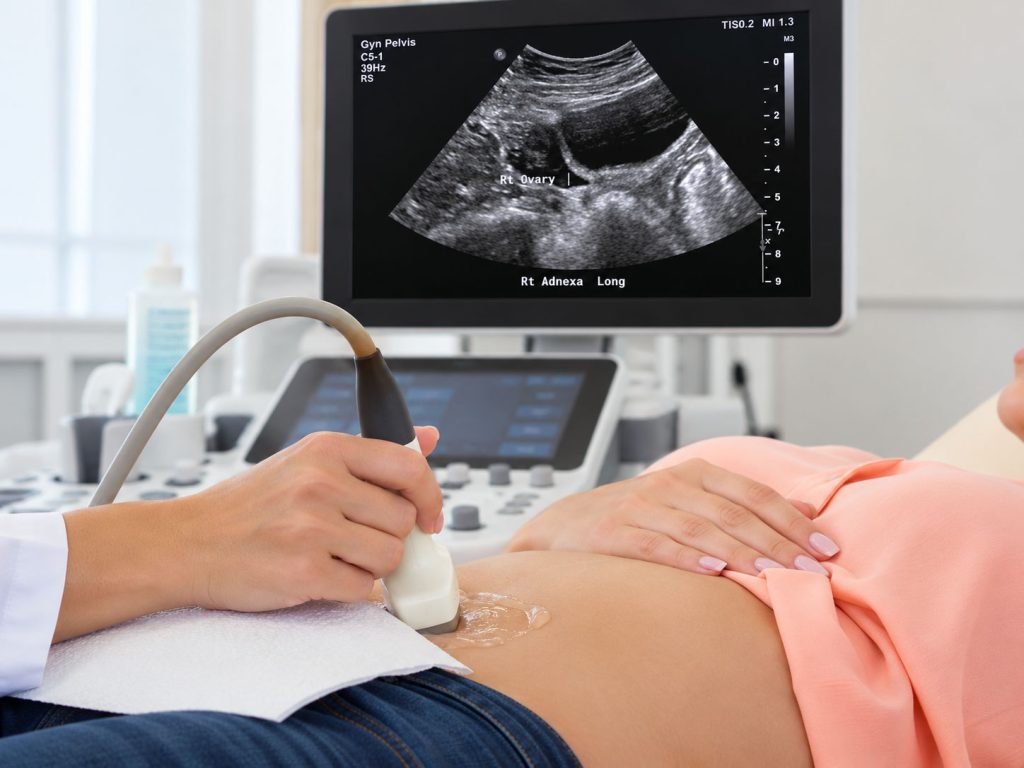
Transvaginal ultrasound and magnetic resonance imaging (MRI) can help identify ovarian endometriomas, certain deep endometriosis lesions, and anatomical abnormalities. [1][2]
Specialist ultrasound may also identify reduced ovarian mobility or adhesions through dynamic examination.
However, superficial endometriosis affecting the ovarian fossa can remain invisible on imaging.
A normal ultrasound or MRI does not exclude ovarian fossa endometriosis. [1][2]
The European Society of Human Reproduction and Embryology (ESHRE) recognizes that imaging is less reliable for detecting superficial peritoneal disease.
Laparoscopy Allows Direct Examination of the Ovarian Fossa
Laparoscopy allows a surgeon to inspect pelvic structures using a camera introduced through small abdominal incisions.
During the procedure, the surgeon can examine both ovarian fossae, assess adhesions, and identify suspicious lesions.
When appropriate, tissue can be removed and submitted for histopathological examination. [1][2]
Laparoscopy is not required for every patient with suspected endometriosis. The decision depends on symptoms, imaging findings, treatment response, fertility goals, and individual circumstances. [1][2]
Can an NYGSE Endometriosis Likelihood Index (ELI) Help?
Ovarian fossa endometriosis may cause pelvic pain, painful periods, or discomfort during intercourse. However, symptoms alone cannot establish the location of endometriosis lesions.
El Predictor de Riesgo de Endometriosis de NYGSE is a free, three-minute tool that evaluates symptoms, menstrual patterns, and medical history to provide an educational estimate of the likelihood of endometriosis.
Although it cannot identify ovarian fossa lesions or diagnose endometriosis, it may help patients recognize symptom patterns worth discussing with a specialist.
GRATIS · 3 MINUTOS · PRIVADO
Realice la evaluación de 3 minutos

Surgical Excision Can Remove Ovarian Fossa Endometriosis
When surgery is indicated, excision allows the surgeon to remove identifiable endometriosis lesions for treatment and, when appropriate, histological examination.
The choice between excision and other surgical techniques depends on disease location, depth, and individual circumstances. [1][3]
For ovarian fossa endometriosis, particular attention is given to the ureter and pelvic blood vessels because of their proximity to the surgical area.
Can Ovarian Fossa Endometriosis Return After Surgery?
Endometriosis can recur after surgery, even when visible lesions have been removed. Persistent or returning pain may also involve adhesions, pelvic floor dysfunction, or other conditions.
Postoperative hormonal treatment may help reduce recurrence in some patients, depending on their symptoms and fertility goals. [1]
When Should You Consult an Endometriosis Specialist
Persistent pelvic pain, severe menstrual cramps, or symptoms that continue despite treatment may warrant specialist evaluation, particularly when deep endometriosis or ureter involvement is suspected. [2]
En New York Gynecology Surgery & Endometriosis (NYGSE), evaluation focuses on identifying affected pelvic structures and discussing appropriate treatment options.
Understanding the location and extent of ovarian fossa endometriosis is essential for planning treatment while protecting surrounding pelvic structures.
Este artículo tiene fines educativos generales y no constituye asesoramiento médico individualizado. Si presenta dolor pélvico intenso y repentino, sangrado abundante, fiebre o desmayos, busque atención médica urgente.
Referencias
- Becker, C. M., Bokor, A., Heikinheimo, O., Horne, A., Jansen, F., Kiesel, L., King, K., Kvaskoff, M., Nap, A., Petersen, K., Saridogan, E., Tomassetti, C., van Hanegem, N., Vulliemoz, N., y Vermeulen, N. (2022). ESHRE guideline: Endometriosis. Human Reproduction Open, 2022(2), hoac009. https://doi.org/10.1093/hropen/hoac009
- National Institute for Health and Care Excellence. (2024). Endometriosis: Diagnosis and management (NICE Guideline No. 73). https://www.nice.org.uk/guidance/ng73
- Working group of ESGE, ESHRE, and WES. (2020). Recommendations for the surgical treatment of endometriosis—Part 2: Deep endometriosis. Human Reproduction Open, 2020(1), hoaa002. https://doi.org/10.1093/hropen/hoaa002
- De Cicco Nardone, C., Terranova, C., Plotti, F., Ricciardi, R., Capriglione, S., Luvero, D., Caserta, D., Moscarini, M., Benedetti Panici, P., & Angioli, R. (2015). The role of ovarian fossa evaluation in patients with ovarian endometriosis. Archives of Gynecology and Obstetrics, 292(4), 869–873. https://doi.org/10.1007/s00404-015-3719-9