

Endometriosis can return after surgery, but recurring symptoms do not always mean new lesions have developed. Some patients may have persistent disease left after treatment, while others experience returning pelvic pain without detectable lesions.
A 2026 review by Masferrer-Ferragutcasas and colleagues reported that approximately 20–26% of patients experienced returning pain within the first year after surgery. However, pain recurrence and the return of endometriosis lesions are not necessarily the same outcome. [2]
What Is Endometriosis Recurrence?
Endometriosis recurrence refers to the return of endometriotic disease or associated symptoms following treatment. However, three outcomes must be distinguished:
- Disease recurrence: Endometriosis lesions detected again after treatment.
- Symptom recurrence: Returning pain or symptoms without necessarily confirming lesions.
- Persistent endometriosis: Disease that remains after treatment rather than developing again.
This distinction raises an important question: When endometriosis is found after surgery, is it newly developed disease, or was it present all along? [2]
How Common Is Endometriosis Recurrence After Surgery?
Recurrence rates vary depending on disease characteristics, surgical treatment, postoperative medication, and follow-up duration.
| Researchers | Follow-up | Reported Finding |
|---|---|---|
| Masferrer-Ferragutcasas et al. (2026) | 1 year | 20–26% pain recurrence |
| Masferrer-Ferragutcasas et al. (2026) | 2 years | 21.5% estimated mean recurrence across differing definitions |
| Redwine (1991) | 5 years | 19% maximum cumulative persistent or recurrent disease |
Note: These studies measured different outcomes and populations. The 2026 figures summarize earlier research, while Redwine’s observational study involved 359 patients undergoing laparoscopic excision. The percentages are not directly comparable. [2][4]
These findings demonstrate why returning symptoms should not automatically be interpreted as newly developed disease.
Persistent Endometriosis Can Be Mistaken for Recurrence
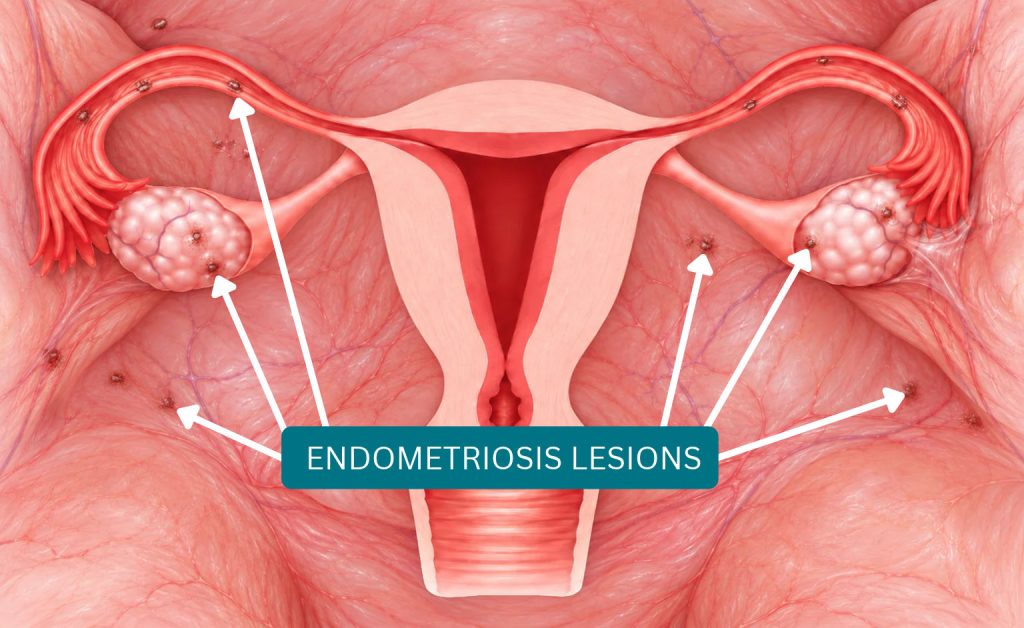
Endometriosis lesions may be dark, reddish, pale, clear, or associated with fibrosis. Some extend beneath the visible tissue surface, making complete identification and removal challenging. [2][4]
Disease that remains after surgery may continue causing symptoms or become detectable later. However, returning pain alone cannot confirm residual endometriosis.
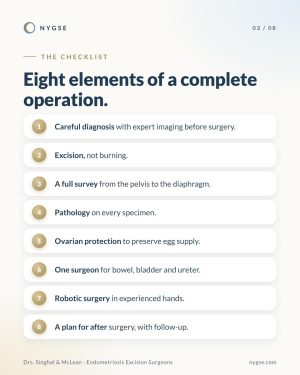
Complete Excision Aims to Remove Identifiable Disease
Excision removes endometriosis lesions, including affected tissue beneath the surface when appropriate. Ablation destroys lesion tissue using energy, with effectiveness depending on lesion depth and characteristics.
The European Society of Human Reproduction and Embryology (ESHRE) suggests considering excision instead of ablation for endometriosis-associated pain. [1]
Why Can Endometriosis Return After Treatment?
Residual lesions may remain when disease is difficult to identify or located near sensitive pelvic structures. Alternatively, new lesions may develop over time.
Endometriosis involves hormonal, inflammatory, and immune processes that surgery does not necessarily eliminate. Researchers continue investigating how these mechanisms contribute to recurrence. [2]
Importantly, disease detected after surgery does not automatically mean the original procedure was performed incorrectly.
Returning Pelvic Pain Does Not Always Mean Endometriosis Has Returned
Pelvic pain may recur because of persistent endometriosis, adenomyosis, adhesions, pelvic floor dysfunction, or other bowel and bladder conditions. [2]
Central sensitization, which increases the nervous system’s responsiveness to pain, may also contribute.
Returning menstrual cramps, painful intercourse, chronic pelvic pain, or bowel and urinary discomfort warrant evaluation, but symptoms alone cannot confirm recurrent lesions.
Hormonal Treatment Can Reduce Recurrence but Does Not Remove Lesions
Hormonal medications can suppress endometriosis-associated activity and relieve symptoms, but they do not surgically remove established lesions.
A 2021 meta-analysis by Zakhari and colleagues involving 1,766 patients found that postoperative hormonal suppression was associated with a 59% relative reduction in recurrence risk compared with expectant management or placebo. [5]
However, recurrence definitions varied, frequently involving ovarian endometriomas. The result should not be applied equally to every form of endometriosis.
ESHRE recommends considering certain postoperative hormonal treatments for at least 18–24 months to reduce recurrent menstrual pain, particularly when pregnancy is not immediately planned. [1]
How Is Recurrent Endometriosis Diagnosed?
Evaluation includes reviewing symptoms, previous surgical findings, pathology reports, and treatment history.
Transvaginal ultrasound can detect ovarian endometriomas and some deep lesions, while MRI may help assess deeper pelvic involvement.
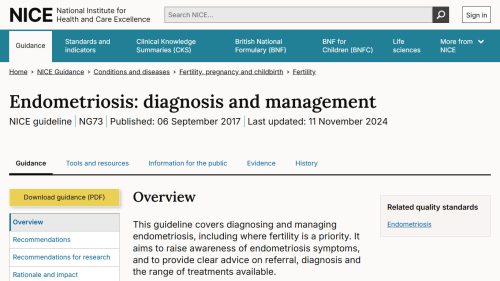
Normal imaging does not exclude superficial endometriosis. NICE recommends further evaluation when symptoms persist or return despite normal examination or imaging findings. [1][3]
Laparoscopy may be considered in selected patients, although a properly performed and systematically documented normal laparoscopy makes endometriosis less likely.
¿Puede ayudar el Índice de Probabilidad de Endometriosis de NYGSE (ELI)?
El Predictor de Riesgo de Endometriosis de NYGSE helps patients assess symptoms and factors associated with endometriosis. For those experiencing recurring pelvic pain after surgery, it may provide a useful starting point for understanding their symptoms and preparing for a medical consultation.
However, the tool cannot determine whether endometriosis has returned, whether lesions remained after surgery, or whether another condition is causing symptoms. A clinical evaluation is necessary to investigate these possibilities.
GRATIS · 3 MINUTOS · PRIVADO
Realice la evaluación de 3 minutos

Repeat Surgery Is Not Always Necessary
Returning symptoms do not automatically require another operation. Hormonal treatment, pain management, pelvic floor physical therapy, or evaluation for other conditions may be appropriate.
Repeat surgery may be considered when significant disease is suspected, symptoms remain difficult to manage, or pelvic organs are affected.
However, previous operations can increase surgical complexity, while repeated ovarian endometrioma surgery may reduce ovarian reserve. Decisions should balance potential benefits against surgical risks and fertility goals. [1][2]
Can Endometriosis Recurrence Be Prevented?
No treatment guarantees that endometriosis will never return.
Careful identification and removal of lesions may reduce untreated disease, while postoperative hormonal suppression can lower certain recurrence risks and recurrent pain in selected patients. [1][5]
Long-term management should address both disease activity and symptoms rather than relying on recurrence statistics alone.
Understanding Recurrence Is Essential to Long-Term Care
Endometriosis recurrence may involve persistent disease, newly detected lesions, or another cause of pelvic pain. Distinguishing these possibilities is essential before considering additional treatment.
En New York Gynecology Surgery & Endometriosis (NYGSE), patients concerned about returning symptoms can seek individualized evaluation based on previous treatment, current symptoms, imaging findings, and reproductive goals.
Understanding whether disease has returned, remained, or is unrelated to current symptoms can help guide appropriate long-term care.
Este artículo tiene fines educativos generales y no constituye asesoramiento médico individualizado. Si presenta dolor pélvico intenso y repentino, sangrado abundante, fiebre o desmayos, busque atención médica urgente.
Referencias
- Becker, C. M., Bokor, A., Heikinheimo, O., Horne, A., Jansen, F., Kiesel, L., King, K., Kvaskoff, M., Nap, A., Petersen, K., Saridogan, E., Tomassetti, C., van Hanegem, N., Vulliemoz, N., y Vermeulen, N. (2022). ESHRE guideline: Endometriosis. Human Reproduction Open, 2022(2), hoac009. https://doi.org/10.1093/hropen/hoac009
- Masferrer-Ferragutcasas, C., Delgado-Gil, R., & Colas, E. (2026). Rethinking endometriosis recurrence: From clinical challenge to biological opportunity. npj Women’s Health, 4, Article 4. https://doi.org/10.1038/s44294-026-00128-9
- National Institute for Health and Care Excellence. (2024). Endometriosis: Diagnosis and management (NICE guideline NG73). https://www.nice.org.uk/guidance/ng73
- Redwine, D. B. (1991). Conservative laparoscopic excision of endometriosis by sharp dissection: Life table analysis of reoperation and persistent or recurrent disease. Fertility and Sterility, 56(4), 628–634. https://doi.org/10.1016/S0015-0282(16)54591-9
- Zakhari, A., Delpero, E., McKeown, S., Tomlinson, G., Bougie, O., & Murji, A. (2021). Endometriosis recurrence following post-operative hormonal suppression: A systematic review and meta-analysis. Human Reproduction Update, 27(1), 96–107. https://doi.org/10.1093/humupd/dmaa033