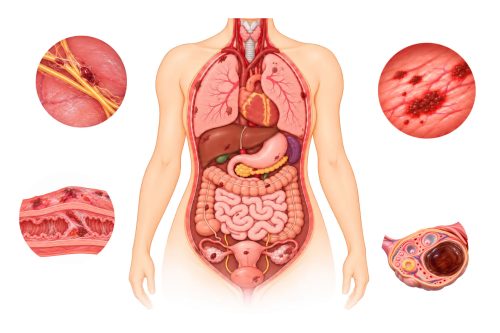


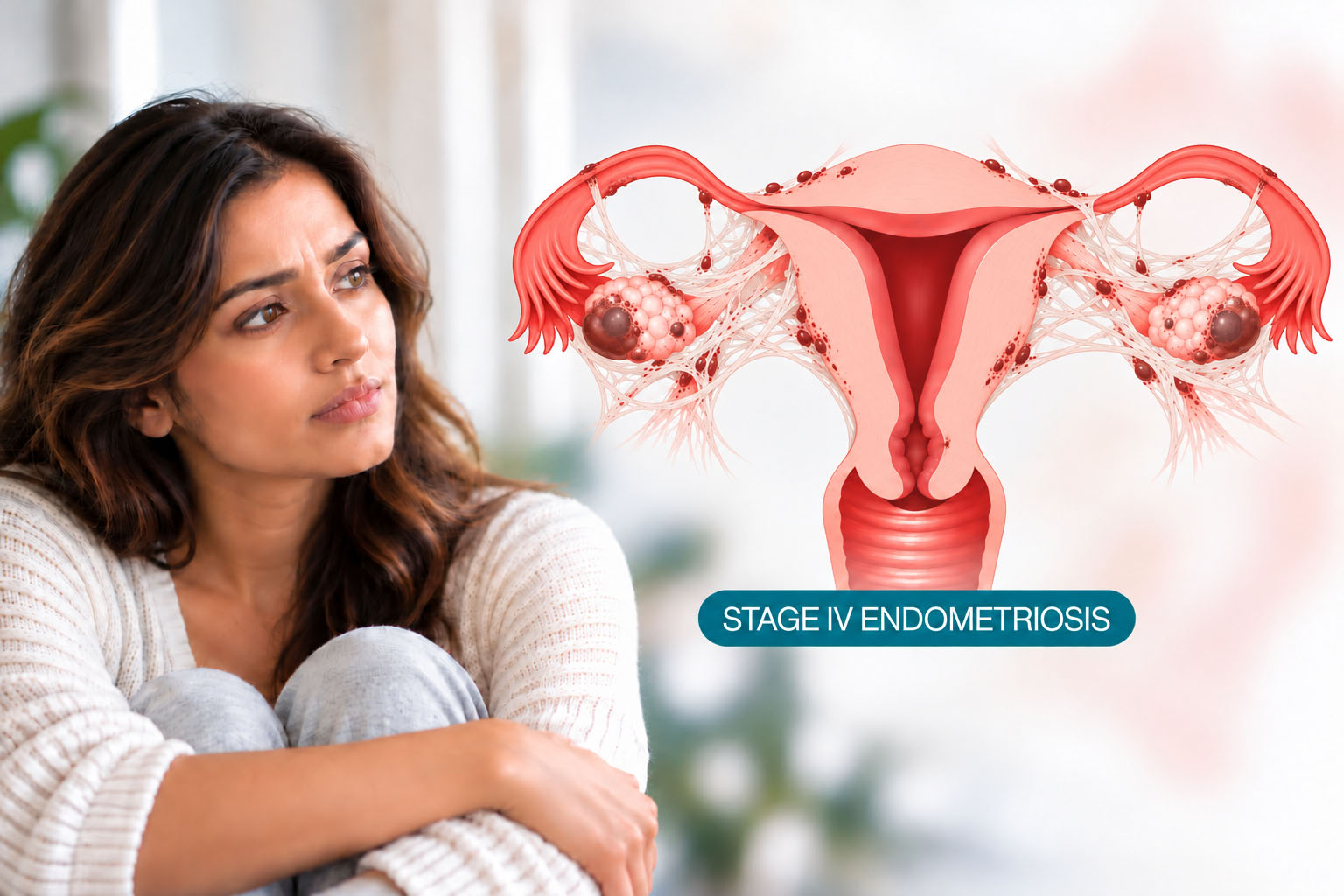
Yes, natural pregnancy is possible with stage 4 endometriosis. Although severe endometriosis can make conception more difficult, the diagnosis does not automatically mean that a woman is infertile or must undergo surgery or in vitro fertilization (IVF).
Pregnancy depends on several reproductive processes working together. Even when endometriosis is extensive, some of these processes may remain functional.
The important question is not simply how advanced the endometriosis is, but how the disease affects the ovaries, fallopian tubes, and other factors necessary for conception.
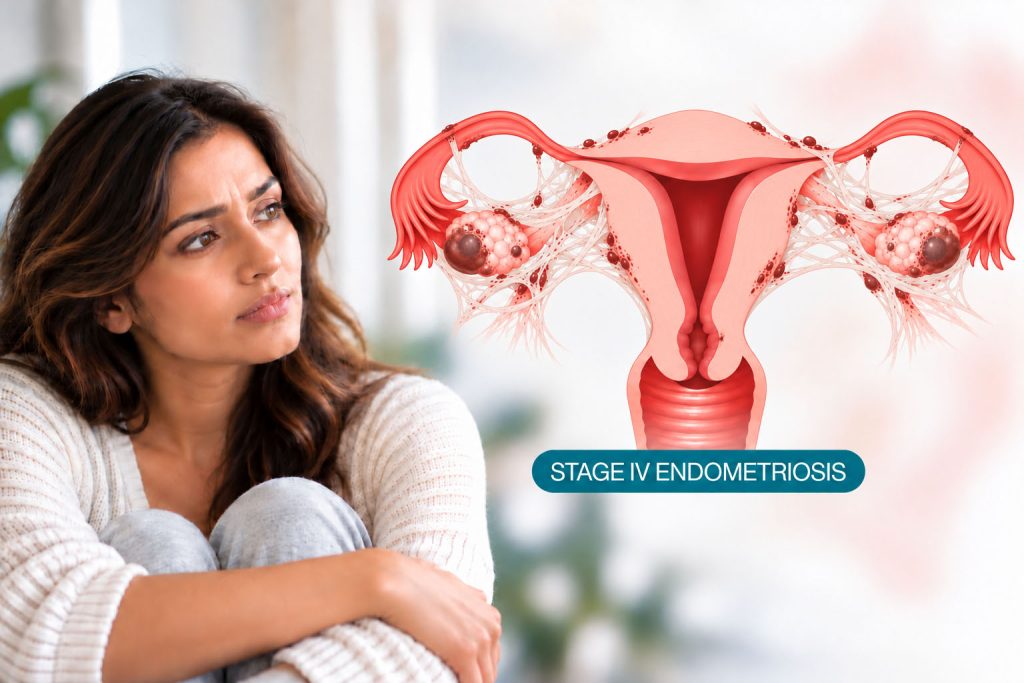
A medical illustration of stage 4 (severe) endometriosis, showing ovarian endometriomas, extensive pelvic adhesions, and distorted reproductive anatomy. Despite these changes, natural pregnancy may still be possible, depending on ovarian and fallopian tube function and other fertility factors.
What Stage 4 Endometriosis Means
Stage 4 is the most severe category in the revised American Society for Reproductive Medicine (rASRM) classification of endometriosis.
This classification considers the location and extent of endometriosis lesions, ovarian involvement, and adhesions identified during surgery.
Patients with stage 4 endometriosis may have extensive scar tissue, ovarian endometriomas, or reproductive organs attached to surrounding structures. In some cases, the normal arrangement of the pelvic organs becomes significantly distorted. [2]
However, stage 4 does not necessarily mean the patient has the most severe pain or the lowest chance of pregnancy.
The classification describes anatomical disease findings. It does not directly measure whether an ovary releases eggs, whether a fallopian tube can capture them, or whether fertilization can occur. [3][5]
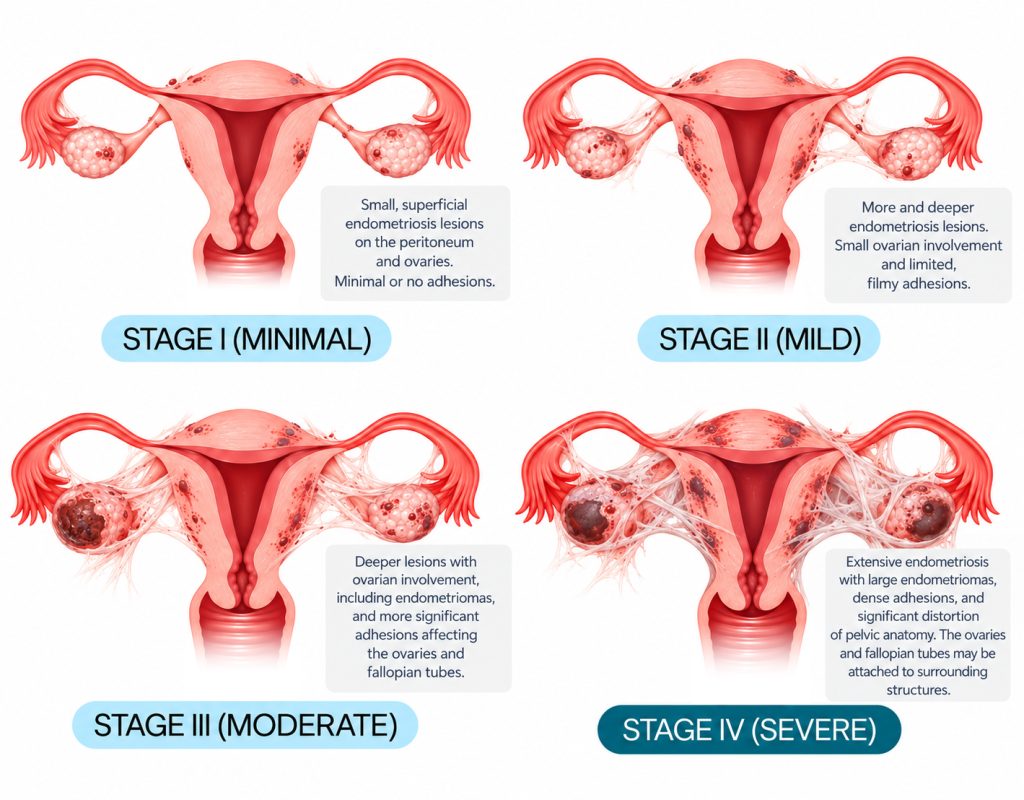
Adapted from the revised American Society for Reproductive Medicine (rASRM) classification of endometriosis (American Society for Reproductive Medicine, 1997).
How Stage 4 Endometriosis Can Interfere With Natural Conception
Understanding how endometriosis affects fertility begins with understanding how pregnancy normally occurs.
During ovulation, an ovary releases an egg into the pelvic cavity. The fingerlike projections at the end of a fallopian tube, called fimbriae, help capture the egg and guide it into the tube.
Fertilization usually occurs inside the fallopian tube. The developing embryo then travels toward the uterus, where implantation may occur.
Stage 4 endometriosis can interfere with several parts of this process.
Adhesions Can Restrict Fallopian Tube Movement
Endometriosis may cause pelvic adhesions, which are bands of scar tissue connecting organs that normally move independently.
An ovary may become attached to the uterus or pelvic wall, while adhesions may pull a fallopian tube away from its normal position.
A fallopian tube can remain open but still have difficulty capturing an egg.
This is because tubal patency, meaning an open passage through the tube, does not guarantee normal movement of the fimbriae or proper positioning near the ovary.
In more extensive disease, adhesions may also distort or obstruct the fallopian tubes, further reducing the possibility of natural fertilization. [5]
Ovarian Endometriomas May Affect Ovarian Function
Stage 4 endometriosis may involve ovarian endometriomas, which are cysts associated with endometriosis that develop within ovarian tissue.
These cysts can alter ovarian anatomy and may be associated with inflammation and reduced ovarian reserve.
However, the presence of an endometrioma does not automatically mean that the affected ovary has stopped functioning.
An ovary may continue releasing eggs despite having an endometrioma. The effect on fertility depends on the extent of ovarian involvement and other reproductive factors. [3]
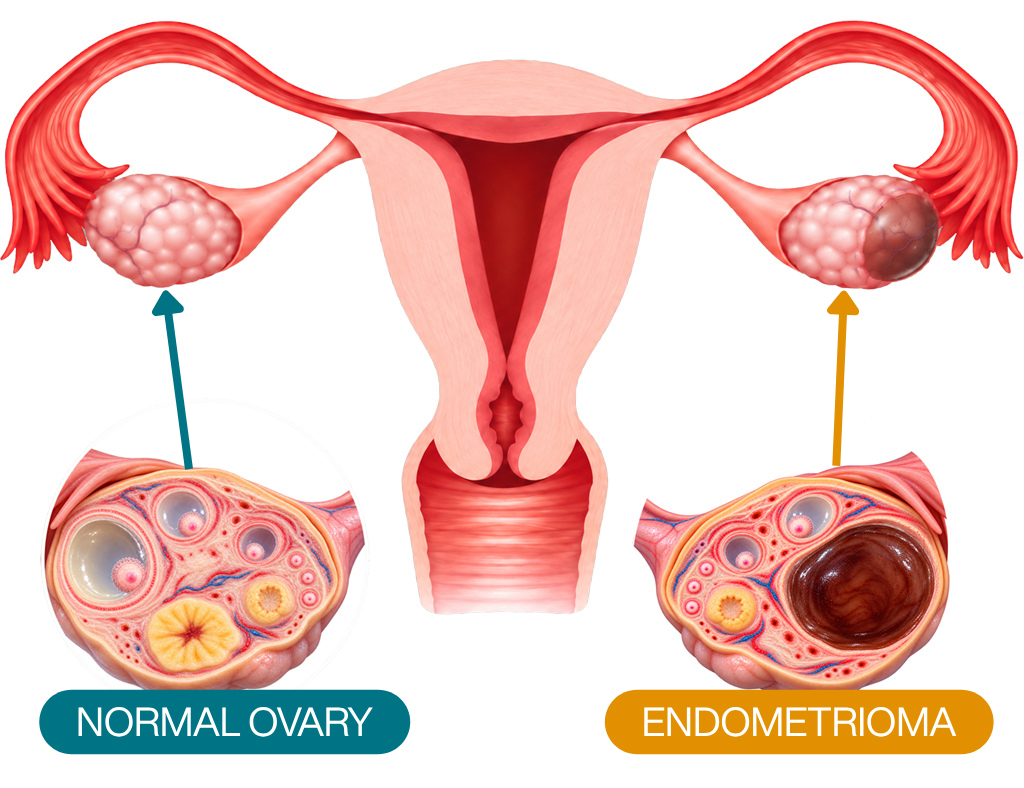
A medical illustration comparing a normal ovary with an ovary affected by an endometrioma, a cyst associated with endometriosis.
Inflammation May Affect the Reproductive Environment
Endometriosis is associated with chronic inflammation that may influence egg development, sperm function, and fertilization.
However, the contribution of inflammation to infertility varies and cannot be reliably measured in every patient. [5]
Natural Pregnancy Is Still Possible With Stage 4 Endometriosis
Even with extensive endometriosis, some patients retain sufficient ovarian and fallopian tube function to conceive naturally.
Others may experience infertility because adhesions interfere with egg capture, the fallopian tubes are damaged, or additional reproductive conditions are present.
The stage of endometriosis alone cannot reliably predict the chances of natural pregnancy.
Age, ovarian reserve, fallopian tube function, sperm quality, and infertility history provide a more complete picture of reproductive potential. [3][5]
Is Surgery Necessary to Get Pregnant With Stage 4 Endometriosis?
Not every patient with stage 4 endometriosis needs surgery before attempting natural pregnancy.
The decision depends on whether the disease interferes with reproductive function, causes significant symptoms, or presents other clinical concerns.
For some patients, surgery may be considered when extensive adhesions distort the relationship between the ovaries and fallopian tubes. However, surgery does not guarantee pregnancy and may carry risks, particularly when ovarian endometriomas are involved.
Treatment decisions should consider fertility goals, ovarian reserve, symptoms, and the potential benefits and risks of surgery. [3][4]
For a more detailed explanation, read our article on pregnancy after endometriosis surgery.
Fertility Evaluation Matters More Than Disease Stage Alone
Patients with stage 4 endometriosis who wish to conceive may benefit from fertility evaluation before or early in their attempts at natural pregnancy.
Significant adhesions, suspected fallopian tube damage, reduced ovarian reserve, and increasing age may affect fertility and the appropriate timing of treatment.
Depending on individual circumstances, an evaluation may include ovarian reserve testing, assessment of fallopian tube patency, pelvic imaging, and semen analysis.
These tests provide useful information, although no single test can predict whether natural pregnancy will occur.
Patients with known advanced endometriosis do not necessarily need to wait 12 months before seeking fertility advice. Early evaluation can help determine whether continued natural attempts or assisted reproductive treatment may be appropriate. [6]
For patients who have undergone surgery, clinicians may also use the Endometriosis Fertility Index (EFI) to estimate the likelihood of pregnancy without assisted reproductive technology. The EFI incorporates patient history and surgical findings to generate a score from 0 to 10. [1]
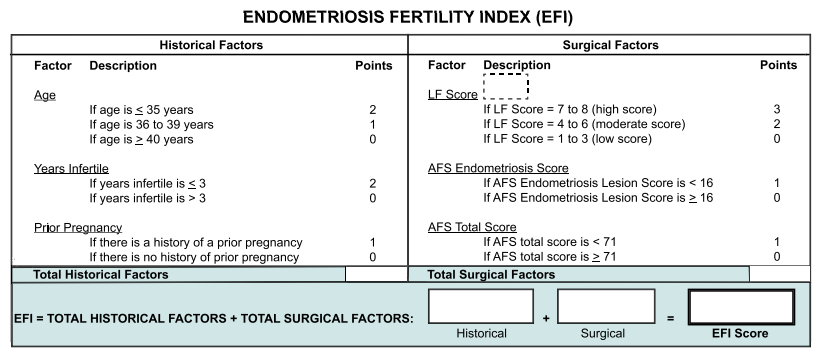
Endometriosis Fertility Index (EFI). The EFI combines historical factors and surgical findings to calculate a score from 0 to 10. Source: Adamson and Pasta (2010).
Understanding Your Pregnancy Options With Stage 4 Endometriosis
Stage 4 endometriosis can make conception difficult, but natural pregnancy remains possible. Fertility depends on how the disease affects reproductive anatomy and function.
At New York Gynecology Surgery & Endometriosis, our specialists provide individualized evaluation and surgical treatment.
Consider scheduling a consultation to discuss your fertility goals and appropriate treatment options.
References
- Becker, C. M., Bokor, A., Heikinheimo, O., Horne, A., Jansen, F., Kiesel, L., King, K., Kvaskoff, M., Nap, A., Petersen, K., Saridogan, E., Tomassetti, C., van Hanegem, N., Vulliemoz, N., & Vermeulen, N. (2022). ESHRE guideline: Endometriosis. Human Reproduction Open, 2022(2), hoac009. https://doi.org/10.1093/hropen/hoac009
- Bulletti, C., Coccia, M. E., Battistoni, S., & Borini, A. (2010). Endometriosis and infertility. Journal of Assisted Reproduction and Genetics, 27(8), 441–447. https://doi.org/10.1007/s10815-010-9436-1
- National Institute for Health and Care Excellence. (2024). Endometriosis: Diagnosis and management (NICE Guideline NG73). https://www.nice.org.uk/guidance/ng73
- Practice Committee of the American Society for Reproductive Medicine. (2012). Endometriosis and infertility: A committee opinion. Fertility and Sterility, 98(3), 591–598. https://doi.org/10.1016/j.fertnstert.2012.05.031