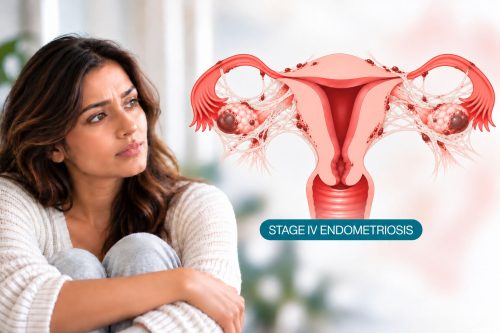


You underwent an appendectomy to remove your appendix. The surgery is over, but during your follow-up appointment, you hear something unexpected: endometriosis was discovered during surgery or identified afterward in the pathology report.
Perhaps the surgeon noticed unusual tissue near your appendix, or the pathology report revealed endometriosis in the appendix itself. Does this mean you have endometriosis elsewhere in your pelvis? Could it explain abdominal pain you experienced before surgery? Will you need another operation?
The answers depend on where the endometriosis was found, how it was identified, and whether you have ongoing symptoms.
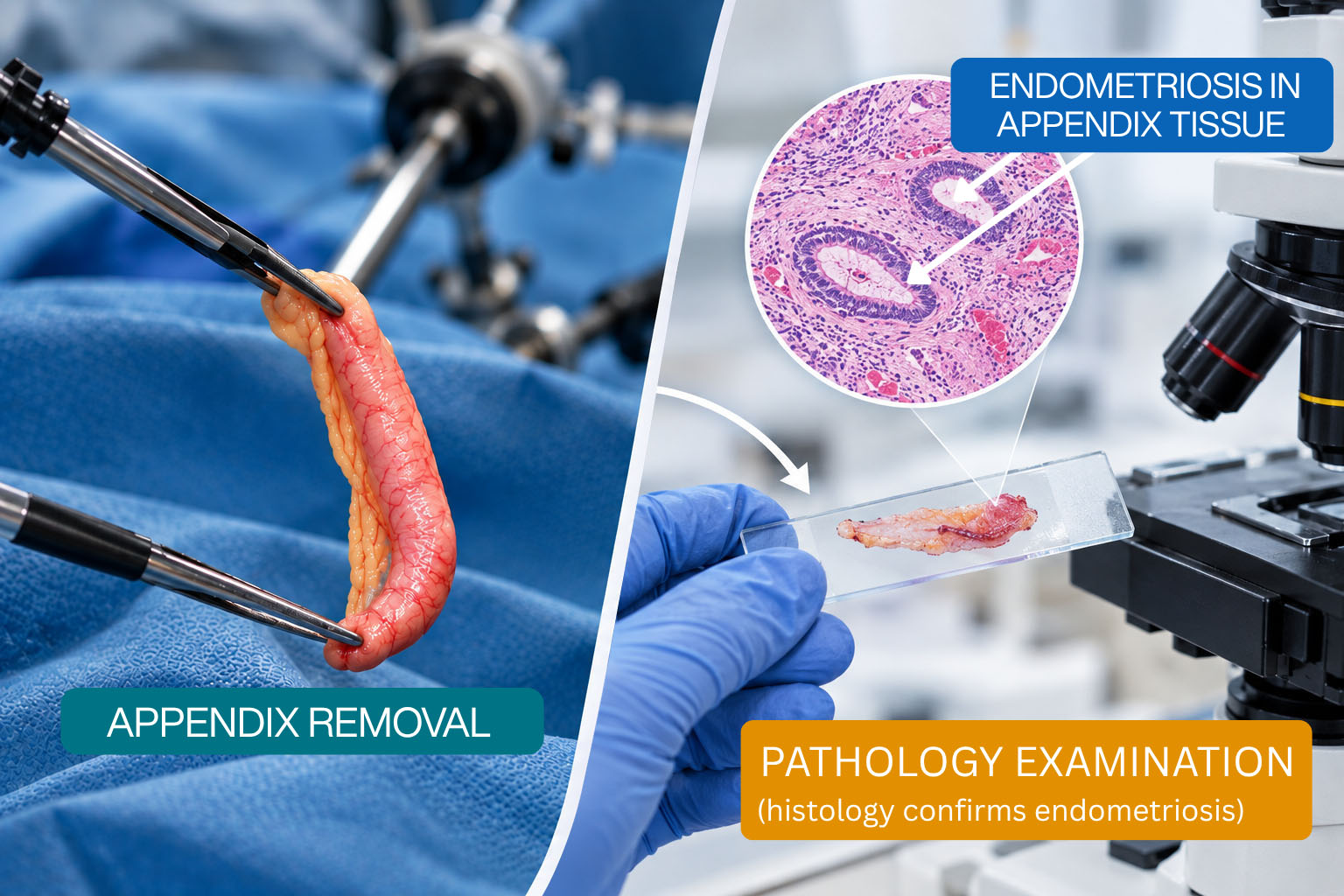
Endometriosis may be discovered unexpectedly during an appendectomy. Examination of the removed appendix under a microscope can confirm the presence of endometriosis in the tissue.
Why Is Endometriosis Sometimes Found During an Appendectomy?
The appendix is a small, narrow pouch attached to the beginning of the large intestine, usually in the lower right abdomen. Its position places it relatively close to several pelvic structures, including the right ovary and fallopian tube.
Endometriosis occurs when tissue similar to the uterine lining grows outside the uterus. It can affect the ovarios, supporting ligaments, and, less commonly, the apéndice. Because appendectomy involves surgery in the lower abdomen, endometriosis may occasionally be discovered even when it was not suspected beforehand. [2]
An Unexpected Discovery During Surgery
Imagine a surgeon removing an appendix because of persistent right-sided abdominal pain. During the operation, the surgeon notices dark spots, scarring, or abnormal tissue on nearby pelvic surfaces. These findings may raise suspicion for endometriosis.
However, not every unusual spot or area of scarring is endometriosis. Other conditions can produce similar appearances. Sometimes, nothing unusual is noticed during surgery, but microscopic examination of the removed appendix later reveals endometriosis. [2]
These are two different situations: one involves a suspected visual finding, while the other involves a tissue-based diagnosis.
Understanding Appendiceal Endometriosis
Appendiceal endometriosis means that endometriosis involves the appendix itself. The disease may affect different layers of the appendiceal wall, including its muscular layer or outer surface. Unlike a typical infection, endometriosis does not necessarily cause the appendix to become acutely inflamed.
Some patients have no recognizable symptoms. Others experience right lower abdominal pain, sometimes associated with menstruation. Endometriosis can cause localized inflammation and irritation, which may contribute to discomfort or symptoms resembling other abdominal conditions. [2]
Can Endometriosis Mimic Appendicitis?
Sí. Appendiceal endometriosis can occasionally produce symptoms resembling appendicitis, including right lower abdominal pain. However, the two conditions have different underlying mechanisms.
Acute appendicitis involves inflammation of the appendix, sometimes caused by obstruction of its lumen. Common symptoms include worsening abdominal pain, nausea, fever, and abdominal tenderness. Appendiceal endometriosis, on the other hand, occurs when endometriosis affects the appendix itself. [1][2]
The two conditions can also occur together. A patient may have genuine acute appendicitis, with endometriosis discovered incidentally when the removed appendix is examined. This is one reason the final pathology report matters.
Does Finding Endometriosis Mean It Is Present Elsewhere?
Not necessarily. Endometriosis involving the appendix may coexist with disease elsewhere in the pelvis, but its discovery does not automatically establish how extensive the disease is. [2]
For example, endometriosis may also involve the ovaries, pelvic peritoneum, uterosacral ligaments, or tissues surrounding the bowel. However, an appendectomy is generally performed to address a suspected appendix problem, not to systematically examine every location where endometriosis might develop.
Even if the surgeon saw no obvious pelvic abnormalities, that observation alone cannot reliably exclude superficial endometriosis. Conversely, a confirmed diagnosis in the appendix does not mean additional lesions must be present.
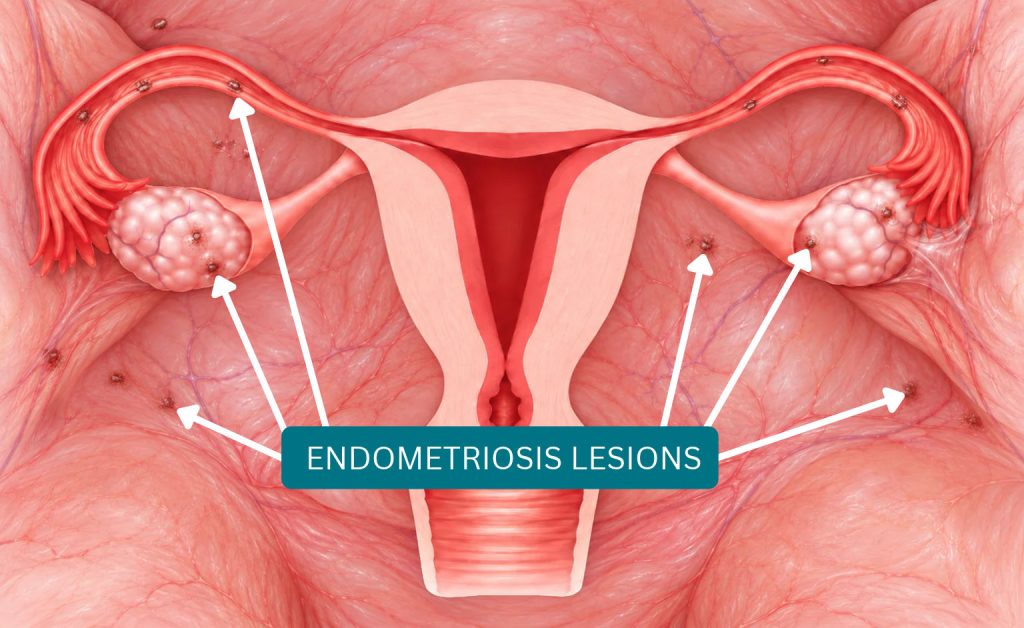
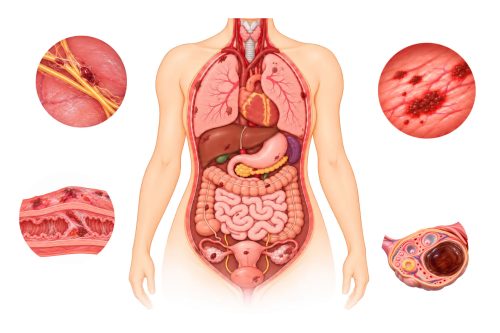
Endometriosis can affect multiple pelvic structures, including the ovaries, uterine surface, and surrounding pelvic tissues. The dark spots illustrate possible endometriosis lesions, which can vary in appearance, size, and location.
The Role of Pathology in Confirming Endometriosis
After an appendectomy, the removed appendix is typically sent to a pathology laboratory. A pathologist examines tissue under a microscope to determine whether appendicitis, endometriosis, or another condition is present.
If characteristic endometrial-type glands and stroma are identified, the findings may establish a diagnosis of appendiceal endometriosis. Pathology can confirm endometriosis in the tissue examined, but it cannot determine whether disease exists in pelvic areas that were not sampled. [1][2]
The operative report provides different information because it describes what the surgeon observed during the procedure. Reviewing both reports can help clarify whether endometriosis was confirmed in the appendix, merely suspected elsewhere, or both.
Your Next Steps After an Unexpected Diagnosis
Discovering endometriosis after an appendectomy does not automatically mean you need further surgery. The first step is understanding the findings.
Ask for copies of your operative report and final pathology report. These documents can help your healthcare provider determine exactly what was discovered.
Your symptoms also matter. Have you experienced unusually painful periods, persistent pelvic discomfort, pain during intercourse, or bowel symptoms that worsen around menstruation?
If you are unsure whether your symptoms may be associated with endometriosis, our Verificador de síntomas de endometriosis can help you identify and organize symptoms to discuss with your healthcare provider. The checker is not a diagnostic test, but it may help you decide what concerns to raise during an evaluation.
On the other hand, someone whose endometriosis was discovered incidentally, who has recovered from surgery, and who has no ongoing symptoms may not require immediate treatment. [3]
Why Endometriosis Specialist Evaluation May Be Important
Finding endometriosis during an appendectomy does not necessarily mean the disease was limited to the appendix. A specialist evaluation can help determine whether further investigation is appropriate, even if your symptoms have improved.
An endometriosis specialist can review your surgical findings, pathology report, and medical history. Depending on the results, further care may involve monitoring, medical treatment, or additional evaluation rather than another operation.
En New York Gynecology Surgery & Endometriosis, our specialists provide individualized assessments for patients with suspected or confirmed endometriosis. Consider scheduling a consultation to better understand your diagnosis and discuss your next steps.
Referencias
- Abdala Bolcatto, A., Erina, M., Mandojana, F. I., Bruera, N., Doniquian, A. M., & Viscido, G. R. (2025). Acute appendicitis due to appendiceal endometriosis: Two case report and literature review. International Journal of Surgery Case Reports, 126, 110743. https://doi.org/10.1016/j.ijscr.2024.110743
- Allahqoli, L., Mazidimoradi, A., Momenimovahed, Z., Günther, V., Ackermann, J., Salehiniya, H., & Alkatout, I. (2023). Appendiceal endometriosis: A comprehensive review of the literature. Diagnostics, 13(11), 1827. https://doi.org/10.3390/diagnostics13111827
- Becker, C. M., Bokor, A., Heikinheimo, O., Horne, A., Jansen, F., Kiesel, L., King, K., Kvaskoff, M., Nap, A., Petersen, K., Saridogan, E., Tomassetti, C., van Hanegem, N., Vulliemoz, N., y Vermeulen, N. (2022). ESHRE guideline: Endometriosis. Human Reproduction Open, 2022(2), hoac009. https://doi.org/10.1093/hropen/hoac009