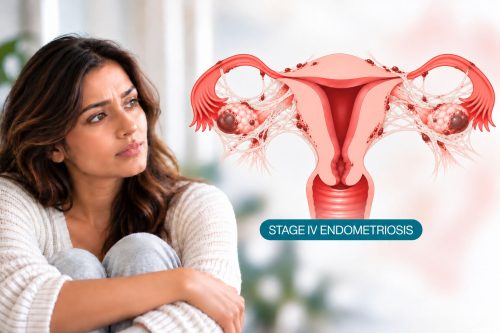



Pelvic pain is common, but that does not mean every type of pelvic pain should be considered normal.
Mild discomfort can occur around menstruation or ovulation. But pelvic pain that is severe, keeps returning, becomes worse over time, or interferes with work, school, sleep, exercise, or everyday activities deserves attention. [4]
Endometriosis is one possible cause. The condition can cause painful periods and chronic pelvic pain, but symptoms vary considerably from one patient to another. Understanding the pattern, severity, and impact of pelvic pain can help determine when further evaluation may be appropriate.

Pelvic pain can affect everyday activities. Severe, persistent, or recurring pelvic pain may require further evaluation for endometriosis or other underlying conditions.
Understanding Normal Pelvic Discomfort
Some pelvic discomfort can occur as part of the menstrual cycle.
Menstrual cramps develop when the uterus contracts during menstruation. Some people also experience temporary discomfort around ovulation, sometimes on one side of the lower abdomen.
These symptoms are often mild and short-lived. However, pain should not automatically be considered normal simply because it occurs during a period.
The severity, duration, frequency, and effect on daily activities are important considerations.
When Is Pelvic Pain Not Normal?
Pelvic pain deserves closer attention when it becomes persistent, progressively worse, or difficult to manage.
Signs that further evaluation may be appropriate include: [4]
- Severe menstrual cramps that interfere with daily activities
- Pelvic pain that continues outside menstruation
- Pain during or after sex
- Painful bowel movements or urination
- Pelvic pain that becomes worse over time
- Recurring pain that does not improve with usual treatment
These symptoms do not necessarily indicate endometriosis. Other gynecologic, gastrointestinal, urinary, and musculoskeletal conditions can also cause pelvic pain.
Does Severe Period Pain Mean Endometriosis?
Not necessarily.
Some patients experience significant menstrual pain without having endometriosis. However, severe or recurring period pain is one of the symptoms that may warrant evaluation for the condition.
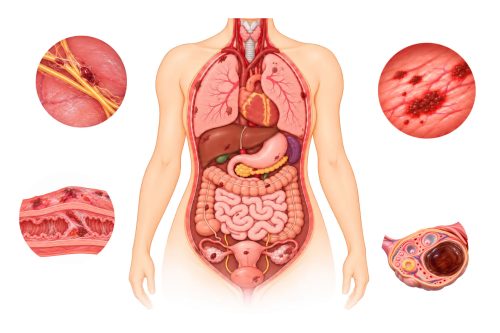
Endometriosis occurs when tissue similar to the lining of the uterus grows outside the uterus. It can affect the ovaries, pelvic peritoneum, uterosacral ligaments, bowel, bladder, and other pelvic structures.
The extent of endometriosis does not always correspond to the severity of pain. Some patients with limited disease experience substantial symptoms, while others with more extensive disease may have relatively little pain. [1]
Pelvic Pain and Endometriosis
Endometriosis-related pelvic pain does not always follow a predictable menstrual pattern.
Some patients experience pain primarily before or during menstruation. Others have discomfort around ovulation, during bowel movements, during sex, or at different times throughout the month.
Pain may also become chronic, occurring even when a patient is not menstruating. [1]
Because endometriosis symptoms can overlap with other conditions, identifying the underlying cause requires consideration of the complete clinical picture rather than one symptom alone.
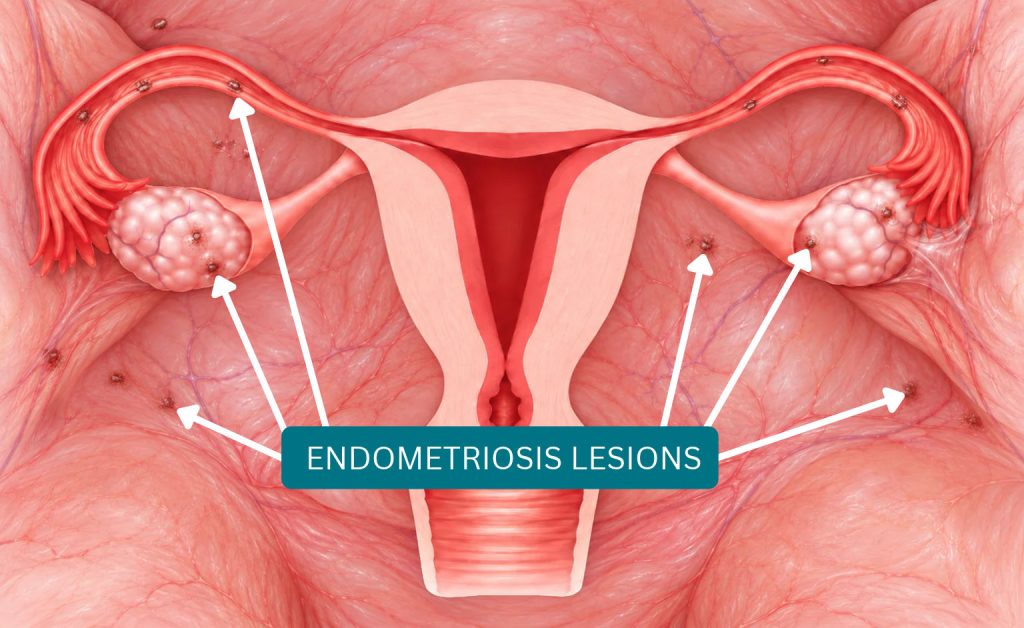
Medical illustration showing dark reddish-brown endometriosis lesions affecting the ovaries, fallopian tubes, and surrounding pelvic tissues.
Pelvic Pain Despite a Normal Ultrasound
A normal ultrasound does not necessarily mean that there is no underlying cause for pelvic pain.
Ultrasound can identify ovarian endometriomas and some forms of deep endometriosis, particularly when performed by clinicians experienced in evaluating the condition. [2]
However, not all endometriosis lesions are visible on ultrasound, especially superficial peritoneal disease.
MRI may provide additional information in selected patients, particularly when deep endometriosis is suspected. Even so, normal imaging does not completely exclude endometriosis. [1][4]
Persistent symptoms may therefore deserve further evaluation despite an unremarkable imaging report.
When Pelvic Pain Is Dismissed as “Normal”
Some patients with endometriosis report being told that their symptoms are simply part of menstruation.
Because menstrual discomfort is common, significant pain may sometimes be normalized by patients, family members, or healthcare professionals. Research has identified symptom normalization and dismissal as factors that can contribute to delayed endometriosis diagnosis. [3]
However, a delayed diagnosis does not always mean that a doctor overlooked the condition. Endometriosis can be difficult to recognize because symptoms vary and overlap with other disorders.
The important distinction is whether persistent or disruptive symptoms are being appropriately evaluated, rather than assuming that pain is harmless because it occurs during menstruation.
When Should You Consider a Second Opinion?
A second opinion may be reasonable when pelvic pain continues to interfere with daily life, remains unexplained after an initial evaluation, or persists despite treatment.
Patients may find it helpful to document when pain occurs, how long it lasts, whether it follows the menstrual cycle, and what other symptoms accompany it.
Explaining how pain affects everyday activities can also provide useful clinical information.
A second opinion does not necessarily mean that the first evaluation was incorrect. It may offer another perspective, particularly when endometriosis or another complex pelvic condition is suspected.
Pelvic Pain Deserves a Closer Look
Occasional mild pelvic discomfort can be common. But severe, recurring, or persistent pain should not automatically be dismissed as normal.
Sudden severe pelvic pain, particularly with fainting, fever, heavy bleeding, or possible pregnancy, requires urgent medical assessment.
For patients experiencing ongoing pelvic pain, painful periods, pain during sex, painful bowel movements, or other recurring pelvic symptoms, an evaluation for endometriosis may be appropriate.
At New York Gynecology Surgery & Endometriosis (NYGSE), we consider the complete pattern of symptoms, previous treatments, imaging findings, reproductive goals, and the effect pain has on daily life to determine whether endometriosis or another condition may be contributing and what further evaluation or treatment may be appropriate.
References
- Becker, C. M., Bokor, A., Heikinheimo, O., Horne, A., Jansen, F., Kiesel, L., King, K., Kvaskoff, M., Nap, A., Petersen, K., Saridogan, E., Tomassetti, C., van Hanegem, N., Vulliemoz, N., & Vermeulen, N. (2022). ESHRE guideline: Endometriosis. Human Reproduction Open, 2022(2), hoac009. https://doi.org/10.1093/hropen/hoac009
- Guerriero, S., et al. (2016). Systematic approach to sonographic evaluation of the pelvis in women with suspected endometriosis, including terms, definitions and measurements: A consensus opinion from the International Deep Endometriosis Analysis (IDEA) group. Ultrasound in Obstetrics & Gynecology, 48(3), 318–332. https://doi.org/10.1002/uog.15955
- Hudelist, G., Fritzer, N., Thomas, A., Niehues, C., Oppelt, P., Haas, D., Tammaa, A., & Salzer, H. (2012). Diagnostic delay for endometriosis in Austria and Germany: Causes and possible consequences. Human Reproduction, 27(12), 3412–3416. https://doi.org/10.1093/humrep/des316
- National Institute for Health and Care Excellence. (2024). Endometriosis: Diagnosis and management (NICE Guideline NG73). https://www.nice.org.uk/guidance/ng73